In the global defense, law enforcement, outdoor, and security supply chain, OEM Tactical Gear manufacturing has become one of the most important production models for brands that need control over product design, quality, and market positioning.
Whether you are building a tactical equipment brand, sourcing for government contracts, or scaling a private-label outdoor business, understanding how OEM tactical gear manufacturing works is essential for making informed procurement decisions.
This guide breaks down everything B2B buyers need to know—from definition and production workflow to OEM vs ODM differences, benefits, and how to choose the right manufacturer.
What Does OEM Tactical Gear Mean?
Definition of OEM Tactical Gear in Manufacturing Context
OEM Tactical Gear refers to tactical equipment that is manufactured by a factory based on a buyer’s specifications, design requirements, or technical drawings, and then branded under the buyer’s own name.
OEM stands for Original Equipment Manufacturer, which means the producer does not sell the product under its own brand but instead manufactures it for another company.
In the tactical gear industry, OEM production typically includes:
- Design execution based on client requirements
- Material selection according to performance standards
- Prototype development and modification
- Mass production under strict quality control
- Private labeling and packaging customization
Unlike standard retail manufacturing, OEM tactical gear is brand-driven, specification-driven, and performance-critical.
What Products Are Included in OEM Tactical Gear?
OEM Tactical Gear covers a wide range of military, law enforcement, and outdoor survival equipment, including:
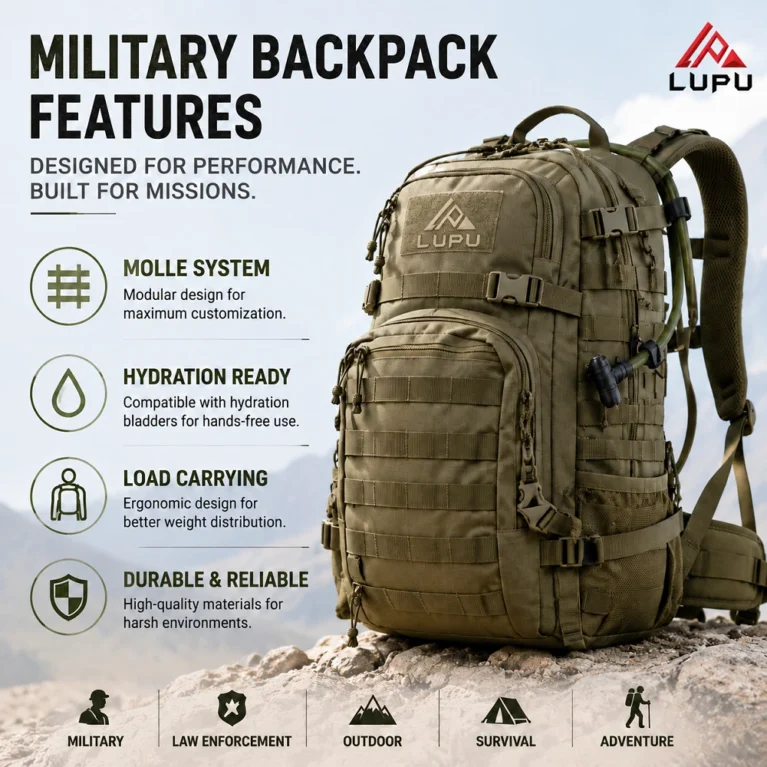
- Тактические рюкзаки and assault packs
- Plate carriers and tactical vests
- Load-bearing equipment (LBE) systems
- Tactical belts and harness systems
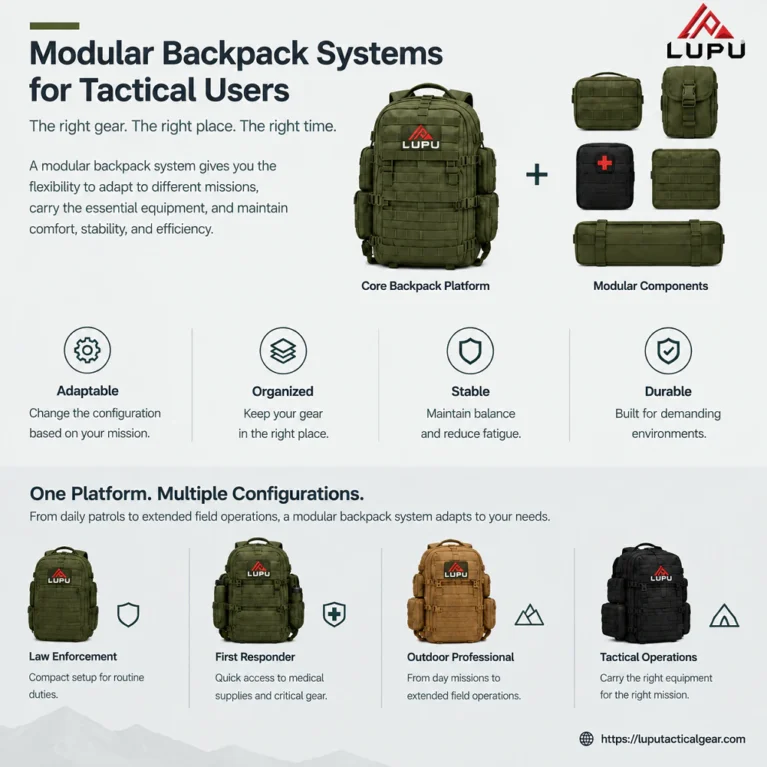
- MOLLE pouches and modular accessories
- Holsters and weapon carrying solutions
- Protective and utility gear components
These products are designed for high durability, modular functionality, and mission-specific use cases, often requiring reinforced stitching, abrasion-resistant fabrics, and field-tested hardware.
Why OEM Tactical Gear Matters in the B2B Industry
The demand for OEM Tactical Gear continues to grow globally due to several structural market trends:
- Expansion of private security and defense outsourcing
- Growth of outdoor survival and tactical lifestyle brands
- Increasing government procurement diversification
- Rising demand for private-label tactical equipment in e-commerce
For B2B buyers, OEM production enables brand independence, supply chain control, and higher margin positioning in competitive markets.
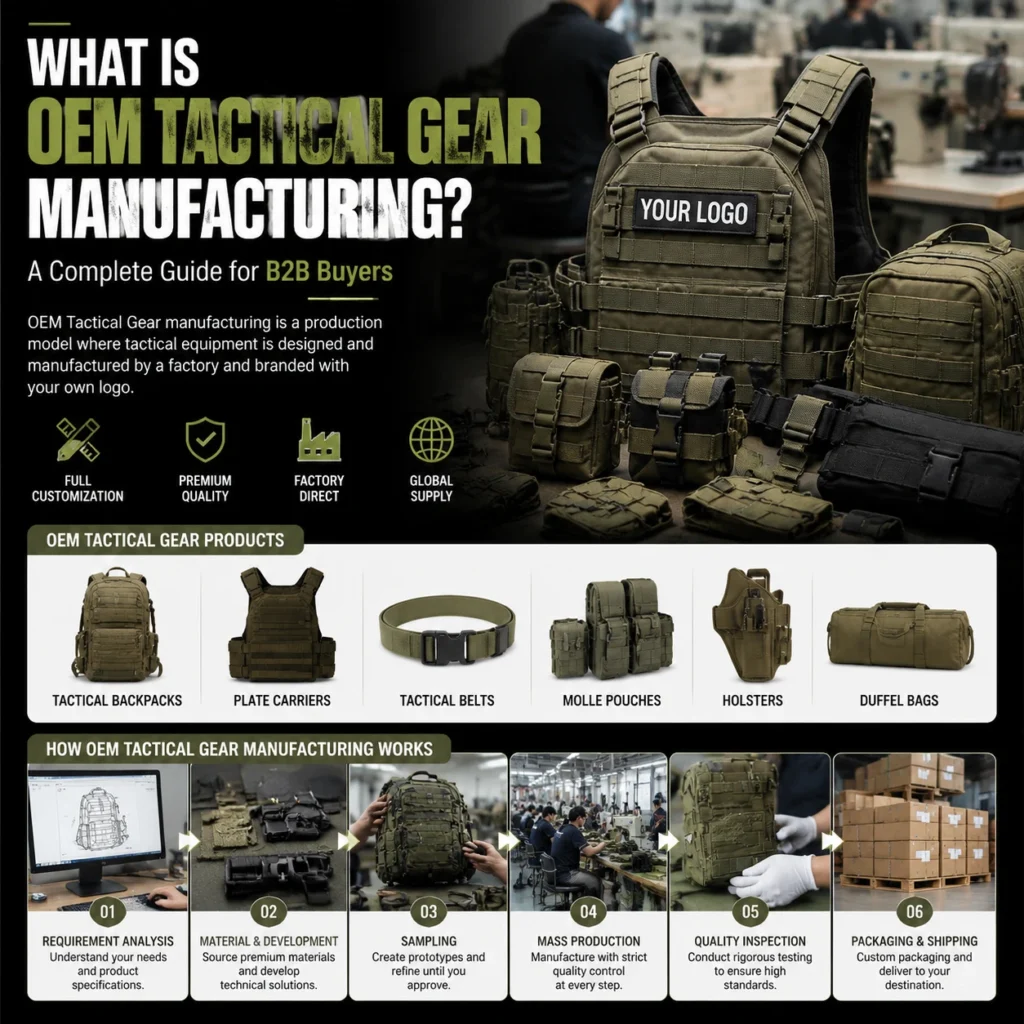
How OEM Tactical Gear Manufacturing Works?
OEM tactical gear production is not a single-step process. It is a structured engineering and manufacturing workflow that ensures both functional performance and brand consistency.
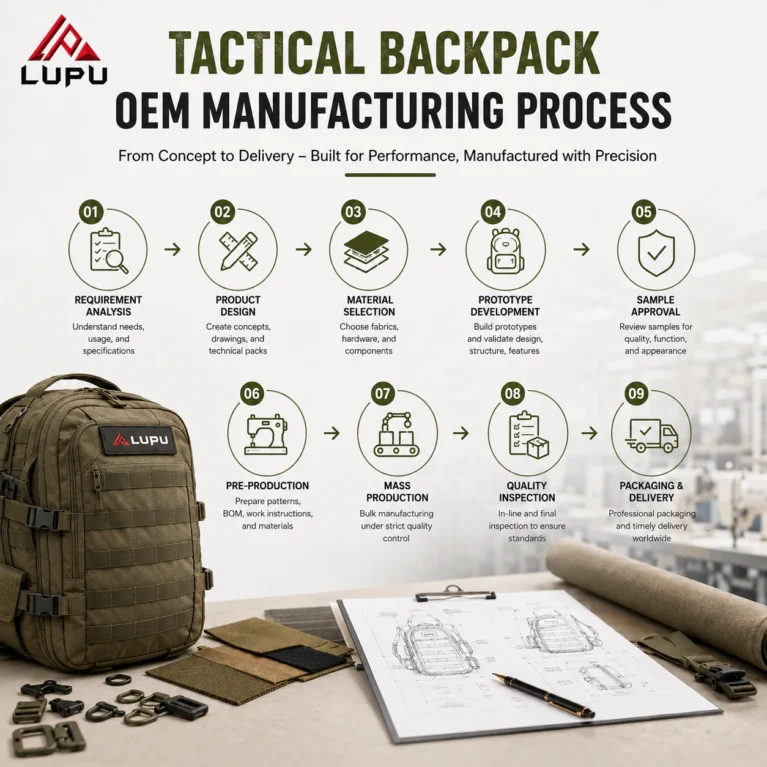
Step 1 – Requirement Analysis and Product Specification
The process begins with detailed communication between buyer and manufacturer.
Key inputs include:
- Product sketches or reference samples
- Intended use scenario (military, law enforcement, outdoor, etc.)
- Functional requirements (load capacity, modularity, waterproofing)
- Brand identity requirements (logos, color schemes, camouflage patterns)
At this stage, experienced производители тактического снаряжения help refine concepts into production-ready technical specifications.
Step 2 – Material Sourcing and Technical Development
Material selection is critical in OEM Tactical Gear manufacturing because performance depends heavily on raw materials.
Common materials include:
- Cordura nylon (500D / 1000D) for abrasion resistance
- High-tensile polyester webbing
- YKK zippers for durability and reliability
- Duraflex buckles for load-bearing strength
- Waterproof coatings (PU / TPU layers)
Manufacturers may also conduct stress testing to ensure materials meet tactical performance expectations.
Step 3 – Sampling and Prototype Development
Before mass production, a prototype or sample is developed.
This stage includes:
- First sample production based on specifications
- Fit and functional testing
- Load-bearing and stress simulations
- User feedback collection (B2B buyer review)
- Design adjustments and refinement cycles
OEM Tactical Gear often requires multiple revisions before final approval due to mission-critical performance requirements.
Step 4 – Mass Production Process
Once the sample is approved, production moves into full-scale manufacturing.
Typical workflow includes:
- Precision cutting of fabric panels
- Industrial stitching and reinforcement
- Assembly of modular systems (MOLLE, straps, buckles)
- Functional integration of load systems
- In-line quality inspection during production
At this stage, production consistency and workmanship quality are critical for brand reputation.
Step 5 – Quality Control & Inspection Standards
Quality control is a definingfactor in tactical gear manufacturing.
Common QC methods include:
- AQL (Acceptable Quality Limit) inspection
- Random batch sampling
- Stress and durability testing
- Stitch density and load verification
- Hardware strength checks
Many OEM tactical gear manufacturers also follow military-grade standards or client-specific compliance requirements.
Step 6 – Packaging and Global Shipping
After production and inspection, products are prepared for international delivery.
This includes:
- Custom branding and private-label packaging
- Polybag, box, or tactical kit packaging options
- Export documentation preparation
- Logistics coordination (air freight, sea freight, express shipping)
For global B2B buyers, reliable logistics execution is as important as manufacturing quality.
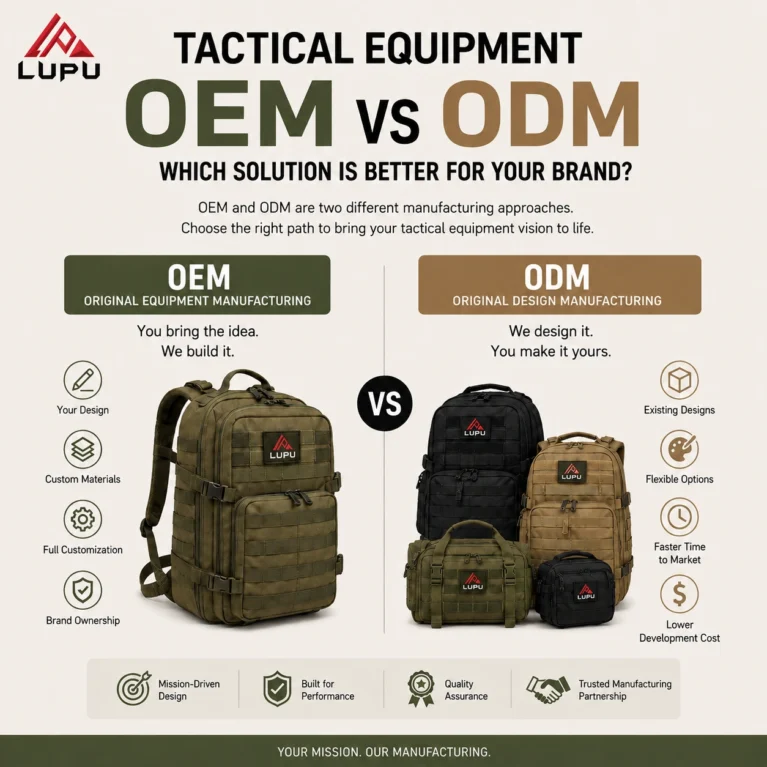
OEM vs ODM Tactical Gear
Understanding the difference between OEM and ODM is essential for strategic sourcing decisions.
What Is OEM Tactical Gear?
OEM tactical gear is:
- Fully based on the buyer’s design or specification
- Manufactured exclusively for the buyer’s brand
- Highly customizable in structure, materials, and branding
OEM is ideal for companies that want full control over product identity and differentiation.
What Is ODM Tactical Gear?
ODM (Original Design Manufacturer) tactical gear refers to:
- Pre-designed products created by the factory
- Buyers select existing models and apply branding changes
- Limited customization compared to OEM
ODM is typically faster and lower-cost but less unique.
Key Differences Between OEM and ODM
|
Factor |
OEM |
ODM |
|
Product Design |
Buyer-controlled |
Factory-controlled |
|
Customization Level |
Высокий |
Ограниченный |
|
Development Cost |
Higher |
Lower |
|
Time to Market |
Longer |
Faster |
|
Brand Uniqueness |
Сильный |
Умеренный |
Which One Is Better for Tactical Gear Buyers?
- Startups often choose ODM for faster entry
- Established brands prefer OEM for differentiation
- Government and military procurement typically require OEM-level specification control
In most serious OEM Tactical Gear sourcing strategies, OEM is the preferred long-term model.
Benefits of OEM Tactical Gear Manufacturing
Full Customization for Brand Identity
OEM allows complete control over:
- Logo placement and brandin
- Color systems and camouflage design
- Structural configuration
- Functional add-ons and modular systems
This level of customization is essential for building a recognizable tactical brand.
Higher Profit Margins for B2B Buyers
By eliminating intermediaries, OEM buyers can:
- Reduce unit cost
- Increase resale margins
- Build premium brand positioning
This is especially important in competitive tactical gear markets.
Scalable Production for Global Markets
OEM tactical gear manufacturing supports:
- Small batch production for market testing
- Large-scale production for distribution
- Flexible MOQ arrangements depending on supplier capability
This scalability is critical for international expansion.
Improved Product Quality Control
Direct factory cooperation allows:
- Better material control
- Transparent production monitoring
- Consistent product standards across batches
This reduces product failure rates and brand risk.
Competitive Advantage in Tactical Gear Market
OEM production enables brands to:
- Launch differentiated product lines
- Respond quickly to market feedback
- Build long-term product ecosystems
Who Needs OEM Tactical Gear Services?
Military and Law Enforcement Suppliers
Government and defense procurement requires:
- Strict specification compliance
- Durable mission-ready equipment
- Long-term supply stability
Outdoor and Hunting Brands
OEM Tactical Gear is widely used in:
- Survival gear brands
- Hunting equipment companies
- Outdoor adventure brands
Security Companies and Contractors
Private security firms require:
- Functional tactical load systems
- Protective and utility gear
- Uniform integration solutions
E-commerce and Amazon Sellers
Online sellers use OEM to:
- Build private-label tactical brand
- Differentiate from generic listings
- Improve product margins
Wholesalers and Distributors
Distributors benefit from OEM by:
- Creating exclusive product lines
- Serving regional markets
- Building long-term factory partnerships
How to Choose an OEM Tactical Gear Manufacturer?
Evaluate Manufacturing Experience and Expertise
Key indicators include:
- Years of tactical gear production experience
- Focus on military/outdoor product categories
- Ability to handle complex OEM requirements
Check Material Quality and Production Standards
A reliable manufacturer should offer:
- Military-grade material options
- Transparent sourcing channels
- Consistent quality documentation
Assess OEM/ODM Capabilities
Strong OEM partners provide:
- End-to-end development support
- Engineering feedback during design
- Flexible customization options
Review Sample and Prototype Quality
Prototype evaluation should focus on:
- Stitching durability
- Functional usability
- Load-bearing performance
- Design accuracy
Verify Certifications and Compliance
Depending on market requirements:
- ISO quality management systems
- Export compliance documentation
- Material safety certifications
Communication and Export Experience
Important factors include:
- Fast response time
- Clear technical communication
- Experience in international logistics
- Understanding of B2B procurement cycles
After-Sales Support and Long-Term Cooperation
A strong OEM partner should provide:
- Batch consistency over time
- Replacement support for defects
- Continuous product improvement feedback
Final Thoughts
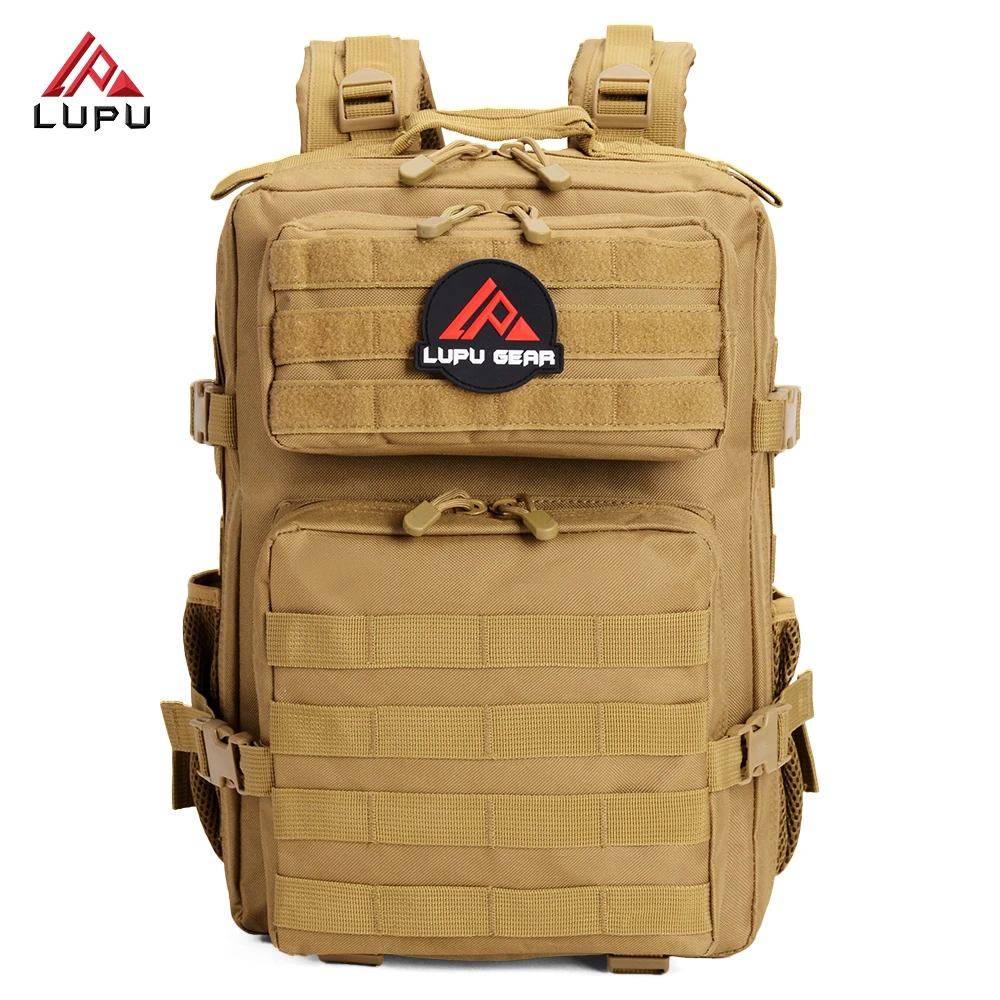
OEM Tactical Gear manufacturing is not just a production method—it is a strategic supply chain model that enables brands to control design, quality, pricing, and market positioning.
For B2B buyers, choosing the right OEM partner directly determines:
- Product reliability
- Brand competitiveness
- Long-term profitability
As global demand for tactical equipment continues to grow, OEM manufacturing will remain the foundation of scalable and differentiated tactical gear brands.
FAQ Section:
What is OEM tactical gear manufacturing?
OEM tactical gear manufacturing refers to producing tactical equipment based on a buyer’s specifications and branding.
What is the difference between OEM and ODM tactical gear?
OEM is fully customized design by the buyer, while ODM uses factory-designed products with branding changes.
Can I customize OEM tactical gear with my logo?
Yes, OEM production allows full branding customization including logos, colors, and packaging.
What industries use OEM tactical gear?
Military, law enforcement, outdoor brands, security companies, and e-commerce sellers.
What is MOQ for OEM tactical gear?
MOQ varies by product, usually from small batch sampling to large-scale production depending on factory capability.