Introduction: Why MOLLE Manufacturing Methods Matter
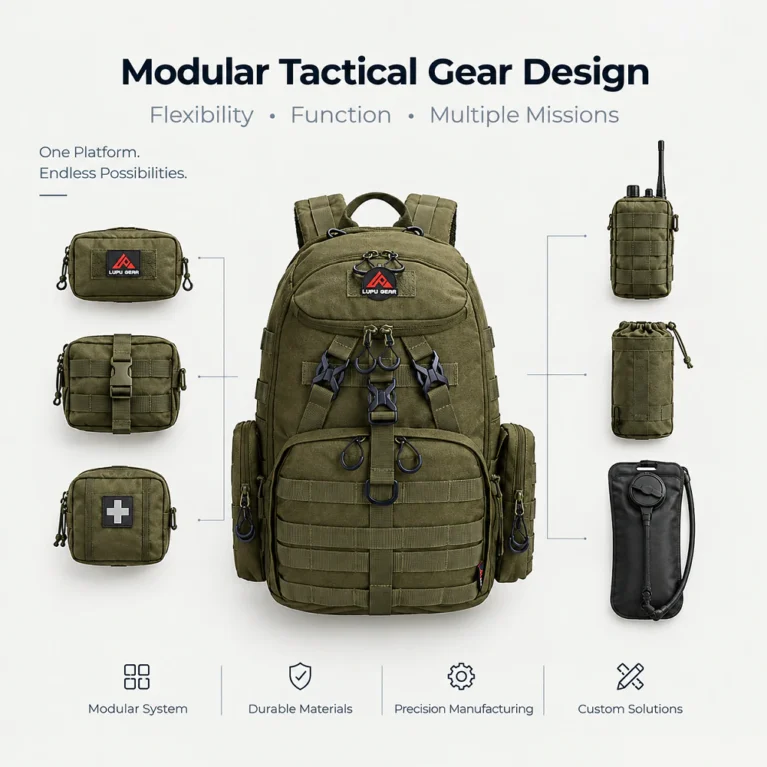
MOLLE (Modular Lightweight Load-carrying Equipment) compatibility is an important design consideration in tactical backpacks, plate carriers, tactical vests, chest rigs, and other modular load-carrying products. It allows users to configure equipment with compatible pouches and accessories according to their specific requirements.
However, not all MOLLE panels are manufactured in the same way.
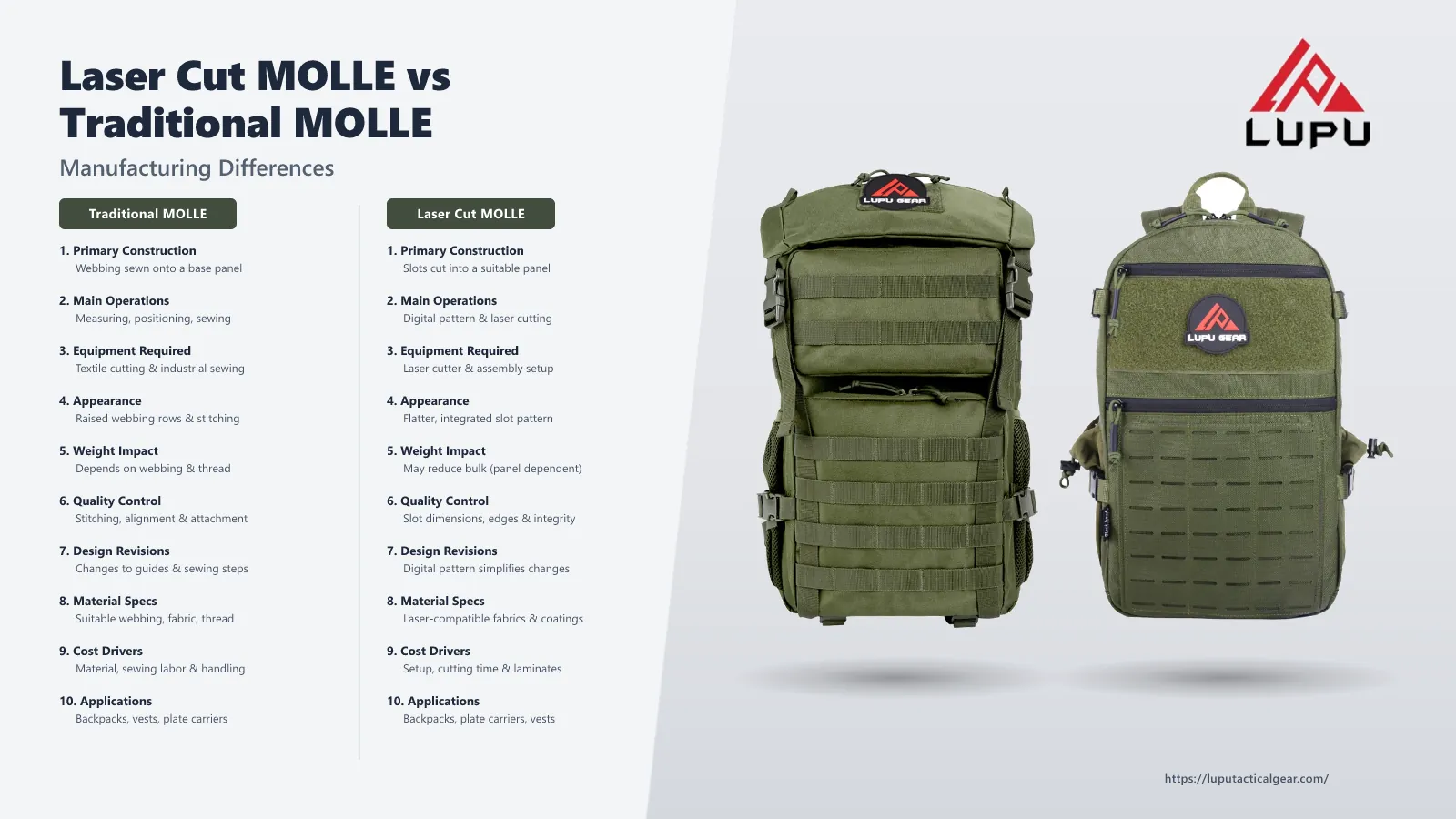
Traditional MOLLE typically uses rows of webbing sewn onto a fabric panel, while laser-cut MOLLE uses precisely cut slots in a suitable material panel to create attachment points. Although both approaches aim to support modular equipment organization, their manufacturing processes differ in material preparation, assembly, quality control, production efficiency, and cost structure.
Для бренды тактического снаряжения, wholesalers, distributors, and OEM/ODM buyers, understanding these differences is essential when developing new products or evaluating manufacturing partners.
The key question is not simply which MOLLE system looks better, but which construction method best meets the product’s functional requirements, manufacturing constraints, and commercial objectives.
This guide compares laser cut MOLLE vs traditional MOLLE from a manufacturing perspective, helping professional buyers make more informed decisions about materials, production processes, quality standards, and custom tactical gear development.
1. What Is Traditional MOLLE?
1.1 Structure and Construction
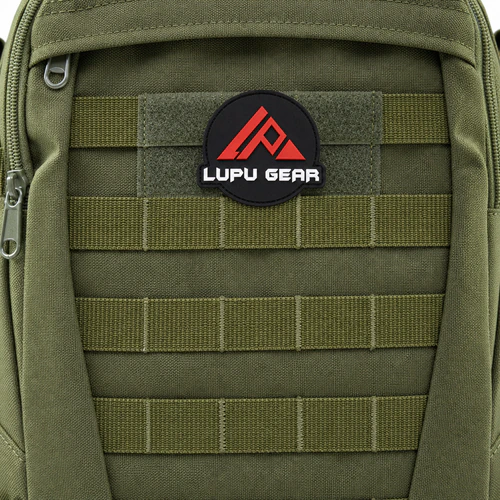
Traditional MOLLE construction uses horizontal rows of textile webbing stitched onto the exterior of a fabric panel. The spacing between the webbing rows and the stitching pattern creates attachment points for compatible pouches and accessories.
The finished panel generally consists of three main elements:
- Base fabric:The structural panel forming part of the backpack, vest, or carrier.
- Attachment webbing:Woven textile strips positioned at specified intervals.
- Stitching and reinforcement: Sewing operations that secure the webbing to the base panel.
Nylon and polyester webbing are common material options, although the appropriate choice depends on the product specification and intended application.
In a well-designed system, the webbing layout must provide the intended attachment compatibility while maintaining consistent spacing and secure construction.
1.2 Traditional MOLLE Manufacturing Process
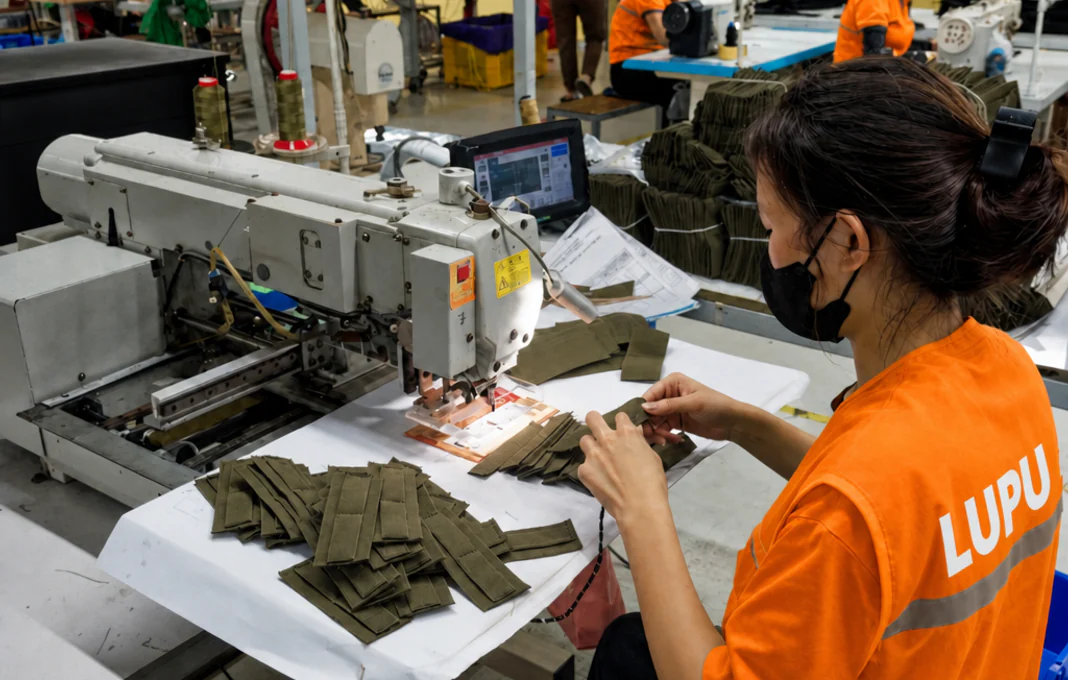
Traditional MOLLE production is primarily a textile cutting, positioning, and sewing process.
|
Step 1: Fabric and webbing preparation
The manufacturer selects the specified base fabric, webbing, thread, and reinforcement materials. Fabric panels and webbing strips are cut to the required dimensions. |
|
Step 2: Webbing measurement and positioning
Webbing strips are positioned according to the approved layout. Accurate measurement is essential because inconsistent spacing can affect attachment compatibility. |
|
Step 3: Sewing and reinforcement
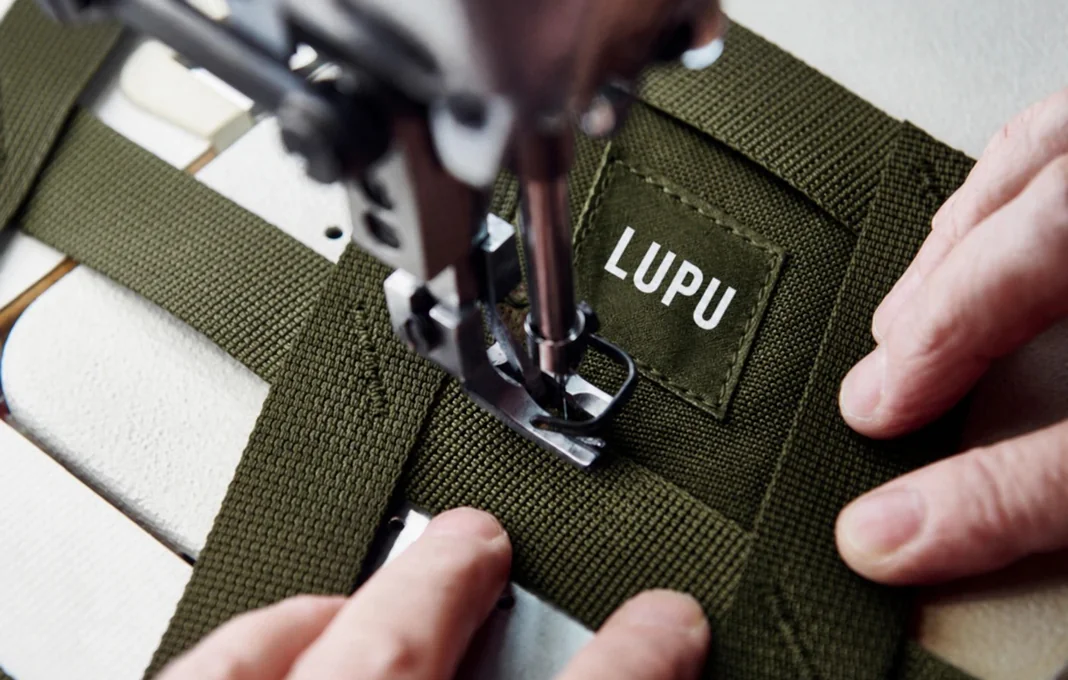
Operators stitch the webbing onto the base panel using the specified construction method. Additional reinforcement may be incorporated where required by the design. |
|
Step 4: Inspection and finishing
The finished panel is checked for alignment, stitch consistency, webbing attachment, dimensions, and other specified acceptance criteria. |

1.3 Key Manufacturing Considerations
Traditional MOLLE production depends heavily on accurate sewing operations and consistent workmanship.
Important considerations include:
- Sewing accuracy: Webbing rows must follow the approved measurements and layout.
- Attachment integrity: Stitching must meet the requirements defined for the product.
- Labor requirements: Repeated measuring, positioning, and sewing operations influence production time.
- Panel construction: Webbing, stitching, and the base fabric contribute to the finished panel’s overall thickness and weight.
- Production consistency: Manufacturers need repeatable processes to maintain uniformity across samples and bulk orders.
Traditional MOLLE remains a practical option for many tactical gear products because it uses established textile manufacturing processes and can be adapted to different panel shapes and configurations.
Its suitability, however, depends on the specific design, materials, construction quality, and intended use.
Traditional MOLLE provides an important reference point when comparing laser cut MOLLE vs traditional MOLLE, particularly in terms of webbing attachment, stitching requirements, and production consistency.
2. What Is Laser-Cut MOLLE?
2.1 Structure and Design Principles
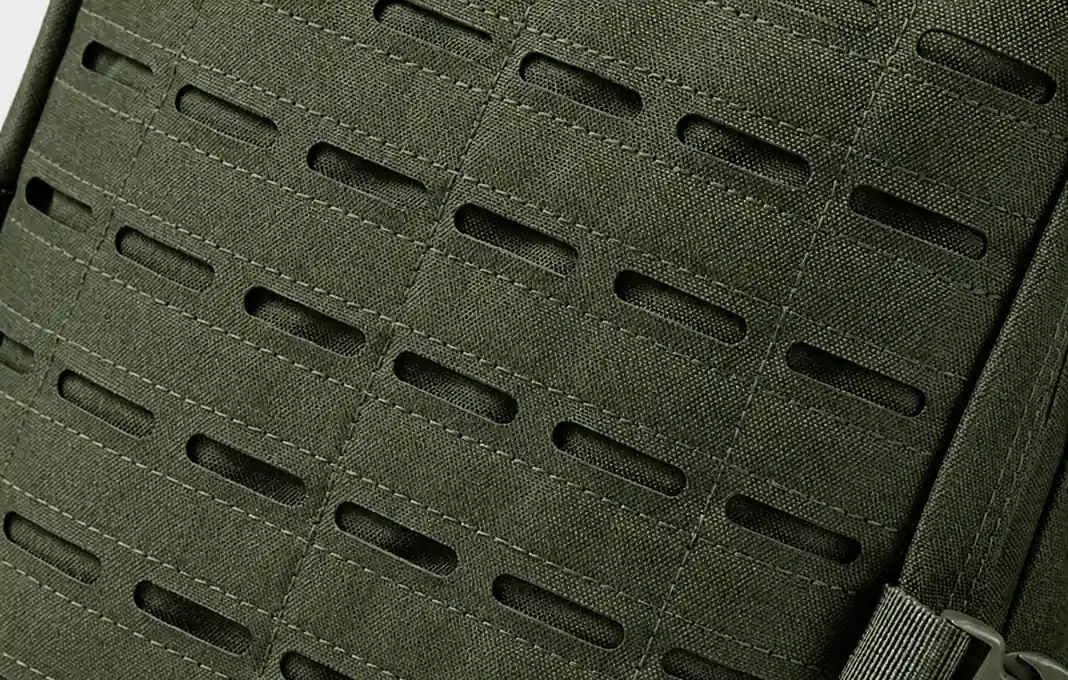
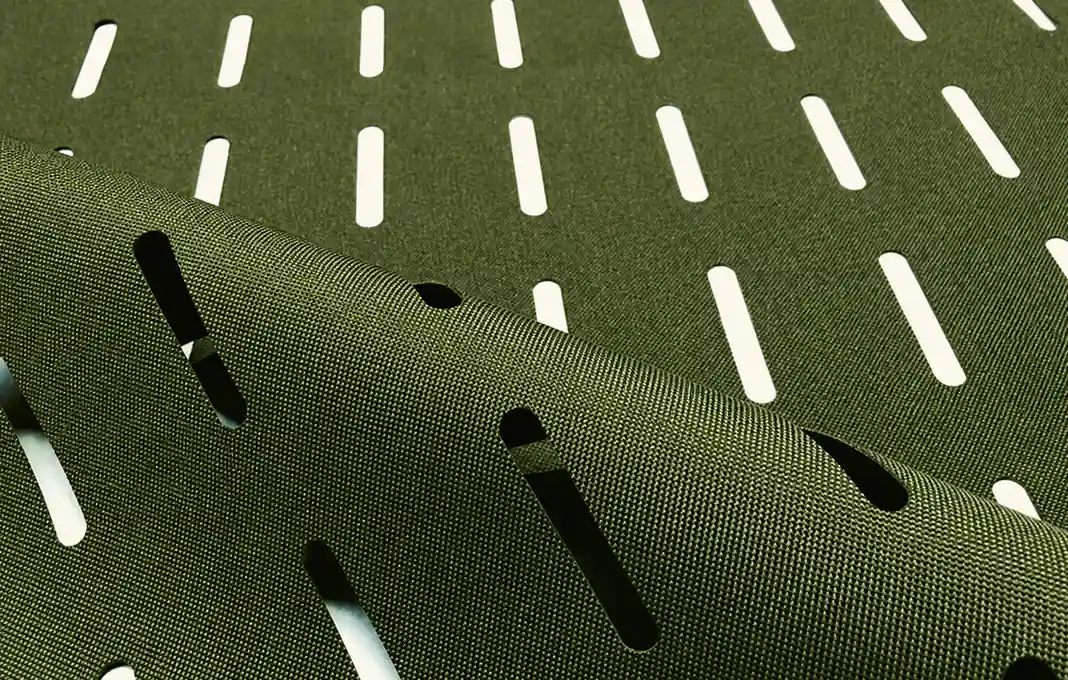
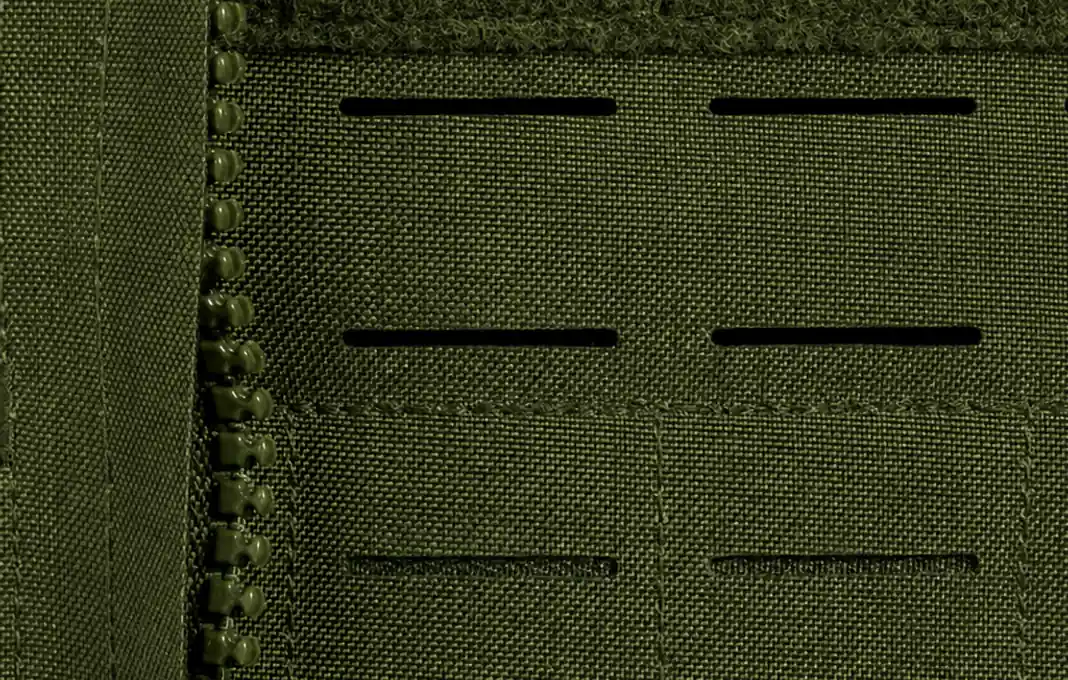
Laser-cut MOLLE creates attachment openings directly in a suitable panel rather than relying exclusively on separate webbing strips sewn onto the surface.
The slots are arranged according to a defined pattern intended to accommodate compatible pouches and accessories. Depending on the product, the panel may use a laminated textile construction, reinforced fabric, or another material system suitable for the intended laser-cutting process.
Compared with traditional sewn webbing, laser-cut construction can create a flatter, more integrated exterior appearance.
However, the quality of the finished panel depends on more than cutting precision. Material selection, layer construction, slot geometry, edge condition, and the integrity of the surrounding material all matter.
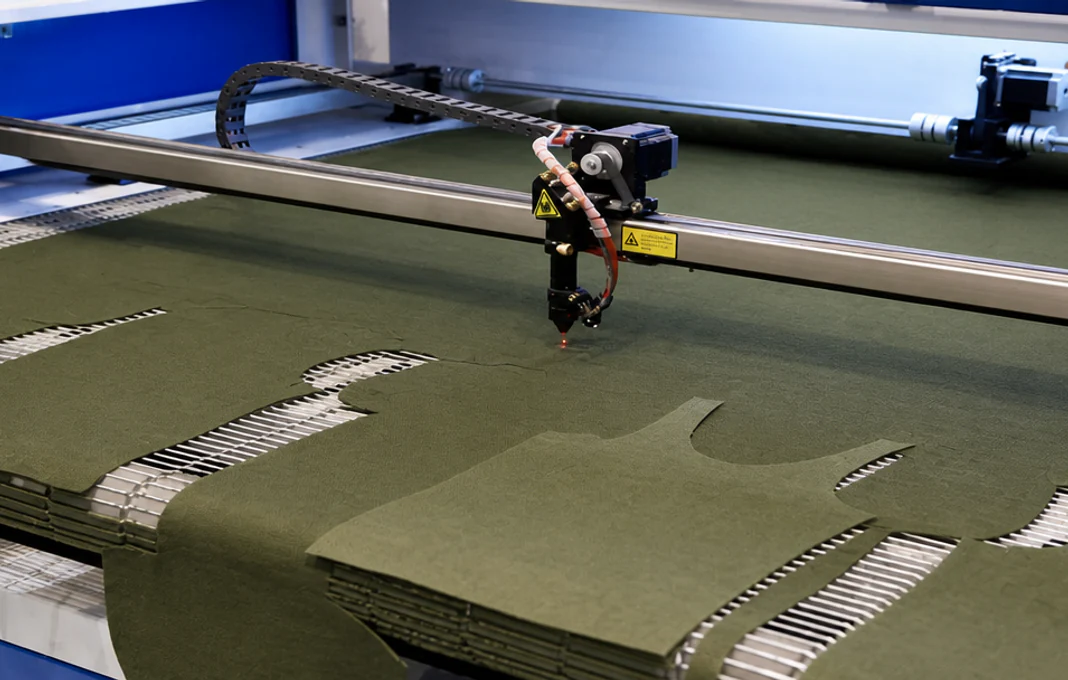
2.2 Laser-Cut MOLLE Manufacturing Process
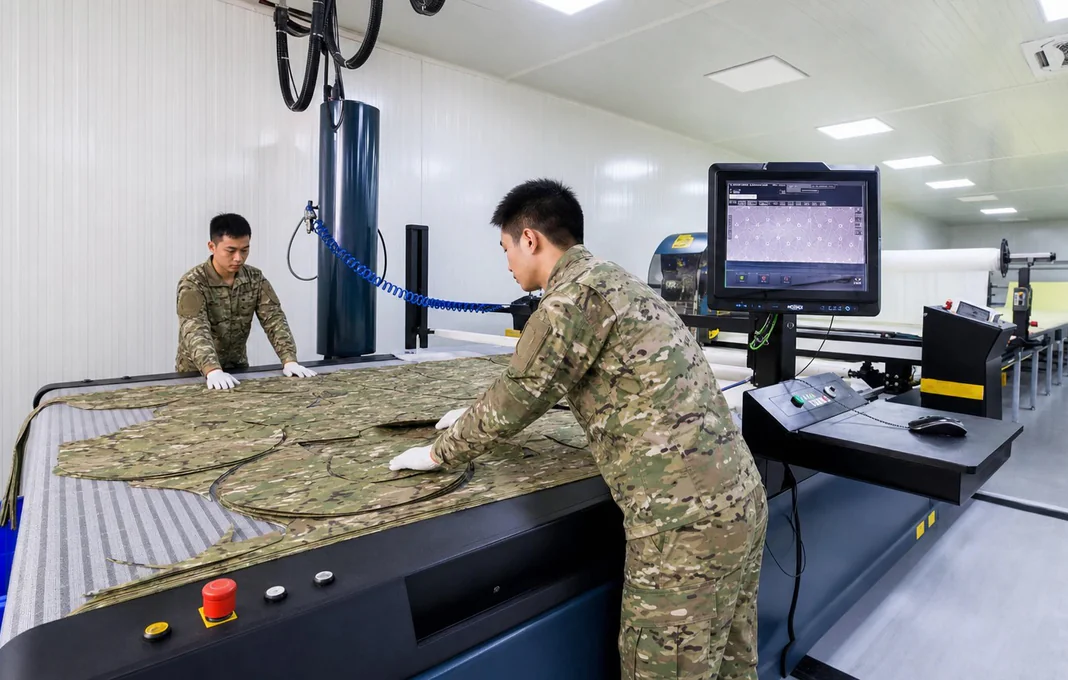
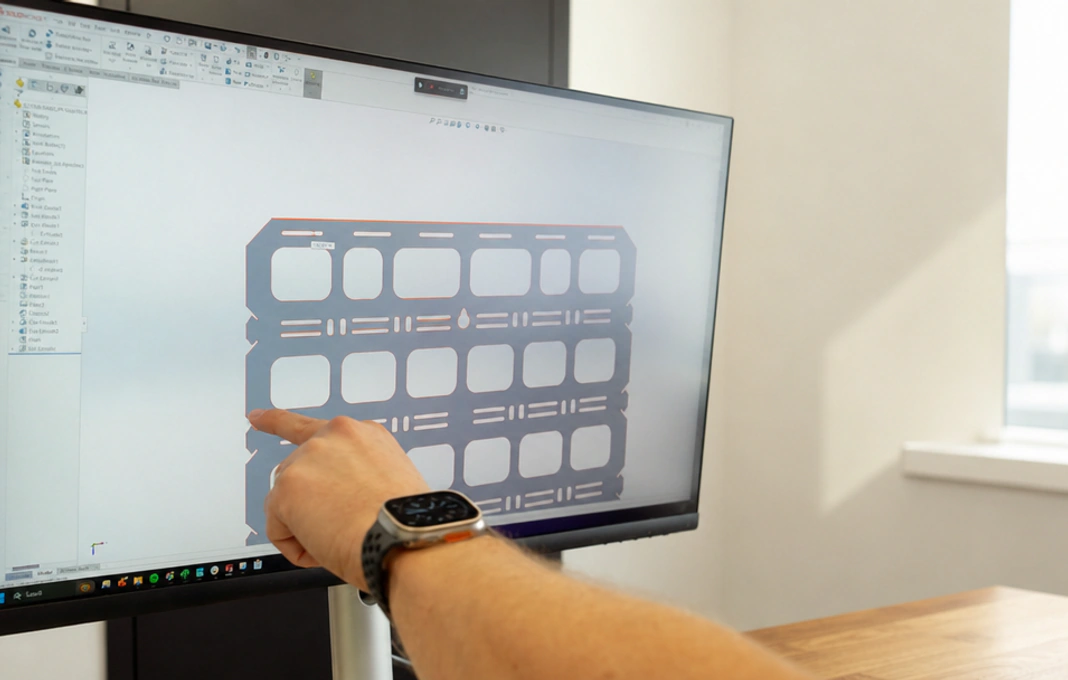
Laser-cut MOLLE introduces digital pattern preparation and controlled cutting into the manufacturing workflow.
|
Step 1: Digital pattern development
Designers prepare the slot layout, panel dimensions, spacing, and cutting pattern based on the approved product requirements. |
|
Step 2: Material selection and preparation
The manufacturer confirms that the selected fabric, laminate, coating, and reinforcement layers are suitable for the proposed process. |
|
Step 3: Laser cutting
The equipment follows the digital pattern to create the designated openings. Cutting parameters must be appropriate for the material and panel thickness. |
|
Step 4: Finishing, assembly, and inspection
The manufacturer examines cut edges, slot dimensions, and material condition. The panel is then reinforced, sewn, laminated, or assembled as required by the product design. |
2.3 Key Manufacturing Considerations
Laser-cut MOLLE shifts some manufacturing requirements from repeated webbing-sewing operations to digital cutting, material control, and downstream assembly.
Key considerations include:
- Cutting accuracy: Slot dimensions and positions must match the approved pattern.
- Material compatibility: Different fabrics, coatings, and laminates respond differently to laser processing.
- Edge quality: Excessive heat can cause discoloration, melting, or other material damage, depending on the construction.
- Panel integrity: Cutting must not compromise the material properties required for the intended application.
- Equipment and setup: Cutting capacity, pattern preparation, material handling, and process control influence production efficiency.
Laser-cutting equipment can reproduce defined patterns consistently under suitable conditions, but digital precision does not automatically guarantee a defect-free or functionally suitable finished product.
The material and manufacturing process still require verification.
Understanding how laser-cut panels are produced makes it easier to assess laser cut MOLLE vs traditional MOLLE in terms of design flexibility, material requirements, and finished-product quality.
3. Laser Cut MOLLE vs Traditional MOLLE: Key Manufacturing Differences
The main difference between the two systems is how their attachment structures are created. Traditional MOLLE relies on sewn textile webbing, while laser-cut MOLLE uses openings cut into a suitable panel.
The choice affects manufacturing operations, inspection priorities, material construction, and cost.
|
Comparison factor |
Traditional MOLLE |
Laser-Cut MOLLE |
|
Primary construction |
Webbing sewn onto a base panel |
Slots cut into a suitable panel |
|
Main production operations |
Measuring, positioning, sewing |
Digital pattern preparation and laser cutting |
|
Equipment requirements |
Textile cutting and industrial sewing equipment |
Laser-cutting equipment, plus sewing or assembly equipment where needed |
|
Внешний вид |
Raised webbing rows and visible stitching |
Flatter, more integrated slot pattern |
|
Вес |
Depends on webbing, thread, and base fabric |
May reduce material bulk, depending on panel construction |
|
Quality-control priorities |
Stitching, alignment, webbing attachment |
Slot dimensions, edge condition, panel integrity |
|
Design revisions |
May require changes to positioning guides and sewing instructions |
Digital patterns can simplify certain layout revisions |
|
Material requirements |
Suitable webbing, base fabric, thread, and reinforcement |
Materials and coatings compatible with the selected cutting process |
|
Production cost drivers |
Material consumption, sewing labor, handling, and inspection |
Equipment, setup, cutting time, material construction, finishing, and inspection |
|
Common applications |
Backpacks, tactical vests, plate carriers, pouches |
Backpacks, plate carriers, vests, and modular panels |
These are general manufacturing distinctions rather than universal performance rankings. Actual results depend on the product’s construction, manufacturing equipment, material specifications, order volume, and acceptance criteria.
3.1 Sewing Operations vs. Digital Cutting
Traditional MOLLE requires webbing to be positioned and stitched according to a defined layout. Repeated sewing operations can increase handling time, particularly when a panel contains many rows or complex attachment arrangements.
Laser-cut MOLLE can reduce the need to sew individual webbing rows onto the panel. Once the cutting pattern and process have been established, the equipment can reproduce the specified openings.
However, laser-cut panels may still require sewing, edge finishing, reinforcement, lamination, or integration into the finished product.
Therefore, comparing only sewing time with laser-cutting time does not provide a complete picture of manufacturing efficiency.
3.2 Design Flexibility and Repeatability
Traditional MOLLE layouts can be adapted by changing webbing placement, strip length, and sewing instructions. These changes may require adjustments to production guides and operator workflows.
Laser-cut designs can make certain pattern changes easier because the slot arrangement is defined digitally. This can be useful when developing customized panel layouts for different product sizes or accessory configurations.
Nevertheless, changing a digital pattern does not remove the need to evaluate material limitations, attachment compatibility, and manufacturing feasibility. Significant revisions may also require new samples and updated acceptance criteria.
3.3 Weight and Panel Construction
Laser-cut MOLLE is sometimes selected to reduce the bulk associated with separate webbing strips. Whether it produces a lighter finished product depends on the complete panel construction.
A laser-cut panel may require a relatively substantial laminate or reinforcement layer. A traditional webbing panel may use a lighter base fabric or a different reinforcement arrangement.
For an accurate comparison, buyers should request the finished panel or product weight rather than assume that the manufacturing method alone determines weight.
3.4 Cost and Production Efficiency
Traditional MOLLE cost is influenced by webbing consumption, sewing time, operator skill, and the number of handling and inspection operations.
Laser-cut MOLLE cost depends on the panel materials, equipment and setup, cutting time, finishing, assembly, and inspection requirements.
For high-volume orders, digital cutting may offer production advantages when the pattern, materials, and equipment are well matched. For other products, conventional sewing may be more economical because it uses an established workflow and readily available materials.
The more reliable comparison is the total cost of producing an approved, conforming finished product—not the cost of a single manufacturing operation.
4. Material Selection: How Materials Affect Both MOLLE Systems
Material selection is one of the most important decisions in MOLLE manufacturing. The attachment method, base fabric, coatings, reinforcement layers, and sewing or cutting process must work together to achieve the intended product specifications.
A manufacturing method should never be selected independently of the materials used to implement it.
4.1 Materials for Traditional MOLLE
Traditional MOLLE typically combines a textile base panel with separate webbing strips and sewing thread.
When selecting materials, manufacturers should consider:
- Base fabric: Its weight, weave, abrasion resistance, flexibility, and compatibility with the product design.
- Webbing: Its width, thickness, construction, and specified performance characteristics.
- Thread: Its suitability for the selected materials and sewing operations.
- Reinforcement: Additional layers or construction details required in designated areas.
- Material compatibility: Whether the fabric, webbing, thread, and coatings work together under the intended conditions.
The choice of material should be based on documented specifications and appropriate verification rather than appearance or a single fabric rating.
4.2 Materials for Laser-Cut MOLLE
Laser-cut MOLLE requires particular attention to the way materials respond to heat and how the panel retains its integrity after cutting.
Some designs use laminated textile constructions in which the outer fabric is bonded to one or more supporting layers. Other configurations may use different reinforced panel materials.
Important considerations include:
- Compatibility of the complete material construction with laser processing.
- Consistency of the laminate and bonding layers.
- Resistance to edge damage, scorching, or unwanted melting.
- Stability of the panel around the cut openings.
- Compatibility between the panel and any subsequent sewing or assembly operations.
Not every fabric or coating is suitable for every laser-cutting process. Material suppliers and manufacturers should confirm compatibility before committing to production.
4.3 How to Choose the Right Material
For both construction methods, begin with the intended application and define the product requirements.
Consider the following questions:
- What level of abrasion, flexibility, and environmental resistance is required?
- Which pouches and accessories must the panel accommodate?
- What are the target weight, thickness, and cost?
- Which materials are compatible with the proposed manufacturing process?
- What inspections or tests will demonstrate that the finished panel meets the specification?
Для custom tactical gear, evaluate the complete construction through representative samples. Material data is useful, but it does not independently establish the performance of a finished product.
5. Quality Control: What Manufacturers Should Inspect
Quality control is essential for both laser-cut MOLLE and traditional MOLLE. The inspection methods differ because the two systems introduce different potential manufacturing defects.
A reliable process starts with approved specifications and defines what an acceptable finished product must meet.
5.1 Traditional MOLLE Quality Checks
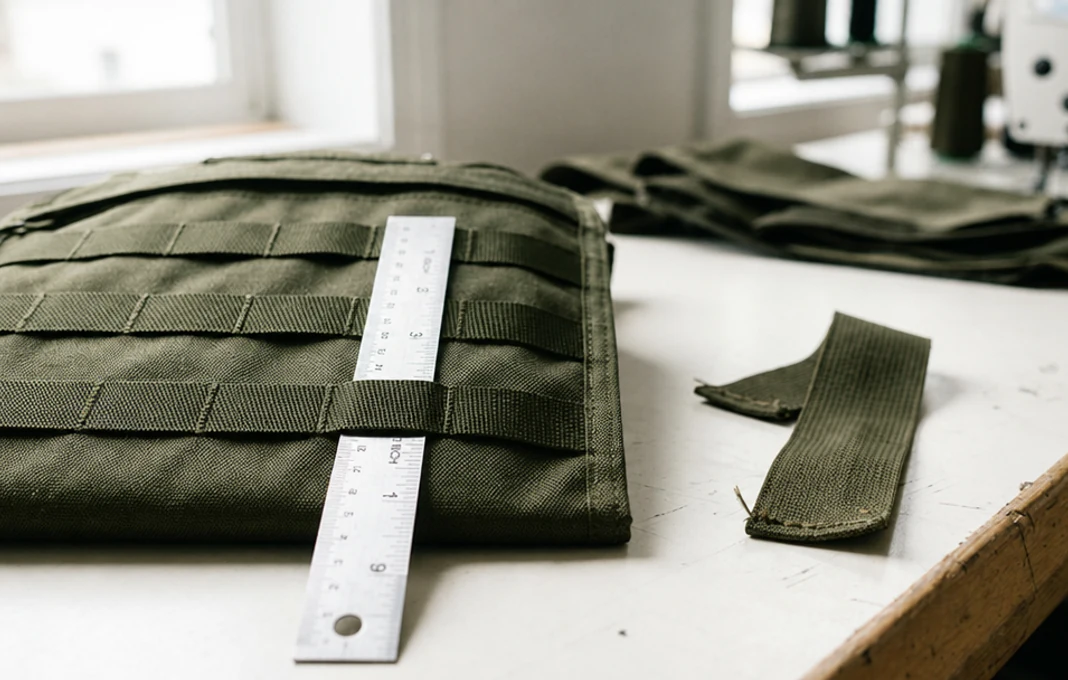
Traditional MOLLE inspections should focus on the quality and consistency of the sewn attachment structure.
Webbing alignment and spacing
Check that the webbing rows follow the approved layout and that the spacing is consistent with the required attachment configuration.
Stitching and seam finishing
Inspect stitch consistency, seam alignment, thread condition, and finishing. The acceptance criteria should reflect the product’s construction requirements.
Webbing attachment integrity
Verify that the webbing is securely attached and that designated reinforcement details match the approved specification.
Dimensions and repeatability
Compare the finished panel with the approved measurements. For bulk production, inspect samples from production batches according to the agreed inspection plan.
Accessory compatibility
Check the panel with the intended compatible pouches or accessories. Correct-looking webbing does not automatically prove that every attachment will fit or function as intended.
5.2 Laser-Cut MOLLE Quality Checks
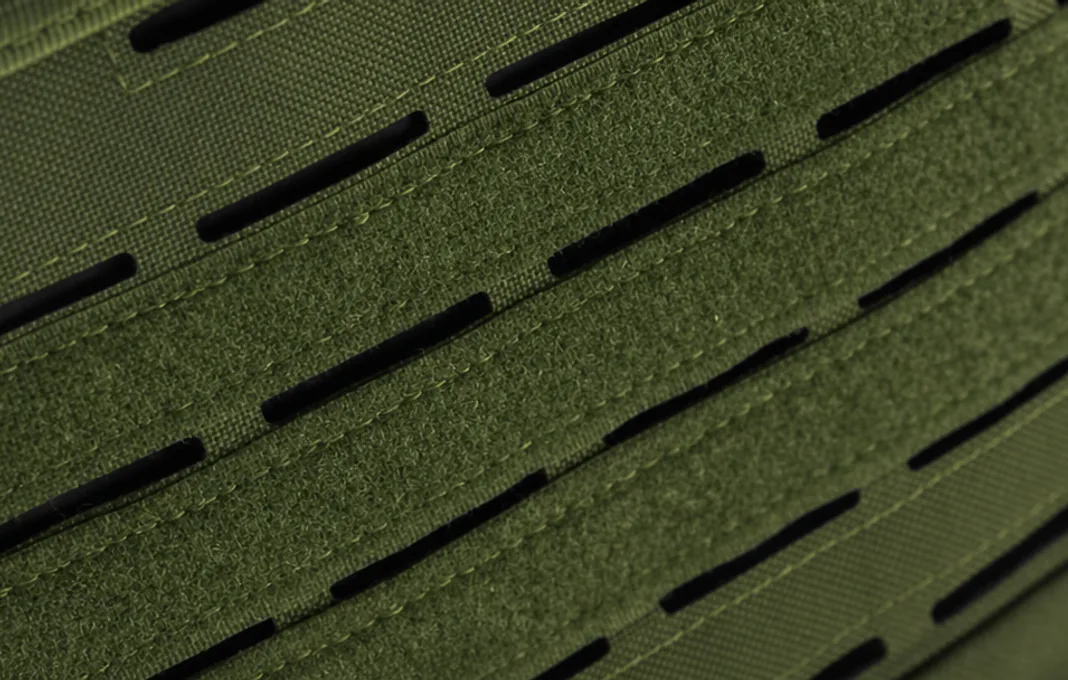
Laser-cut MOLLE requires additional attention to the openings and the material surrounding them.
Slot dimensions and positioning
Verify slot length, width, spacing, and location against the approved pattern and dimensional tolerances.
Cut-edge quality
Inspect for irregular edges, excessive discoloration, melting, or other signs of unsuitable cutting conditions.
Panel integrity
Check whether the material surrounding the openings shows damage or unwanted separation between layers.
Lamination and assembly
Where laminated or reinforced constructions are used, inspect the relevant bonding, seams, and assembly details.
Functional compatibility
Evaluate the panel with the intended attachments to confirm that the openings accommodate the specified accessories.
5.3 Functional Verification and Documentation
Neither inspection approach should rely on appearance alone.
A panel can look consistent while failing to meet a specified functional requirement. Depending on the product and intended use, manufacturers may need dimensional checks, attachment evaluations, material testing, or other appropriate verification.
For B2B procurement, a structured quality process should include:
- Approved drawings and material specifications.
- Defined inspection criteria and tolerances.
- Sample approval before bulk production.
- Documented inspection results.
- A process for identifying, investigating, and correcting defects.
The required verification should be proportionate to the product’s intended use and any applicable performance requirements.
6. Cost, Production Efficiency, and OEM/ODM Considerations
For brands and wholesale buyers, manufacturing decisions must satisfy both technical and commercial requirements. A construction method that offers an attractive appearance may not necessarily deliver the best overall cost or production outcome.
6.1 Understanding the Total Manufacturing Cost
The cost of traditional MOLLE can include:
- Base fabric and webbing consumption.
- Cutting and material preparation.
- Webbing positioning and sewing labor.
- Reinforcement and additional assembly.
- Inspection, rework, and production handling.
The cost of laser-cut MOLLE can include:
- Base fabric, laminate, and reinforcement materials.
- Digital pattern preparation and equipment setup.
- Laser-cutting time and equipment operation.
- Finishing, sewing, lamination, and assembly.
- Inspection, scrap, and rework.
These cost categories overlap in some areas, and their relative importance varies by design.
For example, a simple panel with a conventional webbing layout may be economical to sew. A complex customized slot pattern may benefit from digital cutting if the equipment and material construction are appropriate.
However, equipment investment alone does not determine the cost of a finished product. Production volume, panel complexity, material yield, and downstream assembly must also be considered.
6.2 Production Efficiency and Scalability
Traditional MOLLE production relies on a consistent sewing workflow. Efficiency depends on operator experience, accurate positioning, suitable fixtures, and the number of sewing operations required.
Laser-cut MOLLE relies on an established digital pattern, appropriate cutting parameters, stable material handling, and sufficient equipment capacity.
Digital cutting can improve repeatability for defined patterns, but it does not eliminate inspection or finishing requirements. Similarly, experienced sewing teams can produce consistent traditional MOLLE panels when suitable production controls are in place.
When evaluating scalability, buyers should ask manufacturers about:
- Production capacity and typical workflow.
- Sample-to-production consistency.
- Material availability and supply continuity.
- Inspection and rework procedures.
- Lead times for new patterns or design revisions.
The relevant measure is the manufacturer’s ability to produce the required quality consistently at the expected volume.
6.3 Customization for Tactical Gear Brands
OEM/ODM projects often involve custom panel layouts, product dimensions, colors, branding, and accessory configurations.
Traditional MOLLE customization may involve changing webbing positions, lengths, reinforcement details, or sewing arrangements.
Laser-cut MOLLE customization may involve revising slot patterns, panel shapes, and material constructions.
Both methods require clear specifications. Before production, buyers and tactical gear suppliers should confirm:
- The approved design and attachment layout.
- Materials, colors, and component specifications.
- Dimensional tolerances and inspection criteria.
- Logo, label, and packaging requirements.
- Sample approval and revision procedures.
- Minimum order quantities and production lead times.
A clear manufacturing brief helps reduce misunderstandings and provides a consistent basis for evaluating the finished products.
7. Which MOLLE Manufacturing Method Is Better for Different Products?
There is no universally superior MOLLE construction method. The appropriate choice depends on the product design, material requirements, attachment configuration, target market, and production capabilities.
7.1 Tactical Backpacks
Tactical backpacks may use MOLLE panels on the front, sides, or other designated areas.
Traditional sewn webbing can be suitable when the design calls for established textile construction and raised webbing rows. Laser-cut panels may be appropriate when a flatter exterior or a specific integrated attachment layout is desired.
Buyers should consider:
- The intended pouch and accessory configuration.
- Panel flexibility and the backpack’s overall dimensions.
- Weight and material requirements.
- Attachment layout and accessibility.
- Manufacturing cost and consistency across bulk orders.
A backpack’s overall carrying performance also depends on its seams, compartments, straps, reinforcement, and other structural features—not only the MOLLE panel.
7.2 Plate Carriers and Tactical Vests
Plate carriers and tactical vests require careful consideration of panel construction, fit, adjustment systems, and accessory placement.
Traditional MOLLE may suit designs that use sewn webbing as part of their overall construction. Laser-cut panels may be appropriate where the selected materials and panel structure support the intended slot layout.
For these products, buyers should evaluate:
- Compatibility with the intended accessories.
- Panel dimensions and construction.
- Stitching or cut-edge quality.
- Reinforcement and attachment requirements.
- Fit and mobility within the intended configuration.
Where a carrier is designed to accommodate protective inserts, its specifications and applicable validation requirements must be assessed separately. A MOLLE construction method does not establish ballistic protection or other protective performance.
7.3 Chest Rigs and Modular Pouches
Chest rigs and modular pouches often require compact attachment layouts and careful management of overall bulk.
The appropriate method depends on how the panel integrates with the rest of the product.
For example, a design may prioritize a particular pouch arrangement, flexibility, or low-profile appearance. These objectives should be evaluated against material behavior, attachment compatibility, sewing or cutting constraints, and the intended use.
Rather than selecting a method based on appearance alone, buyers should review a sample with the intended accessories installed.
7.4 Hybrid MOLLE Designs
Hybrid construction combines sewn webbing and laser-cut panels within the same product.
A tactical backpack, for example, might use a laser-cut front panel while retaining conventional sewn webbing on selected side sections.
This approach can allow designers to assign different construction methods to different areas according to their functional requirements.
Potential considerations include:
- Whether each panel uses the most suitable construction method.
- The interaction between different materials and layers.
- Assembly complexity and production sequence.
- Consistency in appearance, dimensions, and finishing.
- The additional inspection requirements introduced by multiple construction methods.
Hybrid designs can provide useful flexibility, but they should be evaluated as complete products rather than assumed to combine the advantages of both methods automatically.
8. Common Mistakes Buyers Should Avoid
When comparing laser cut MOLLE vs traditional MOLLE, avoid these common purchasing mistakes.
Mistake 1: Choosing Laser-Cut MOLLE Based on Appearance Alone
A clean, integrated appearance does not establish attachment strength, material durability, or long-term performance. Evaluate the actual construction and relevant test evidence.
Mistake 2: Assuming Traditional MOLLE Is Always Heavier
Weight depends on the complete panel construction, including the base fabric, webbing, reinforcement, and any laminate. Compare measured weights of equivalent finished components.
Mistake 3: Treating All Laser-Cut Materials as Equally Suitable
Different materials and coatings respond differently to laser processing. Confirm compatibility and inspect representative samples before approving production.
Mistake 4: Ignoring Attachment Compatibility
A panel may appear to have a standard MOLLE layout but still fail to accommodate the intended accessories correctly. Verify dimensions and functionality using the actual intended attachments.
Mistake 5: Comparing Quotations Without Comparing Specifications
Two suppliers may quote products that look similar but use different materials, reinforcement, construction methods, or quality-control procedures.
Compare quotations against the same technical brief and acceptance criteria.
Mistake 6: Skipping Sample Approval
A sample helps establish a shared reference for materials, dimensions, workmanship, and appearance. For customized or bulk orders, approve the relevant specifications before mass production.
Mistake 7: Assuming a Manufacturing Method Guarantees Performance
Neither sewing nor laser cutting automatically guarantees a particular level of durability or load-bearing capability. Such claims require suitable evidence and product-specific verification.
9. Questions to Ask a MOLLE Производитель тактического снаряжения
Before choosing a manufacturing partner, ask questions that reveal the supplier’s actual production capabilities and quality-control processes.
Materials and Construction
- Which base fabrics, webbing materials, laminates, and reinforcement options are available?
- How do you confirm material compatibility with the proposed manufacturing method?
- Can you explain the main construction trade-offs for our intended product?
Manufacturing Capabilities
- Which sewing and laser-cutting operations can you perform in-house?
- How do you control webbing spacing and stitching consistency?
- How do you verify slot dimensions and cut-edge quality?
- Can you support hybrid MOLLE construction?
Обеспечение качества
- What inspection procedures are used during production?
- How are finished products compared with approved samples?
- What functional checks are available for the intended attachments?
- How are defects recorded and corrective actions managed?
Commercial Requirements
- What are the minimum order quantities?
- What are the sampling and production lead times?
- Which customization and private-label options are available?
- How are design revisions, material substitutions, and sample approvals documented?
The answers should be evaluated against your project’s actual requirements. Clear communication, documented specifications, and a repeatable production process are more useful indicators than broad claims that one manufacturing method is always better.
10. Conclusion: Choose the MOLLE Manufacturing Method That Fits the Product
Laser-cut MOLLE and traditional MOLLE serve a similar purpose but use different manufacturing approaches.
Traditional MOLLE relies on sewn webbing, making webbing placement, stitching consistency, and attachment integrity central to quality control. Laser-cut MOLLE uses openings created in a suitable panel, making digital pattern accuracy, material compatibility, cut-edge quality, and panel integrity important considerations.
Neither approach is inherently superior for every tactical gear product.
The right choice depends on the intended application, material construction, attachment requirements, desired appearance, production volume, and total manufacturing cost. For some products, traditional sewn webbing may be the most practical option. For others, laser-cut panels or a hybrid design may better match the requirements.
For B2B buyers, the most reliable decision-making process is to define the specifications, compare equivalent samples, verify attachment compatibility, and establish clear acceptance criteria before bulk production.
Ultimately, choosing between laser-cut MOLLE and traditional MOLLE depends on your product design, material specifications, target market, and production requirements. Understanding the key differences in laser cut MOLLE vs traditional MOLLE can help buyers make better-informed sourcing decisions. Regardless of the method selected, consistent manufacturing quality and compliance with documented specifications remain essential to producing reliable tactical gear.
Exploring Custom MOLLE Tactical Gear Manufacturing?
LUPU Tactical Gear works with brands, distributors, wholesalers, and business buyers seeking тактические рюкзаки на заказ, plate carriers, tactical vests, and other modular equipment.
If you are developing a new product or comparing traditional sewn MOLLE with laser-cut MOLLE, contact our team to discuss your design requirements, material options, customization needs, and manufacturing project.