Introduction — Why This Comparison Matters
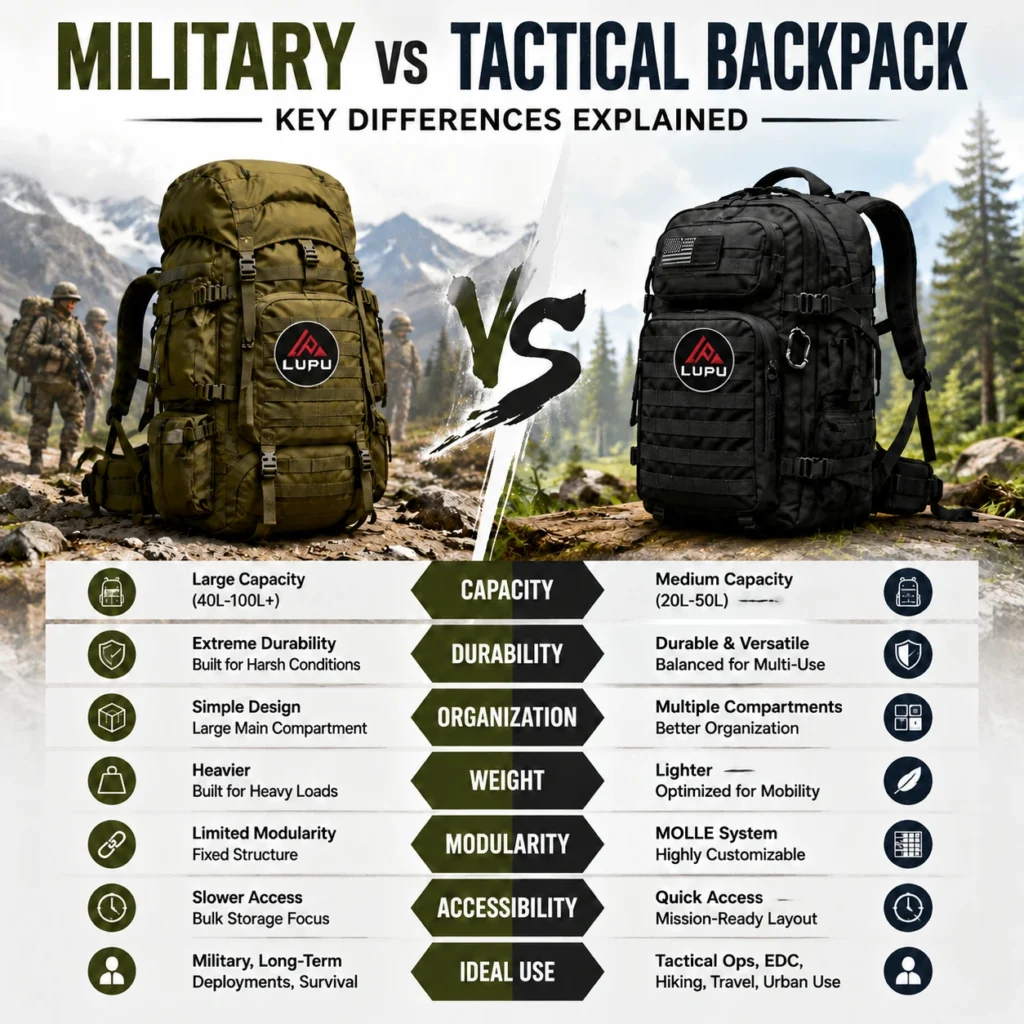
The debate around Military vs Tactical Backpack is more than a matter of aesthetics or branding—it reflects two fundamentally different design philosophies in load carriage systems. While both categories share roots in military-grade engineering, they have evolved to serve distinct operational needs.
In today’s market, these backpacks are used not only by soldiers but also by hikers, survivalists, law enforcement personnel, travelers, and everyday carry (EDC) users. However, confusing the two can lead to poor gear choices, reduced comfort, and even mission failure in demanding environments.
This guide provides a deep, expert-level breakdown of Military vs Tactical Backpack, helping you understand not just what separates them, but why those differences matter in real-world use.
Understanding Military Backpacks
Definition and Core Purpose
A military backpack is engineered primarily for armed forces engaged in long-duration missions. Its core objective is simple: carry heavy loads reliably over extended periods in harsh environments.
Unlike civilian outdoor packs, military backpacks prioritize endurance, structural integrity, and operational simplicity over convenience or modular customization.
Key Characteristics
Military backpacks are built for survival-level stress conditions. Common features include:
- Heavy-duty fabrics such as Кордура nylon or ballistic nylon
- Reinforced stitching and load-bearing frames
- High capacity, typically ranging from 40L to over 100L
- Minimal compartmentalization for maximum bulk storage efficiency
- High tolerance for abrasion, moisture, and extreme weather conditions
The design philosophy is deliberately conservative: fewer moving parts, fewer weak points.
Typical Use Scenarios
Military backpacks are commonly used for:
- Extended field deployments
- Long-range patrol operations
- Heavy logistics transport
- Survival situations requiring maximum gear capacity
- Expedition-level outdoor travel with self-sufficiency requirements
In short, they are designed for endurance-first missions where failure is not an option.
Understanding Tactical Backpacks
Definition and Core Purpose
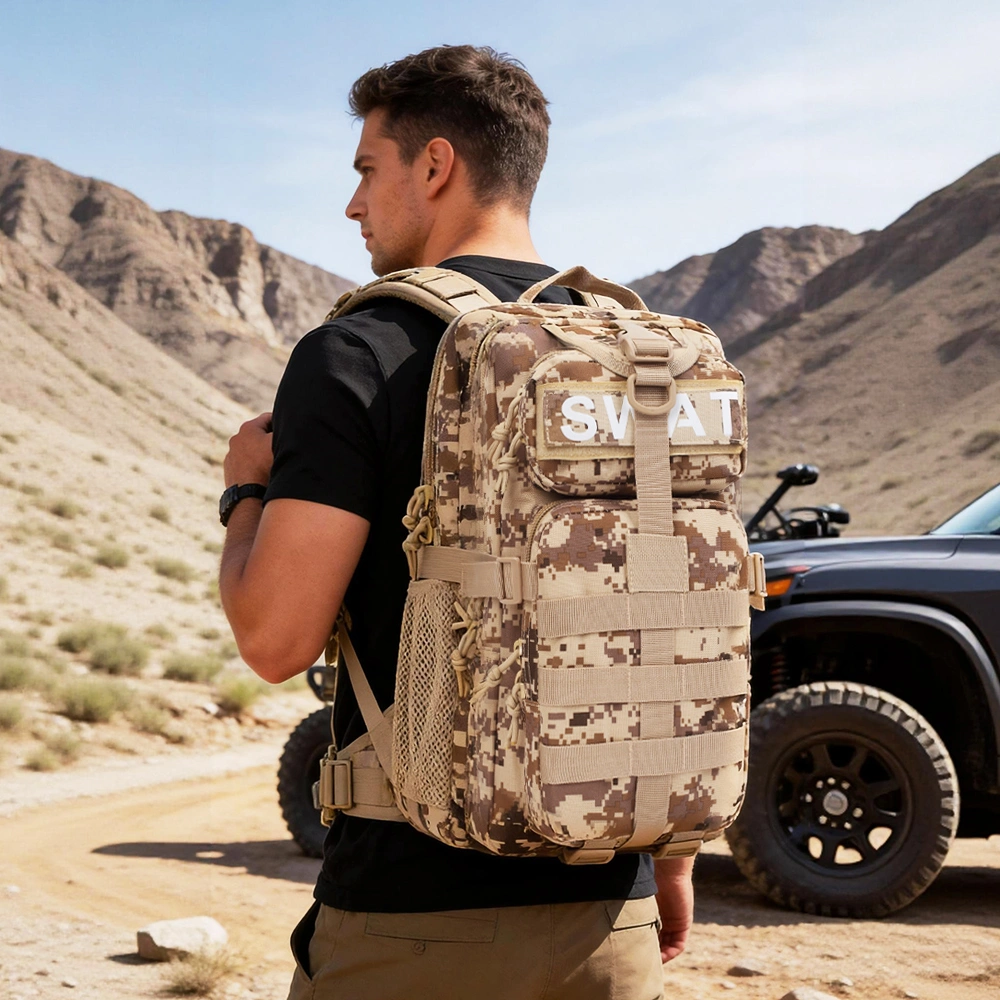
A тактический рюкзак is a modern evolution inspired by military gear but optimized for flexibility, accessibility, and modular customization. It bridges the gap between battlefield utility and civilian practicality.
While still rugged, tactical backpacks are designed for users who require rapid access and adaptable load configurations.
Key Characteristics
The defining feature of tactical backpacks is modularity. Key elements include:
- MOLLE (Modular Lightweight Load-carrying Equipment) webbing system
- Medium capacity range, typically 20L–50L
- Multiple compartments for structured organization
- Quick-access pockets for essential gear
- Concealed or specialized storage sections
- Ergonomic designs optimized for mobility
Unlike traditional military packs, tactical backpacks emphasize efficiency of access over sheer volume.
Typical Use Scenarios
Tactical backpacks are widely used in:
- Hiking and day trekking
- Urban commuting and EDC setups
- Law enforcement and security operations
- Travel and short-term field missions
- Emergency preparedness (bug-out bags)
They are ideal for environments requiring fast reaction and organized access to gear.
Military vs Tactical Backpack — Core Differences Explained
Understanding the Military vs Tactical Backpack distinction requires examining their design philosophy, structure, and intended use cases.
1. Design Philosophy
- Military Backpack: Built for durability and long-term operational endurance
- Tactical Backpack: Built for adaptability, modularity, and multi-scenario use
Military design is rigid and mission-stable, while tactical design is dynamic and user-driven.
2. Capacity and Storage Layout
Military backpacks typically feature large, open storage compartments designed for bulk gear.
Tactical backpacks use segmented compartments that improve organization and accessibility.
In practical terms:
- Military = “carry everything in one secure system”
- Tactical = “organize everything for fast retrieval”
3. Materials and Durability
Both categories use high-strength materials, but with different priorities:
- Military backpacks prioritize maximum durability under extreme load and abrasion
- Tactical backpacks balance durability with weight efficiency and mobility
Military packs often feel heavier but more “industrial-grade”, while tactical packs feel lighter and more refined.
4. Weight and Portability
- Military backpacks: heavier due to reinforced frames and larger capacity
- Tactical backpacks: lighter and optimized for mobility
This difference becomes critical during long-distance movement or urban navigation.
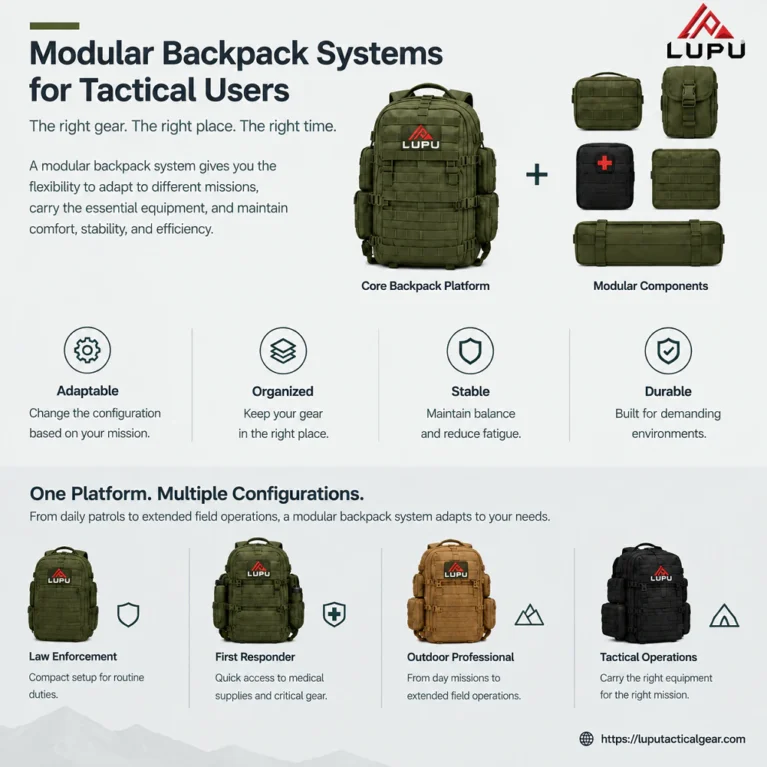
5. Modular Systems (MOLLE Integration)
- Military backpacks: limited or standardized modularity
- Tactical backpacks: extensive MOLLE/PALS webbing for attachments
This is one of the most defining differences in the Military vs Tactical Backpack comparison. Tactical systems allow users to configure their gear dynamically based on mission needs.
6. Accessibility and Organization
- Military backpacks prioritize storage efficiency over quick access
- Tactical backpacks prioritize rapid retrieval of essential items
For example, accessing a first-aid kit or flashlight is significantly faster in a tactical system.
7. User Profile and Intended Environment
- Military backpacks: professional soldiers, long-term deployments, survival scenarios
- Tactical backpacks: civilians, hikers, law enforcement, urban professionals, preppers
Each is optimized for a different operational reality.
Military vs Tactical Backpack — Core Differences
|
Аспект |
Военный рюкзак |
Тактический рюкзак |
|
Философия дизайна |
Built for durability, endurance, and long-term military operations. |
Built for adaptability, modularity, and multi-scenario use. |
|
Capacity & Storage Layout |
Large capacity (40L–100L+), open storage for bulk equipment. |
Medium capacity (20L–50L), segmented compartments for organization. |
|
Materials & Durability |
Heavy-duty materials (e.g., Cordura, ballistic nylon), extreme durability under harsh conditions. |
Durable materials with balanced weight efficiency and protection. |
|
Weight & Portability |
Heavier, optimized for carrying heavy loads over long distances. |
Lighter, optimized for mobility and agility. |
|
Modular Systems |
Limited modularity, fixed internal structure. |
Extensive MOLLE/PALS webbing for attachments and customization. |
|
Accessibility & Organization |
Simplified layout, slower access, bulk storage oriented. |
Multiple compartments, quick-access design, mission-ready organization. |
|
User Profile & Environment |
Military personnel, long-term deployments, survival missions. |
Civilians, hikers, law enforcement, urban users, EDC scenarios. |
|
Основная цель |
Maximum endurance and load-bearing stability in extreme environments. |
Fast access, flexibility, and multi-environment adaptability. |
|
Best Use Scenarios |
Field operations, expedition travel, survival situations. |
Hiking, commuting, travel, emergency preparedness, tactical use. |
Real-World Performance Comparison
Urban Environments
In cities, tactical backpacks clearly outperform military ones due to better organization, lighter weight, and easier access to everyday items.
Outdoor Expeditions
For multi-day wilderness survival or heavy expedition loads, military backpacks excel due to their capacity and structural endurance.
Emergency Preparedness (Bug-Out Scenarios)
Tactical backpacks are often preferred because they allow fast access to critical survival gear.
Long-Term Deployment
Military backpacks remain the gold standard for extended operations requiring high load stability and durability.
Advantages and Disadvantages
Военные рюкзаки
Преимущества:
- Extremely durable under harsh conditions
- High load capacity
- Stable weight distribution for heavy gear
Disadvantages:
- Heavy and less mobile
- Limited compartment organization
- Slower gear access
Тактические рюкзаки
Преимущества:
- Highly modular and customizable
- Lightweight and mobile
- Excellent gear organization
- Fast access to essentials
Disadvantages:
- Lower maximum capacity compared to military packs
- May sacrifice some extreme durability under prolonged heavy loads
How to Choose Between Military vs Tactical Backpack?
Choosing the right backpack depends entirely on use case rather than just the tactical brand name.
Ask yourself:
- Do I need long-term load carriage or short-to-medium missions?
- Is accessibility or capacity more important?
- Will I operate in urban, outdoor, or mixed environments?
- Do I need modular attachments for evolving gear setups?
Practical Recommendations
- Choose a military backpack if:
- You carry heavy gear for extended periods
- You prioritize durability over convenience
- You operate in survival or field deployment conditions
- Choose a tactical backpack if:
- You need fast access to organized gear
- You operate across mixed environments
- You prefer modular customization and flexibility
Common Myths and Misconceptions
“Military backpacks are always better“
Not true. They are better for endurance missions, but not for everyday usability or quick-access needs.
“Tactical backpacks are just fashion gear“
Incorrect. Tactical backpacks are functional systems designed for efficiency and modularity.
“They are interchangeable“
Only partially. While they overlap, each is optimized for different operational requirements.
The Convergence Trend — Modern Hybrid Designs
The modern backpack industry is increasingly blending the best of both worlds. Many производители тактического снаряжения now produce hybrid models that combine:
- Military-grade durability
- Tactical modularity (MOLLE systems)
- Lightweight composite materials
- Improved ergonomic designs
This convergence reflects the rise of EDC culture, survival preparedness, and multi-role outdoor usage.
Заключение
The Military vs Tactical Backpack comparison ultimately comes down to purpose-driven design. Military backpacks are built for endurance, capacity, and harsh operational stability. Tactical backpacks are engineered for flexibility, accessibility, and modern multi-environment use.
There is no universal “better” option—only the right tool for the right mission. Understanding these differences ensures better performance, improved comfort, and more effective gear selection in any scenario.
ЧАСТО ЗАДАВАЕМЫЕ ВОПРОСЫ
What is the main difference between military and tactical backpacks?
Military backpacks focus on endurance and high-capacity load carriage, while tactical backpacks prioritize modularity and accessibility.
Can a military backpack be used for hiking?
Yes, but it may feel heavier and less organized compared to hiking or tactical packs.
What is the MOLLE system?
MOLLE is a modular webbing system that allows users to attach additional pouches and gear externally.
Are tactical backpacks waterproof?
Many are water-resistant, but full waterproofing depends on material and design.
Which is better for everyday use?
Tactical backpacks are generally better suited for daily use due to organization and lighter weight.