Introduction: Why ISO Certification Has Become a Critical Standard in Tactical Gear Manufacturing
The tactical equipment industry operates under a level of performance expectation that few other manufacturing sectors experience. Tactical gear is not simply designed for everyday use—it is developed for demanding environments where durability, reliability, and consistency are essential.
Whether used by military personnel, law enforcement professionals, security teams, outdoor specialists, or professional end users, tactical equipment must perform under pressure. Products such as tactical backpacks, plate carriers, load-bearing equipment, pouches, protective accessories, and mission-specific gear are expected to maintain functionality despite exposure to harsh weather, heavy loads, repeated use, and unpredictable operating conditions.
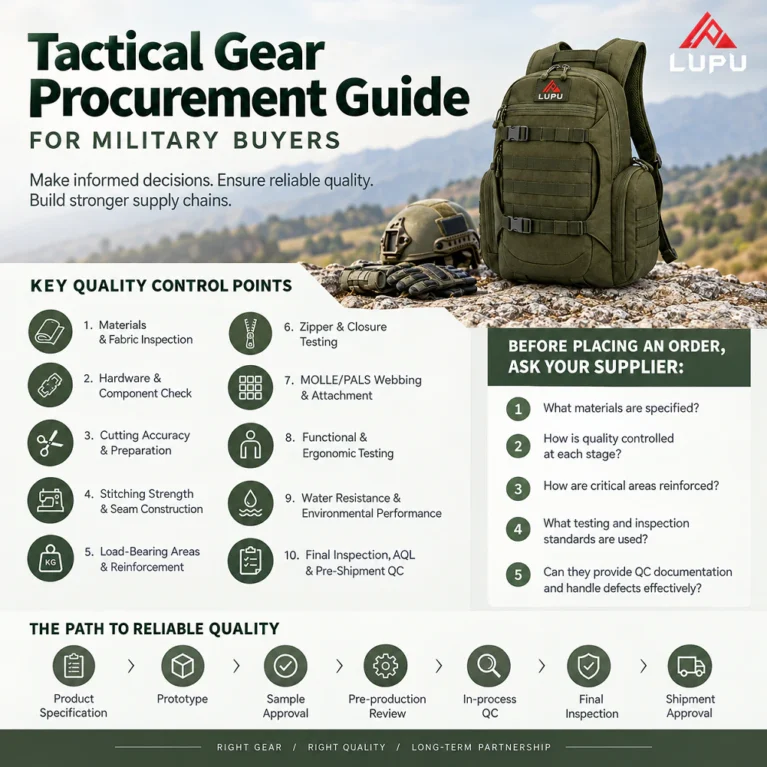
As global tactical equipment markets continue to mature, buyers are becoming increasingly focused on manufacturing credibility. Product appearance, competitive pricing, and production capacity are no longer enough to establish supplier trust. Professional buyers now evaluate manufacturers based on deeper operational capabilities, including:
- Quality management systems
- Production consistency
- Material control
- Manufacturing traceability
- Process reliability
- Continuous improvement capability
This is why ISO Tactical Gear manufacturing has become an increasingly important consideration for brands, distributors, and professional procurement organizations.
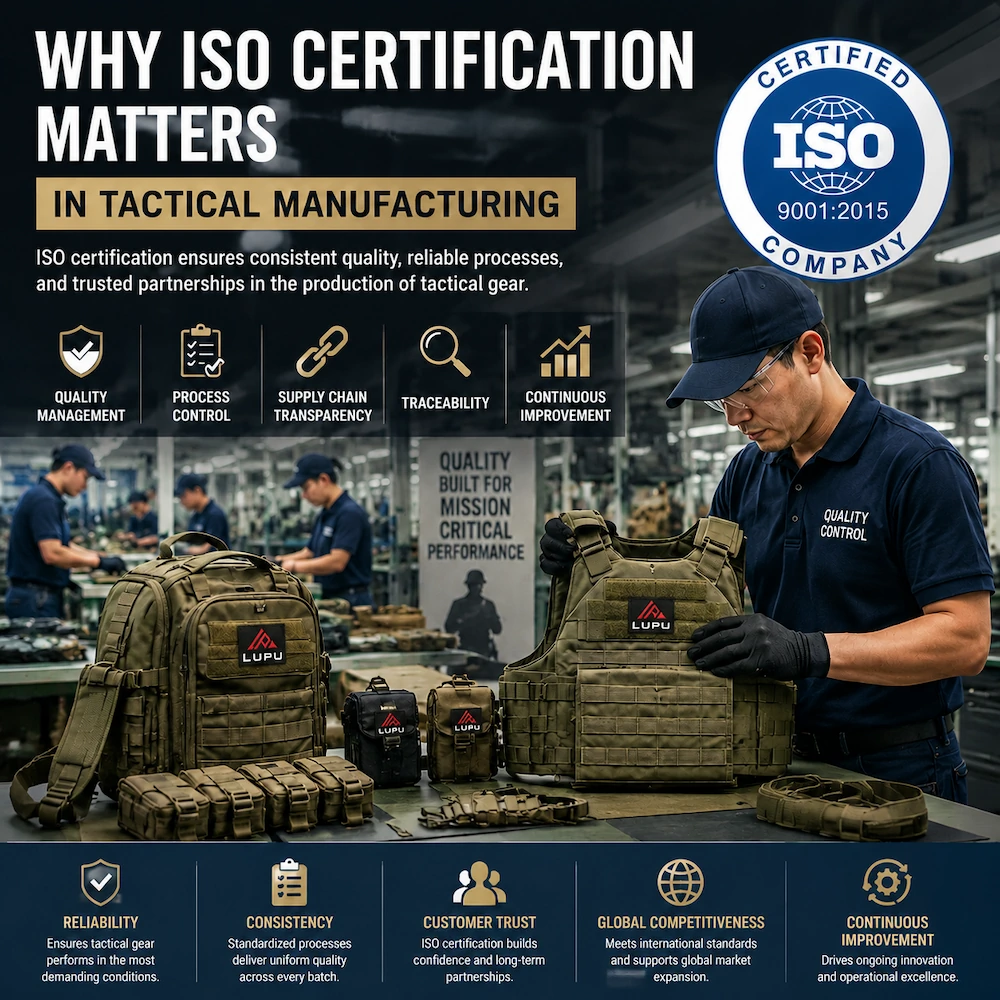
An ISO-certified tactical gear manufacturer demonstrates that its production processes are managed according to internationally recognized quality principles. While ISO certification does not mean that every product automatically meets a specific military specification or operational requirement, it provides strong evidence that the manufacturer has established systems to control quality, reduce risks, and improve manufacturing performance.
For companies sourcing tactical equipment, choosing an ISO Tactical Gear supplier is not simply about purchasing a product. It is about partnering with a manufacturer that understands quality management, operational discipline, and long-term reliability.
1. Understanding What ISO Tactical Gear Really Means
1.1 ISO Certification Does Not Certify the Gear — It Certifies the Manufacturing System
One of the most common misunderstandings about ISO Tactical Gear is the assumption that ISO certification directly approves the tactical product itself.
In reality, ISO standards primarily evaluate the management systems behind manufacturing operations.
The most widely recognized quality standard used by tactical equipment manufacturers is ISO 9001, which focuses on quality management systems.
An ISO 9001-certified tactical gear manufacturer has demonstrated that it follows structured procedures for:
- Production planning
- Quality control
- Supplier management
- Risk identification
- Process monitoring
- Corrective action
- Continuous improvement
The value of ISO certification is therefore not limited to a certificate displayed on a company website. Its real importance lies in creating a manufacturing environment where quality can be consistently achieved.
A professional buyer does not only ask:
“Can this manufacturer produce a good tactical product?”
The more important question is:
“Can this manufacturer repeatedly produce the same high-quality tactical product at commercial scale?”
ISO systems are designed to answer that question.
2. Why ISO Tactical Gear Manufacturers Gain More Trust From Professional Buyers
2.1 The Growing Expectations of Global Tactical Equipment Procurement
Modern tactical gear supply chains involve multiple stakeholders:
- Tactical brands
- Government contractors
- Defense-related suppliers
- Law enforcement distributors
- International wholesalers
- OEM partners
Each stakeholder faces different operational risks.
A procurement manager selecting a tactical gear supplier must evaluate:
- Manufacturing reliability
- Delivery consistency
- Quality documentation
- Production scalability
- Supplier accountability
Without a structured quality system, even experienced manufacturers may struggle to demonstrate consistent performance.
An ISO-certified tactical gear manufacturer can provide stronger confidence through documented processes and measurable controls.
2.2 ISO Certification Creates Transparency in the Supply Chain
Professional buyers increasingly require visibility into how products are made.
ISO-based manufacturing systems improve transparency by establishing:
- Defined production procedures
- Controlled inspection methods
- Documented quality requirements
- Supplier evaluation processes
- Internal audit mechanisms
This allows customers to better understand how quality is managed throughout the manufacturing lifecycle.
In international tactical equipment sourcing, transparency is a competitive advantage.
3. ISO 9001: The Foundation of High-Quality ISO Tactical Gear Manufacturing
3.1 Establishing a Professional Quality Management System
Producing reliable tactical equipment requires more than skilled workers and quality materials. It requires a controlled manufacturing system where every important process is clearly defined.
ISO 9001 provides a framework for building this system.
For tactical gear manufacturers, this includes:
Production Process Control
A professional manufacturing process should define:
- Manufacturing procedures
- Production standards
- Inspection requirements
- Quality checkpoints
- Responsibility ownership
This reduces uncertainty and ensures that production results are repeatable.
3.2 Material Control: The Starting Point of Tactical Gear Quality
The performance of tactical equipment begins with raw materials.
A high-quality tactical gear manufacturer must carefully manage:
- Fabrics
- Webbing materials
- Buckles
- Hook-and-loop components
- Hardware accessories
- Reinforcement materials
Material inconsistency can affect:
- Product lifespan
- Load performance
- Comfort
- Operational reliability
ISO-based supplier management helps manufacturers establish stronger controls over incoming materials.
This includes:
- Supplier qualification
- Material verification
- Purchasing specifications
- Incoming inspection procedures
3.3 Production Control Improves Product Consistency
Tactical gear often contains multiple components and complex construction requirements.
Examples include:
- Reinforced stitching areas
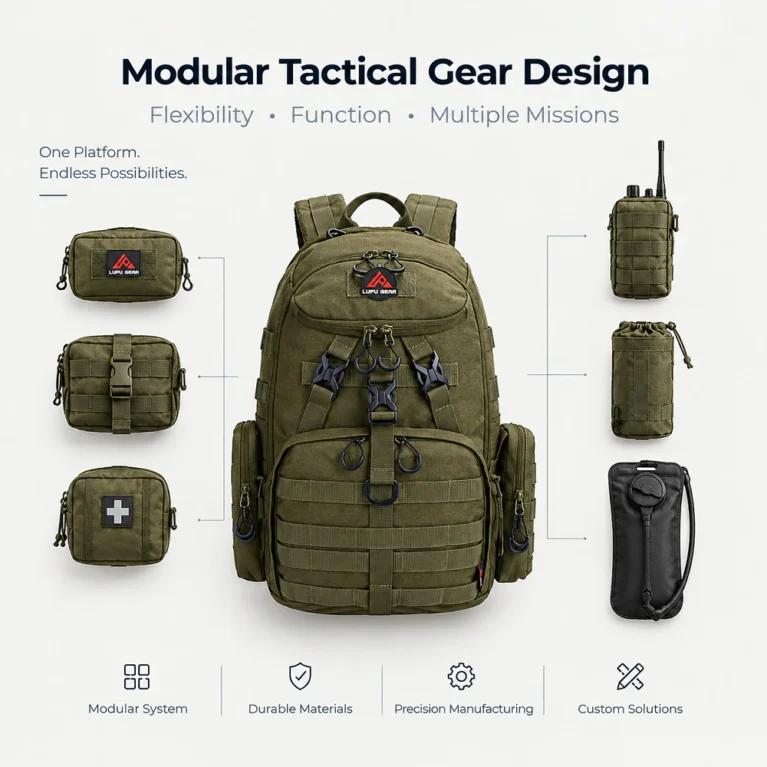
- Modular attachment systems
- Load-bearing structures
- Adjustable components
- Protective assemblies
Without controlled production processes, quality variation can occur between different batches.
ISO 9001 helps manufacturers create repeatable production systems that support:
- Consistent workmanship
- Reduced manufacturing variation
- Improved defect prevention
- Better production efficiency
This is one of the key reasons professional buyers prefer working with ISO Tactical Gear manufacturers.
4. How ISO Certification Improves Tactical Gear Reliability
4.1 Reliability Is the Core Requirement of Tactical Equipment
Unlike ordinary consumer products, tactical equipment is expected to function in challenging environments.
Potential operating conditions may include:
- Extreme temperatures
- Heavy physical activity
- Frequent transportation
- Outdoor exposure
- Long-term storage
- High-frequency usage
A tactical product must be designed and manufactured with reliability in mind.
However, reliability is not created only through product design.
It also depends on manufacturing discipline.
4.2 Process Control Reduces Manufacturing Risks
ISO-certified manufacturing systems help reduce risks by controlling critical production factors.
These include:
Standardized Work Instructions
Clear procedures help ensure that production teams follow consistent methods.
Employee Training
Manufacturing quality depends heavily on operator knowledge and skill.
ISO systems encourage:
- Employee training programs
- Process awareness
- Responsibility identification
Equipment Management
Manufacturing tools and equipment must remain reliable.
Quality systems support:
- Maintenance procedures
- Equipment monitoring
- Measurement control
Problem Prevention
Instead of only reacting to defects, ISO systems encourage manufacturers to identify potential risks before they become production problems.
This proactive approach is especially valuable for tactical gear production, where reliability expectations are high.
5. Quality Control in ISO Tactical Gear Manufacturing
5.1 Moving Beyond Traditional Inspection
Many manufacturers view quality control as final product inspection.
However, advanced tactical gear manufacturing requires a broader approach.
Traditional quality control asks:
“Is this product acceptable?”
ISO-based quality management asks:
“How can we ensure every product is consistently acceptable?”
This difference represents a major shift from defect detection to defect prevention.
5.2 Key Quality Factors for Tactical Equipment
Material Performance
Quality tactical gear depends on appropriate material selection and control.
Important characteristics include:
- Abrasion resistance
- Tear resistance
- Environmental durability
- Structural strength
Manufacturing Accuracy
Small manufacturing differences can influence tactical equipment performance.
Important production details include:
- Stitching quality
- Seam reinforcement
- Component alignment
- Assembly consistency
Batch-to-Batch Consistency
For professional buyers, consistency is essential.
A supplier must demonstrate the ability to maintain quality across:
- Prototype production
- Small batch orders
- Large-scale manufacturing
- Long-term cooperation
ISO systems help manufacturers achieve this consistency through controlled processes.
6. Traceability: A Critical Advantage of ISO Tactical Gear Production
6.1 Why Traceability Matters in Tactical Supply Chains
Traceability allows manufacturers and customers to understand the complete production history of a product.
A mature traceability system can track:
- Material sources
- Production batches
- Inspection records
- Manufacturing processes
- Quality decisions
This capability becomes increasingly important as tactical supply chains become more international and complex.
6.2 How Traceability Improves Accountability
When a quality issue occurs, the manufacturer needs to identify:
- What happened?
- Why did it happen?
- Which products may be affected?
- How can recurrence be prevented?
ISO-based systems support:
Root Cause Analysis
Manufacturers investigate underlying causes rather than only addressing symptoms.
Corrective Actions
Companies implement improvements to prevent future problems.
Better Customer Support
Detailed records allow faster communication and more effective solutions.
For professional tactical equipment suppliers, traceability is not administrative overhead—it is a strategic capability.
7. ISO Tactical Gear and Global Supply Chain Requirements
7.1 Meeting International Buyer Expectations
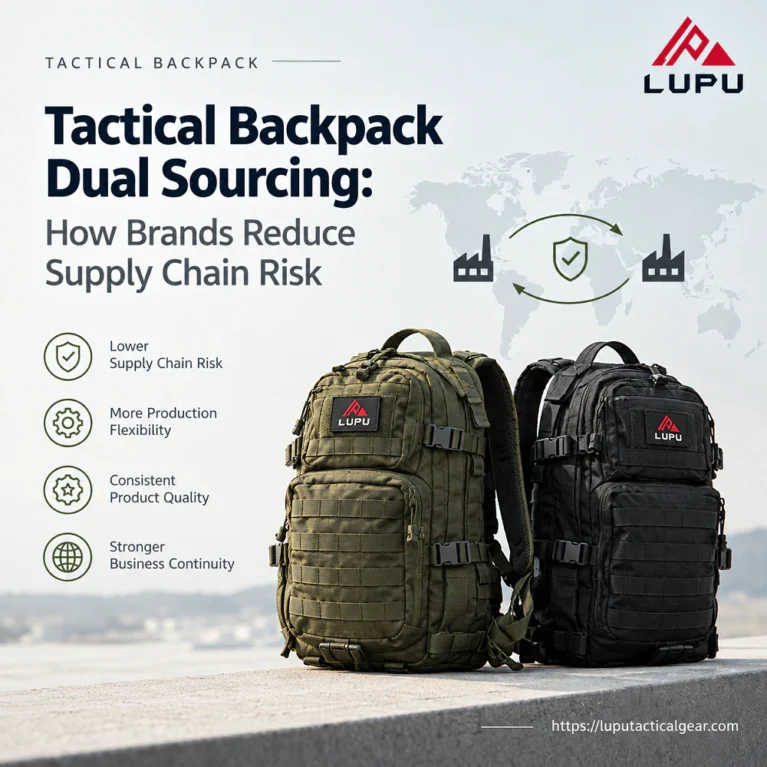
Global tactical equipment buyers increasingly look for suppliers capable of meeting professional manufacturing standards.
ISO certification helps manufacturers demonstrate readiness for:
- International partnerships
- OEM tactical gear projects
- Large-volume production
- Long-term supplier relationships
7.2 ISO Certification as a Supplier Qualification Advantage
When evaluating suppliers, buyers often consider:
- Does the manufacturer have documented processes?
- Are quality problems managed systematically?
- Can production scale without sacrificing quality?
- Is continuous improvement part of the company culture?
An ISO-certified tactical gear manufacturer can provide stronger answers to these questions.
8. Competitive Advantages of Choosing ISO Tactical Gear Manufacturers
8.1 Building Long-Term Customer Confidence
In tactical equipment markets, trust is one of the most valuable business assets.
ISO certification helps manufacturers demonstrate:
- Professional management
- Manufacturing discipline
- Quality commitment
- Operational stability
8.2 Supporting Global Market Expansion
For tactical gear companies seeking international growth, ISO certification can support:
- Supplier approval processes
- Customer audits
- Business partnerships
- Market credibility
Certification does not replace product quality, but it strengthens the foundation required for global competition.
9. Common Misunderstandings About ISO Tactical Gear Certification
Myth 1: ISO Certification Means the Product Is Automatically Military Certified
Reality:
ISO certification verifies manufacturing management systems.
Specific military approvals or performance requirements depend on individual contracts, regulations, and testing standards.
Myth 2: ISO Certification Is Only Paperwork
Reality:
A properly implemented ISO system creates measurable improvements in:
- Process control
- Quality consistency
- Risk management
- Operational efficiency
Myth 3: ISO Certification Only Benefits Large Companies
Reality:
Small and medium-sized tactical gear manufacturers can also benefit by improving:
- Customer confidence
- Production organization
- Market competitiveness
10. How Manufacturers Build ISO Tactical Gear Production Capability
Step 1: Evaluate Existing Manufacturing Processes
Manufacturers should review:
- Current workflows
- Quality procedures
- Supplier controls
- Documentation practices
Step 2: Develop a Quality Management System
Important elements include:
- Standard operating procedures
- Inspection criteria
- Quality objectives
- Corrective action processes
Step 3: Train Employees and Establish Quality Culture
Successful ISO implementation requires employee participation.
Key areas include:
- Training
- Process awareness
- Responsibility
- Continuous improvement
Step 4: Complete Certification Audits
The certification process typically involves:
- System evaluation
- Internal audits
- Management review
- Third-party assessment
Conclusion: ISO Tactical Gear Represents Trust, Reliability, and Manufacturing Excellence
The future of tactical equipment manufacturing will increasingly depend on more than product design and production capacity. Buyers need confidence that their suppliers can deliver consistent quality through controlled, transparent, and reliable processes.
ISO certification provides tactical gear manufacturers with a structured framework to achieve this goal.
For companies producing ISO Tactical Gear, certification represents:
- Stronger quality management
- Improved manufacturing consistency
- Better supply chain transparency
- Increased customer confidence
- Greater competitiveness in global markets
In a demanding industry where reliability matters, ISO certification is not simply a compliance milestone. It is a strategic investment in manufacturing excellence.
A trusted ISO Tactical Gear manufacturer does not just produce equipment—it builds confidence through every stage of the production process.
Partner with a Trusted ISO Tactical Gear Manufacturer
Choosing the right tactical gear supplier means choosing more than a production partner—it means choosing reliability, consistency, and long-term manufacturing confidence.
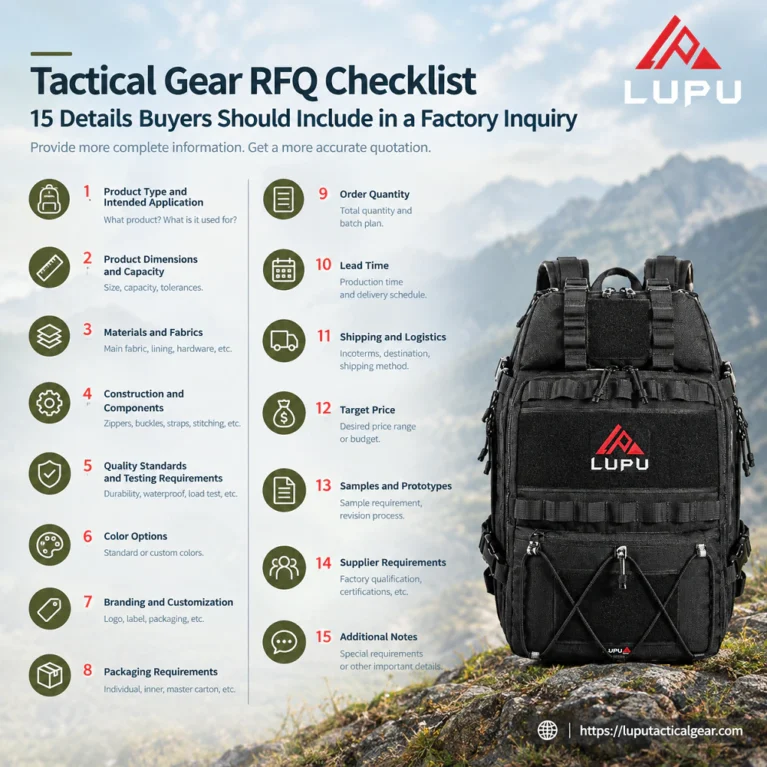
If you are looking for an ISO-certified tactical gear manufacturer with professional quality management systems, controlled production processes, and scalable OEM/ODM capabilities, we are ready to support your next project.
Contact LUPU Tactical team (info@luputacticalgear.com) today to discuss your tactical equipment requirements and discover how ISO-controlled manufacturing can help strengthen your supply chain.
FAQ: ISO Tactical Gear Manufacturing
- What does ISO certification mean for a tactical gear manufacturer?
ISO certification means a tactical gear manufacturer has established a structured quality management system that follows internationally recognized standards. It demonstrates that the company manages production processes, quality control, supplier evaluation, documentation, and continuous improvement through systematic procedures.
ISO certification does not certify every individual tactical product but verifies that the manufacturer has reliable systems in place to consistently produce quality equipment.
- Does ISO 9001 certification guarantee tactical gear quality?
ISO 9001 certification does not automatically guarantee that every tactical product meets specific performance requirements. Instead, it confirms that the manufacturer operates under controlled processes designed to improve consistency, reduce production risks, and maintain stable quality standards.
Product performance still depends on factors such as material selection, product design, manufacturing expertise, and testing requirements.
- Why should buyers choose an ISO tactical gear supplier?
Working with an ISO tactical gear supplier provides greater confidence in manufacturing reliability. ISO-certified manufacturers typically have clearer production procedures, stronger quality controls, better traceability systems, and more transparent supply chain management.
For professional buyers, these capabilities help reduce sourcing risks and support long-term cooperation.
- How does ISO certification improve tactical gear production consistency?
ISO-based quality management systems help manufacturers standardize important production activities, including material inspection, manufacturing procedures, quality checkpoints, employee training, and corrective actions.
This structured approach helps reduce variation between production batches and improves consistency for OEM, wholesale, and large-volume orders.
- Is ISO certification important for international tactical gear buyers?
Yes. International buyers often evaluate suppliers based on manufacturing capability, quality management practices, and supply chain reliability. ISO certification can help tactical gear manufacturers demonstrate professional operational standards and improve credibility when working with global brands, distributors, and procurement organizations.
- What should buyers consider besides ISO certification when selecting a tactical gear manufacturer?
ISO certification is an important indicator of manufacturing management, but buyers should also evaluate:
- Material quality and sourcing capability
- Product development experience
- Manufacturing capacity
- Quality inspection procedures
- Customization and OEM/ODM capabilities
- Communication and delivery performance
A reliable tactical gear supplier should combine certification, technical expertise, and proven production capability.
- Can small and medium tactical gear manufacturers benefit from ISO certification?
Yes. ISO certification can help manufacturers of all sizes improve internal management, organize production processes, reduce quality risks, and build stronger customer confidence. For growing tactical gear companies, ISO certification can also support expansion into international markets.