Introduction: What Defines a True Military Backpack?
A military backpack is far more than a durable bag with camouflage fabric and multiple pockets. It is a carefully engineered load-carrying system designed to support mobility, organization, endurance, and mission effectiveness in demanding environments.
Whether used by military personnel, law enforcement teams, outdoor professionals, or serious adventurers, a professional-grade backpack must perform reliably under pressure. It needs to carry essential equipment, protect valuable gear, maintain comfort over long periods, and adapt to changing operational requirements.
Understanding the essential Military Backpack Features helps users make informed decisions when selecting equipment for tactical operations, outdoor missions, and extended field activities.
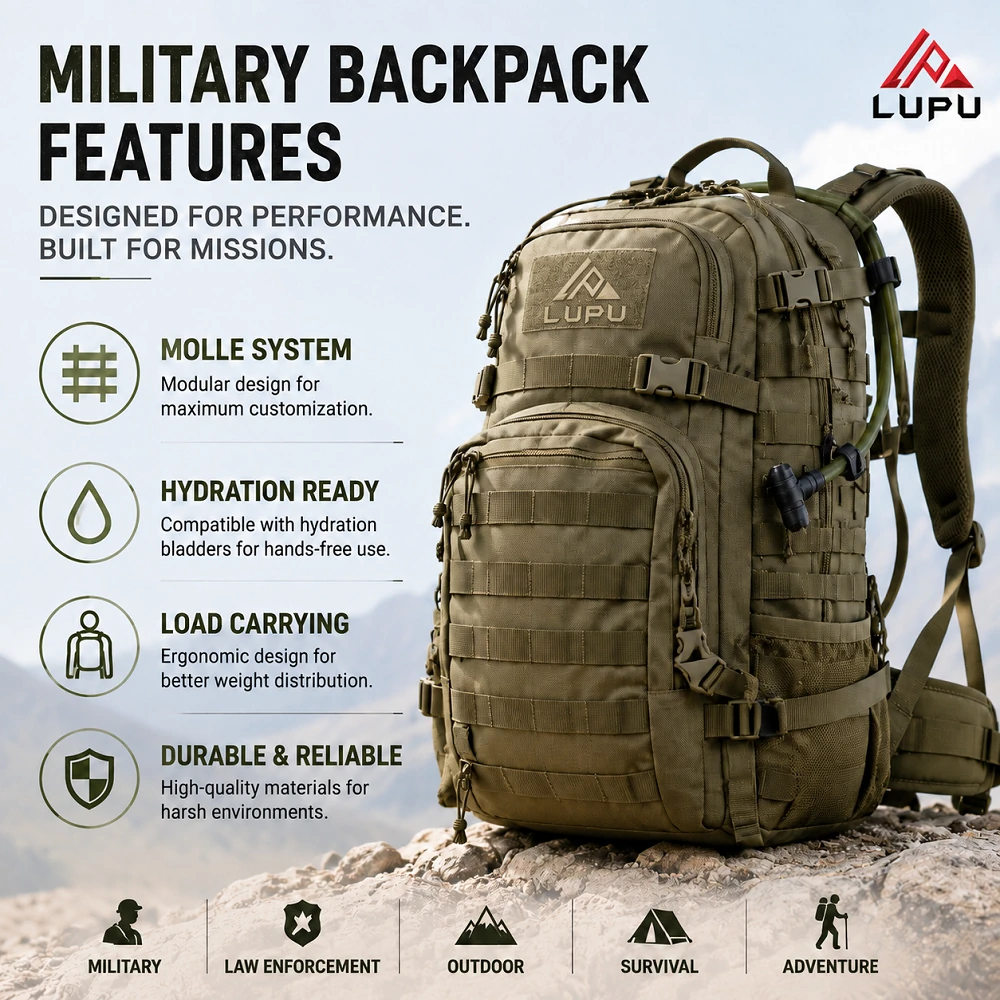
The most important characteristics of a modern military backpack include:
- Modular MOLLE attachment systems
- Compatibilité avec les vestes d'hydratation
- Advanced load-carrying design
- Durable materials and construction
- Efficient internal organization
- Environmental protection
A well-designed military backpack is not simply a storage solution. It is a personal equipment platform that improves mobility, readiness, and operational efficiency.
1. The Core Design Philosophy Behind Military Backpacks
Professional sacs à dos militaires are developed around three fundamental principles:
1.1 Mobility: Supporting Movement Without Restriction
A tactical mission often requires users to move quickly through unpredictable terrain, including:
- Mountains
- Forest environments
- Urban areas
- Extreme weather conditions
A poorly designed backpack can restrict movement, create pressure points, and increase fatigue.
A properly engineered military backpack should:
- Maintain stability during movement
- Keep equipment balanced
- Reduce unnecessary body strain
- Allow natural shoulder and back movement
The goal is not simply to carry more equipment, but to carry it more efficiently.
1.2 Accessibility: Equipment Must Be Available When Needed
In tactical environments, seconds matter.
A professional military backpack must allow users to quickly access essential items such as:
- Medical equipment
- Communication devices
- Navigation tools
- Emergency supplies
- Mission-specific accessories
Effective compartment design prevents users from wasting time searching through a disorganized pack.
A good tactical backpack combines:
- Main storage capacity
- Quick-access compartments
- External attachment points
- Dedicated equipment organization
1.3 Adaptability: One Platform, Multiple Missions
Modern operations require flexibility.
A military backpack may be used for:
- Patrol missions
- Training exercises
- Outdoor exploration
- Survival situations
- Long-distance hiking
This is why modularity has become one of the most important Military Backpack Features.
A backpack that supports customization can adapt to different mission requirements without requiring completely different equipment.
2. MOLLE System: The Foundation of Tactical Modularity
Why MOLLE Is One of the Most Important Military Backpack Features?
One of the defining characteristics of a professional tactical backpack is the MOLLE system.
MOLLE stands for:
Modular Lightweight Load-carrying Equipment
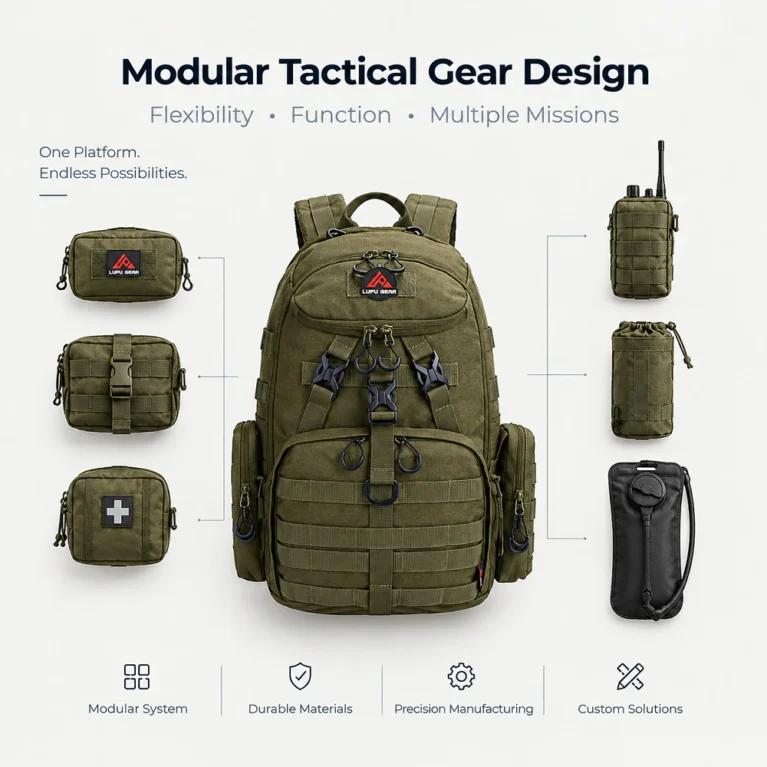
It is a standardized attachment system that allows users to add compatible pouches and accessories directly onto the backpack exterior.
Unlike traditional backpacks with fixed storage layouts, MOLLE backpacks provide customization and mission flexibility.
2.1 How MOLLE Webbing Works
The MOLLE system uses rows of reinforced webbing, commonly known as PALS (Pouch Attachment Ladder System).
These webbing panels allow users to attach:
- Utility pouches
- Medical kits
- Magazine carriers
- Radio holders
- Tool attachments
- Additional storage modules
The user can configure the backpack according to specific operational needs.
For example:
A military user may configure the pack with:
- Medical pouch
- Communication pouch
- Magazine pouch
An outdoor user may choose:
- Water bottle carrier
- Navigation pouch
- Emergency equipment storage
2.2 Advantages of MOLLE Backpack Design
Personnalisation
Every mission has different equipment requirements.
A modular MOLLE system allows users to build a personalized load configuration instead of relying on a fixed backpack design.
Improved Organization
Traditional backpacks often force users to place everything inside one large compartment.
MOLLE systems provide external organization, allowing frequently used equipment to remain accessible.
Benefits include:
- Faster equipment access
- Better weight distribution
- Improved organization
Mission Adaptability
A tactical backpack should evolve with the user.
The same backpack platform can support:
- Military operations
- Law enforcement duties
- Hiking trips
- Emergency preparedness
This adaptability is one reason MOLLE remains a core feature of professional tactical equipment.
3. Hydration System Integration: A Critical Tactical Requirement
Why Modern Military Backpacks Need Hydration Compatibility?
Maintaining hydration is essential during extended physical activity.
Dehydration can negatively affect:
- Physical endurance
- Concentration
- Decision-making ability
- Overall performance
Traditional water bottles create several limitations:
- They require removing equipment to access water
- They occupy valuable external storage space
- They interrupt movement during activities
A hydration bladder system solves these problems by providing hands-free access to water through a drinking tube and bite valve.
For this reason, hydration compatibility has become one of the key Military Backpack Features in modern tactical backpack design.
3.1 Dedicated Hydration Compartment
A professional compatible sac à dos d'hydratation should include a dedicated compartment designed specifically for a water reservoir.
Benefits:
- Keeps the bladder secure
- Protects other equipment from moisture
- Improves weight distribution
- Prevents movement inside the backpack
Common hydration capacities include:
2L Hydration Bladder
Suitable for:
- Short missions
- Day hikes
- Lightweight tactical setups
3L Hydration Bladder
Suitable for:
- Long patrols
- Extended outdoor activities
- Military operations
- Remote environments
3.2 Hydration Tube Routing System
A well-designed military backpack should include a dedicated tube exit port.
This allows the drinking tube to route from the internal hydration compartment to the shoulder area.
Advantages:
- Easy access while moving
- Cleaner tube management
- Reduced interference with equipment
3.3 Bite Valve Management
The bite valve is the final connection between the hydration system and the user.
A quality tactical backpack should provide:
- Tube retention clips
- Shoulder strap routing
- Secure valve positioning
This keeps the drinking system accessible while preventing loose tubing from interfering with movement.
4. Load Carrying System: The Science of Carrying Weight
Beyond Capacity: How Military Backpacks Manage Heavy Loads
A common misunderstanding is that a larger backpack automatically provides better performance.
In reality, carrying efficiency depends on how the backpack manages weight.
A professional military backpack must distribute load effectively across:
- Shoulders
- Chest
- Back
- Hips
Poor load distribution can cause:
- Shoulder fatigue
- Lower back pressure
- Reduced mobility
- Long-term discomfort
4.1 Ergonomic Shoulder Strap Design
High-quality tactical backpacks use reinforced and adjustable shoulder straps.
Important features include:
- Contoured padding
- Adjustable length
- Durable stitching
- Breathable materials
The purpose is to create a stable connection between the backpack and the user’s body.
4.2 Sternum Strap Function
The sternum strap connects the shoulder straps across the chest.
Its role is to:
- Stabilize the backpack
- Prevent shoulder straps from spreading outward
- Improve balance during movement
This is especially valuable during:
- Running
- Climbing
- Fast movement
- Uneven terrain
4.3 Hip Belt and Load Transfer
For larger military backpacks, a hip belt plays an important role.
It transfers part of the backpack weight from the shoulders to the hips.
Advantages:
- Reduced shoulder pressure
- Better weight control
- Improved endurance
For extended missions, proper load transfer can significantly improve comfort.
4.4 Compression Strap System
Compression straps help control the backpack profile.
They:
- Reduce internal movement
- Stabilize equipment
- Keep the load closer to the body
A compact and stable backpack improves mobility and reduces unnecessary energy consumption.
5. Material Selection: What Makes a Military Backpack Durable?
Materials Behind Long-Term Field Performance
Durability is one of the most important considerations when evaluating Military Backpack Features.
A tactical backpack must withstand:
- Abrasion
- Heavy loads
- Harsh weather
- Frequent transportation
- Long-term field use
5.1 High-Density Nylon Fabrics
Common materials include:
Nylon 500D
Advantages:
- Léger
- Strong abrasion resistance
- Suitable for mobile applications
Nylon 1000D
Advantages:
- Extremely durable
- Higher abrasion resistance
- Designed for demanding environments
Cordura® Fabric
Known for:
- Exceptional durability
- Tear resistance
- Long service life
Material selection directly affects the backpack’s performance and lifespan.
5.2 Reinforced Stitching and Stress Points
The weakest point of any backpack is usually not the fabric itself, but the connection points.
Critical reinforcement areas include:
- Shoulder strap attachment points
- Carry handles
- MOLLE panels
- Bottom corners
Professional military backpacks use reinforced stitching techniques to improve structural reliability.
5.3 Weather Protection
Outdoor environments expose equipment to:
- Rain
- Dust
- Mud
- Snow
Protective features may include:
- Water-resistant coatings
- Covered zippers
- Reinforced seams
These features help protect mission-critical equipment.
6. Internal Organization: Mission-Focused Storage Design
A professional military backpack must balance capacity with organization.
More space does not always mean better performance.
Efficient organization allows users to quickly locate equipment.
Compartiment principal
Designed for:
- Clothing
- Large equipment
- Survival gear
- Mission supplies
Administrative Compartments
Designed for:
- Documents
- Maps
- Electronics
- Small accessories
Quick Access Pockets
Designed for:
- Medical equipment
- Flashlights
- Emergency tools
Fast access can be critical in unpredictable environments.
7. Military Backpack Applications: Different Users, Different Requirements
Military Operations
Requirements:
- Maximum durability
- Modular attachment capability
- Hydration compatibility
- Stable load carrying
Application de la loi
Requirements:
- Organized storage
- Quick equipment access
- Compact tactical design
Hiking and Outdoor Exploration
Requirements:
- Comfortable carrying system
- Lightweight construction
- Hydration support
Survival and Emergency Preparedness
Requirements:
- Large capacity
- Reliable construction
- Flexible organization
8. How to Choose the Right Military Backpack?
Before selecting a tactical backpack, consider these factors:
8.1 Mission Requirements
Ask:
- What environment will it be used in?
- How long will the activity last?
- What equipment needs to be carried?
8.2 Capacity
Choose capacity based on:
- Equipment volume
- Mission duration
- Mobility requirements
A smaller backpack improves mobility, while larger packs provide extended carrying capability.
8.3 MOLLE Compatibility
Check:
- Webbing quality
- Stitch reinforcement
- Accessory compatibility
A reliable MOLLE system increases long-term versatility.
8.4 Hydration Support
Look for:
- Dedicated bladder compartment
- Tube routing system
- Secure drinking tube management
Hydration compatibility is now considered a standard requirement for many professional tactical users.
8.5 Load Carrying Comfort
Evaluate:
- Shoulder strap design
- Back panel padding
- Weight distribution system
Comfort directly affects endurance during extended use.
Conclusion: The Future of Military Backpack Design
A professional military backpack is not simply a container for carrying equipment. It is an integrated load management system designed around mobility, adaptability, and performance.
The most important Military Backpack Features include:
- MOLLE modular attachment systems
- Compatibilité avec les vestes d'hydratation
- Ergonomic load carrying structures
- Durable tactical materials
- Mission-focused organization
As tactical requirements continue to evolve, modern military backpacks are becoming lighter, more modular, and more adaptable.
For military professionals, outdoor specialists, and tactical users, choosing the right backpack means selecting a reliable platform that supports performance when conditions become challenging.
A well-designed military backpack does not just carry equipment — it enhances the user’s ability to move, operate, and endure.
Custom Military Backpack Solutions for Your Brand
Need a reliable tactical backpack designed for your specific requirements?
We provide custom military backpack solutions with flexible options for materials, MOLLE configurations, hydration compatibility, capacity, and branding.
Whether you are developing tactical gear, outdoor equipment, or professional load-carrying systems, our experienced team can help transform your concept into a durable field-ready product.
Explore Custom Tactical Backpack Manufacturing
→ Contact our team to discuss your project requirements.
Email: