Введение
The tactical backpack market has evolved far beyond its traditional military applications. Today, tactical backpacks serve a wide spectrum of users—from outdoor enthusiasts, hikers, and emergency responders to law enforcement officers, EDC (Everyday Carry) users, and adventure travelers.
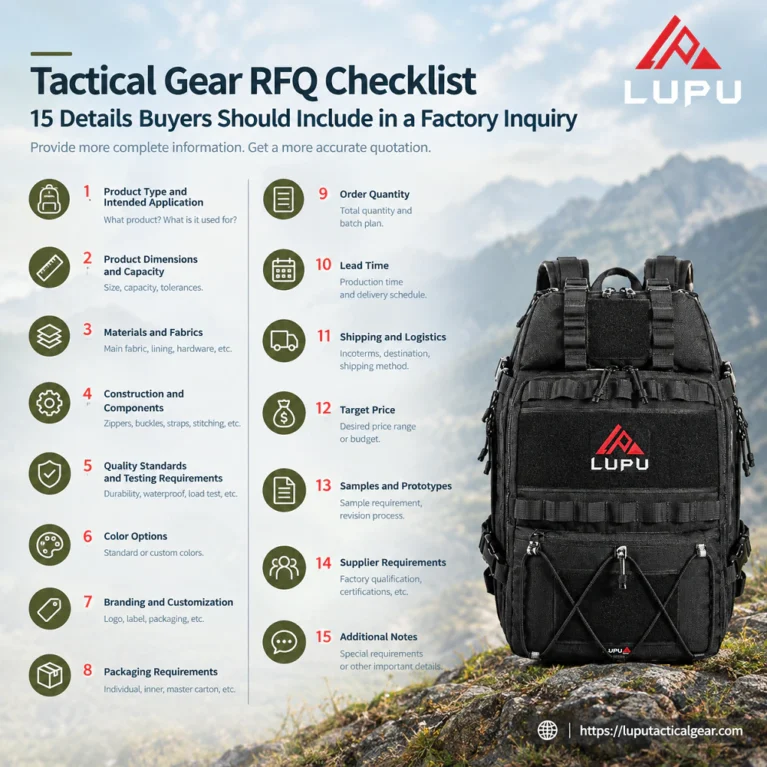
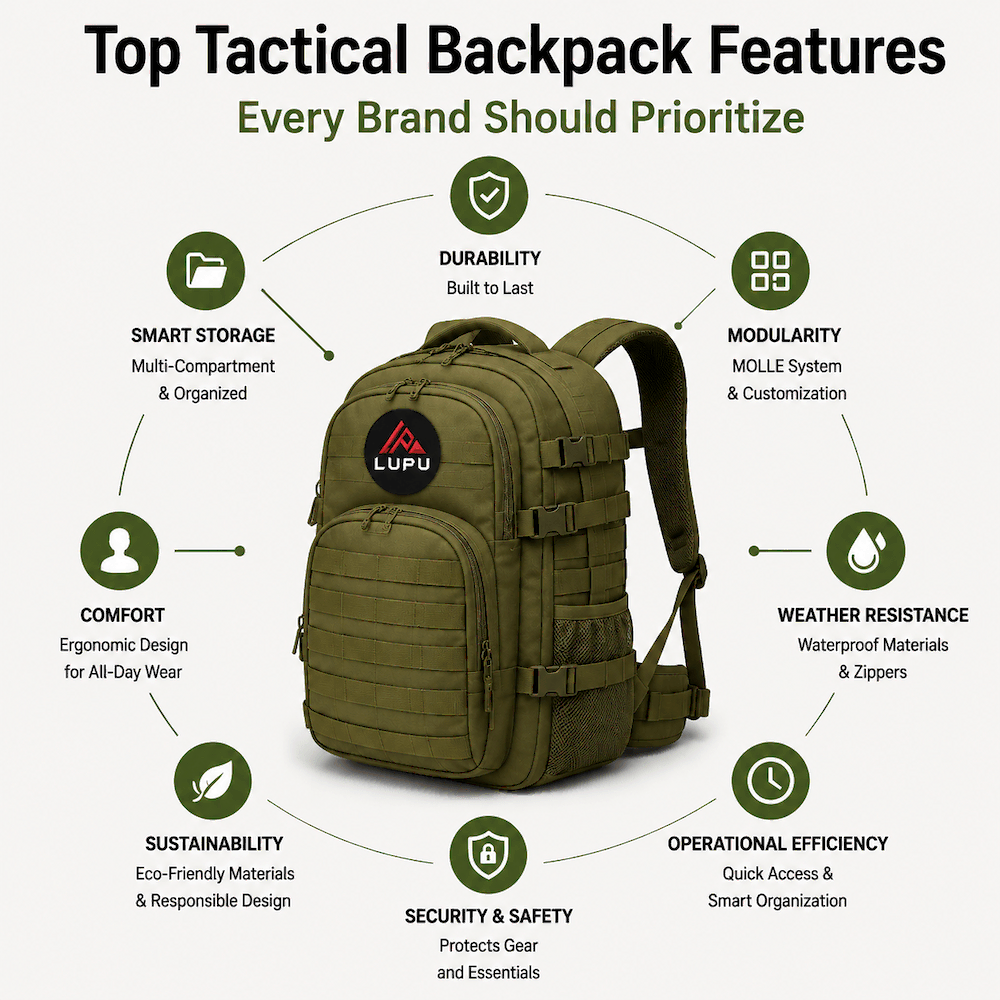
For brands entering or expanding within this competitive segment, understanding the most crucial tactical backpack features is vital. These features directly influence product performance, customer satisfaction, and brand reputation. The right combination of durability, comfort, modularity, and operational efficiency can make a backpack stand out in a saturated market.
According to a 2025 Outdoor Gear Market report, tactical backpack sales grew 18% YoY in North America, highlighting the increasing demand for specialized backpacks that combine durability with modular functionality. This guide explores the essential tactical backpack features every brand should prioritize when designing, sourcing, or manufacturing tactical backpacks.
Why Tactical Backpack Features Matter More Than Ever?
Rising Consumer Expectations
Modern consumers demand multifunctional gear that can adapt to various scenarios. Outdoor enthusiasts expect a backpack that accommodates extended trips, while EDC users prioritize convenience and accessibility. Similarly, tactical professionals require products that withstand the rigors of field operations. Meeting these diverse expectations requires brands to focus on functional tactical backpack features that deliver real-world value. Tactical backpack buyers increasingly consider factors such as weight-to-capacity ratio, MOLLE compatibility, and ergonomic support when choosing a product.
The Impact on Brand Competitiveness
Prioritizing the right features allows brands to differentiate themselves in a crowded market. A backpack that balances comfort, modularity, and durability can drive positive reviews, repeat purchases, and long-term customer loyalty. Data from a 2024 OEM Tactical Gear Survey shows that backpacks with reinforced stress points and MOLLE systems receive 30% higher repeat orders from military and law enforcement clients.
Balancing Performance and Cost
While it’s tempting to overload backpacks with multiple features, бренды тактического снаряжения must avoid over-engineering. The key is to prioritize features that enhance user experience, reduce operational friction, and withstand environmental stressors without unnecessarily increasing costs.
Durability – The Foundation of Every Tactical Backpack
High-Performance Fabric Selection
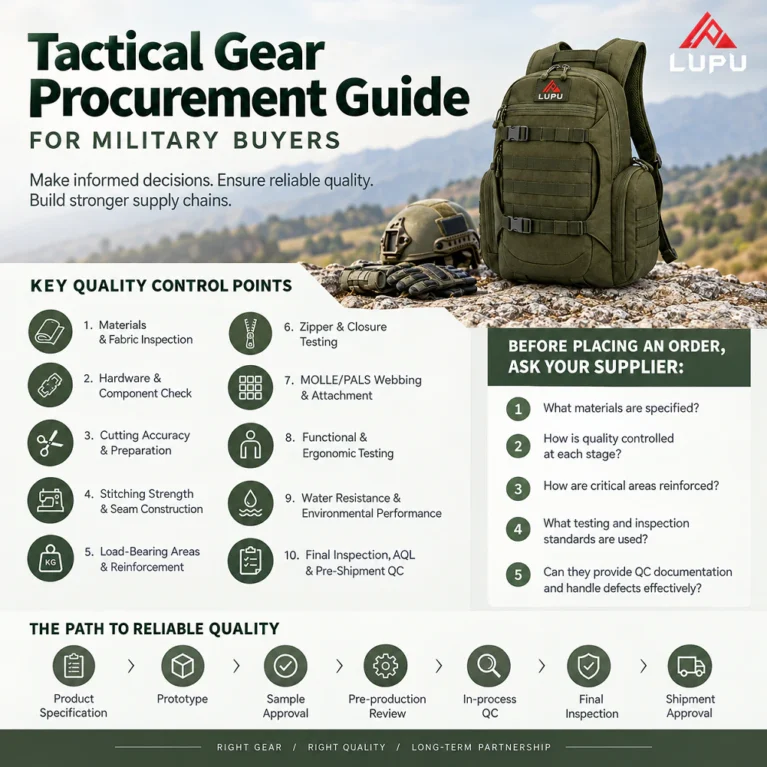
The backbone of a tactical backpack lies in its material. Common options include:
- Cordura 500D–1000D:High abrasion resistance and tear strength. Tensile strength: 800–1200 N, Abrasion cycles: 100,000+
- Ripstop Nylon:Lightweight yet durable, prevents small tears from spreading. Typical denier: 210D–420D, Weight: 180–250 g/m²
- Oxford Fabrics:Offers affordable yet robust performance for mid-range backpacks.
Table: Common Tactical Backpack Materials Comparison
|
Материал |
Denier |
Tensile Strength (N) |
Abrasion Cycles |
Водонепроницаемость |
Common Applications |
|
500D Cordura |
500 |
800 |
100,000+ |
Средний |
EDC, Patrol Packs |
|
1000D Cordura |
1000 |
1200 |
150,000+ |
Средний |
Military Packs |
|
600D Polyester |
600 |
400 |
50,000 |
Средний |
Budget Tactical Bags |
|
Нейлон Ripstop |
210–420 |
600 |
80,000 |
Средний |
Outdoor & Hiking Packs |
|
X-Pac Fabric |
210 |
700 |
120,000 |
Высокий |
Premium Tactical Gear |
Reinforced Stitching and Stress Points
Backpacks must endure heavy loads and repeated use. Bartack reinforcement and double or triple stitching at load-bearing points (such as shoulder straps and zippers) ensure long-term reliability.
Key stress points: Shoulder straps, bottom base, MOLLE attachment points; failure in these areas can reduce backpack lifespan by up to 40%.
Abrasion and Tear Resistance
Durable fabrics and reinforced areas prevent wear in high-friction zones, particularly on the base, sides, and corners.
Hardware Quality
Zippers, buckles, and pull tabs are critical. Brands should prioritize corrosion-resistant zippers, sturdy plastic or metal buckles, and durable webbing that withstands repeated tension.
Example: YKK zippers with #10 coil for main compartment, Duraflex side-release buckles with 500 lb break strength, and nylon webbing rated 1000 lb tensile strength.
Load-Carrying Comfort as a Core Tactical Backpack Feature
Ergonomic Shoulder Strap Design
Properly padded, contoured straps distribute weight evenly and reduce fatigue during prolonged use. Adjustable padding and strap width are key considerations for different user physiques. Optimal strap width: 50–70 mm; padding thickness: 15–25 mm; foam density: 45–60 kg/m³ for peak comfort under 15–20 kg loads.
Adjustable Sternum and Waist Straps
These straps stabilize the load, reduce strain on the shoulders, and enhance mobility during high-intensity movement or outdoor activities.
Ventilated Back Panels
Back panels with airflow channels prevent heat buildup, manage moisture, and improve overall comfort, particularly during long hikes or field operations.
Frame and Support Systems
Internal or semi-rigid frames provide structure for heavy loads. Brands should consider backpack designs that balance support with flexibility to accommodate different load types.
Table: Recommended Backpack Capacities and Carry Time
|
Вместимость |
Типичное использование |
Recommended Carry Time |
|
20–30L |
EDC / Urban Use |
1 Day |
|
30–40L |
Day Hiking |
1–2 Days |
|
40–60L |
3-Day Tactical Missions |
2–4 Days |
|
60L+ |
Extended Operations |
5+ Days |
Modular Storage Systems and Organization
Совместимость с MOLLE
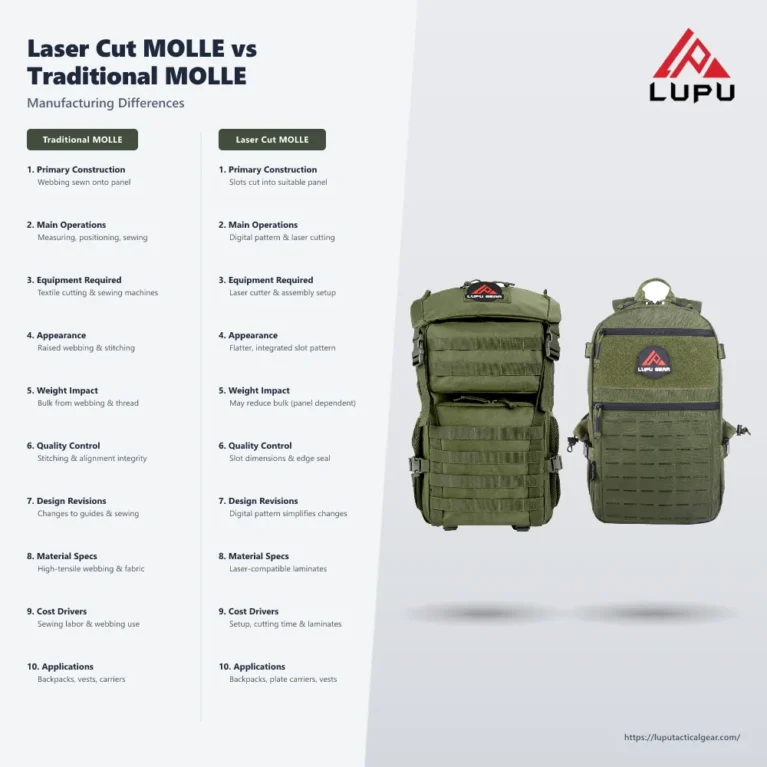
Modular Lightweight Load-carrying Equipment (MOLLE) systems allow users to attach additional pouches and accessories. This feature is essential for both tactical operations and outdoor adventurers seeking versatility.
MOLLE spacing: 25 mm webbing width with 38 mm spacing is standard; load-bearing capacity: up to 10 kg per attachment point.
Multi-Compartment Layout
Separate main compartments, admin pockets, and quick-access storage provide functional organization and enable users to segregate gear efficiently.
Internal Organization Features
Mesh pockets, elastic retention systems, and dedicated tool compartments improve accessibility and prevent items from shifting during movement.
Customizable Storage Configurations
Allowing users to adjust internal dividers or remove pouches caters to mission-specific requirements and enhances operational efficiency.
Table: Compartment Functionality Overview
|
Compartment |
Function |
Typical Load |
|
Главное отделение |
Bulk Gear & Clothing |
15–20 kg |
|
Admin Pocket |
Documents & Tools |
2–5 kg |
|
Front Utility Pocket |
Quick Access Items |
1–3 kg |
|
Hydration Sleeve |
Water Storage |
2–3 L |
|
Hidden Pocket |
Valuables |
0.5–1 kg |
Weather Resistance and Environmental Protection
Water-Resistant Fabrics and Coatings
Polyurethane coatings (PU) or Durable Water Repellent (DWR) finishes protect contents against rain and light water exposure.
Weatherproof Zippers and Closures
Reverse coil zippers, storm flaps, and reinforced seams prevent water ingress in harsh conditions.
Protection in Extreme Conditions
High-quality tactical backpacks can withstand dust, mud, temperature fluctuations, and other environmental challenges without compromising function.
Waterproofing Technologies Used in Tactical Backpacks
|
Waterproofing Technology |
Уровень защиты |
Typical Application |
Cost Impact |
|
PU Coating |
Умеренный |
Entry-Level Tactical Packs |
Низкий |
|
DWR Treatment |
Умеренный |
Outdoor & Hiking Packs |
Средний |
|
TPU Lamination |
Высокий |
Premium Tactical Backpacks |
Высокий |
|
Waterproof Zippers |
Высокий |
Military & Expedition Packs |
Средний |
|
Seam Sealing |
Очень высокий |
Waterproof Tactical Gear |
Высокий |
|
Rain Cover System |
Очень высокий |
Multi-Day Outdoor Use |
Низкий |
Tactical Backpack Features That Enhance Operational Efficiency
Rapid Access Design
Quick-open compartments and strategically placed pockets allow fast retrieval of essential gear in emergencies.
Совместимость с гидратацией
Dedicated hydration bladder compartments with hose routing systems are indispensable for outdoor activities or field operations.
Compression Straps
External straps stabilize the load and allow users to reduce bulk when carrying lighter loads.
External Attachment Points
Loops, D-rings, and carabiner points enable users to attach additional gear like trekking poles, helmets, or tactical equipment, enhancing flexibility in diverse environments.
Table: Feature Priority by User Type
|
Характеристика |
Military Users |
Outdoor Users |
EDC Users |
|
Система MOLLE |
★★★★★ |
★★★★☆ |
★★☆☆☆ |
|
Совместимость с гидратацией |
★★★★★ |
★★★★★ |
★★☆☆☆ |
|
Concealed Carry Pocket |
★★★★☆ |
★☆☆☆☆ |
★★★☆☆ |
|
Compression Straps |
★★★★★ |
★★★★☆ |
★★★☆☆ |
|
Quick Access Pocket |
★★★★☆ |
★★★☆☆ |
★★★★★ |
Security and Safety Features Modern Users Expect
Concealed Carry Compatibility
As civilian demand grows for self-defense and law enforcement accessories, dedicated compartments for concealed carry are becoming essential.
Anti-Theft Enhancements
Lockable zippers, hidden pockets, and secure compartments protect valuable items during travel or in crowded environments.
Reflective and Identification Elements
Subtle reflective patches or ID panels improve visibility in low-light situations and support personal safety.
Some high-end tactical backpacks now integrate RFID-blocking pockets to prevent digital theft, a feature increasingly valued by government and law enforcement clients.
Scalability and Customization for Brand Growth
Private Label Opportunities
OEM and ODM services allow brands to create signature products while leveraging factory expertise for high-quality manufacturing.
Custom Materials and Colorways
Brands can differentiate themselves with unique materials, camo patterns, and color options tailored to target demographics.
Logo Placement and Branding Integration
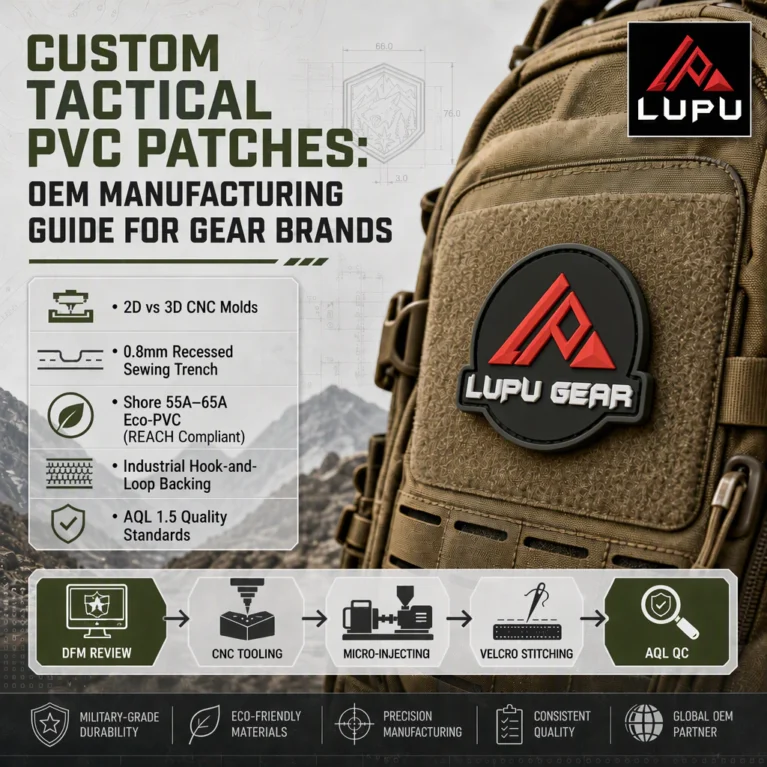
Embroidery, PVC patches, and laser-cut branding options allow products to maintain a professional, high-end appearance.
OEM and ODM Considerations
Flexible manufacturing ensures brands can adapt to changing market demands without compromising on quality or timelines.
Highlight: Brands can now request custom die-cut foam inserts, laser-engraved panels, or color-matched webbing for high-end tactical backpack lines.
Sustainability Is Becoming a Competitive Advantage
Eco-Friendly Fabric Alternatives
Recycled nylon, organic textiles, and sustainably sourced materials help brands meet emerging environmental expectations.
Durable Products Reduce Environmental Impact
Long-lasting backpacks decrease replacement frequency, reducing waste and enhancing brand credibility.
Meeting Emerging Consumer Expectations
Sustainability-conscious buyers increasingly favor brands that demonstrate environmental responsibility throughout product design and manufacturing.
Certifications to mention: GRS (Global Recycled Standard), OEKO-TEX Standard 100, Bluesign. Data shows eco-certified backpacks can command a 5–15% price premium in B2B channels.
Common Mistakes Brands Make When Selecting Tactical Backpack Features
Prioritizing Appearance Over Functionality
A visually appealing backpack that fails in real-world conditions damages reputation.
Ignoring End-User Scenarios
Features must align with intended use—outdoor hiking, EDC, or tactical operations—rather than generic designs.
Overloading Products with Unnecessary Features
Excess complexity can compromise durability, increase weight, and frustrate users.
Choosing Low-Quality Components to Reduce Costs
Cheap zippers, buckles, and fabrics erode trust and result in returns and negative reviews.
Neglecting Field Testing and User Feedback
Testing prototypes in realistic scenarios ensures the product meets performance expectations before launch.
Table: Common Brand Mistakes and Consequences
|
Mistake |
Consequence |
|
Choosing Cheap Zippers |
Increased Product Returns |
|
Poor Strap Design |
User Fatigue |
|
Weak Stitching |
Premature Failure |
|
Excessive Features |
Increased Weight |
|
No Field Testing |
Poor User Experience |
Заключение
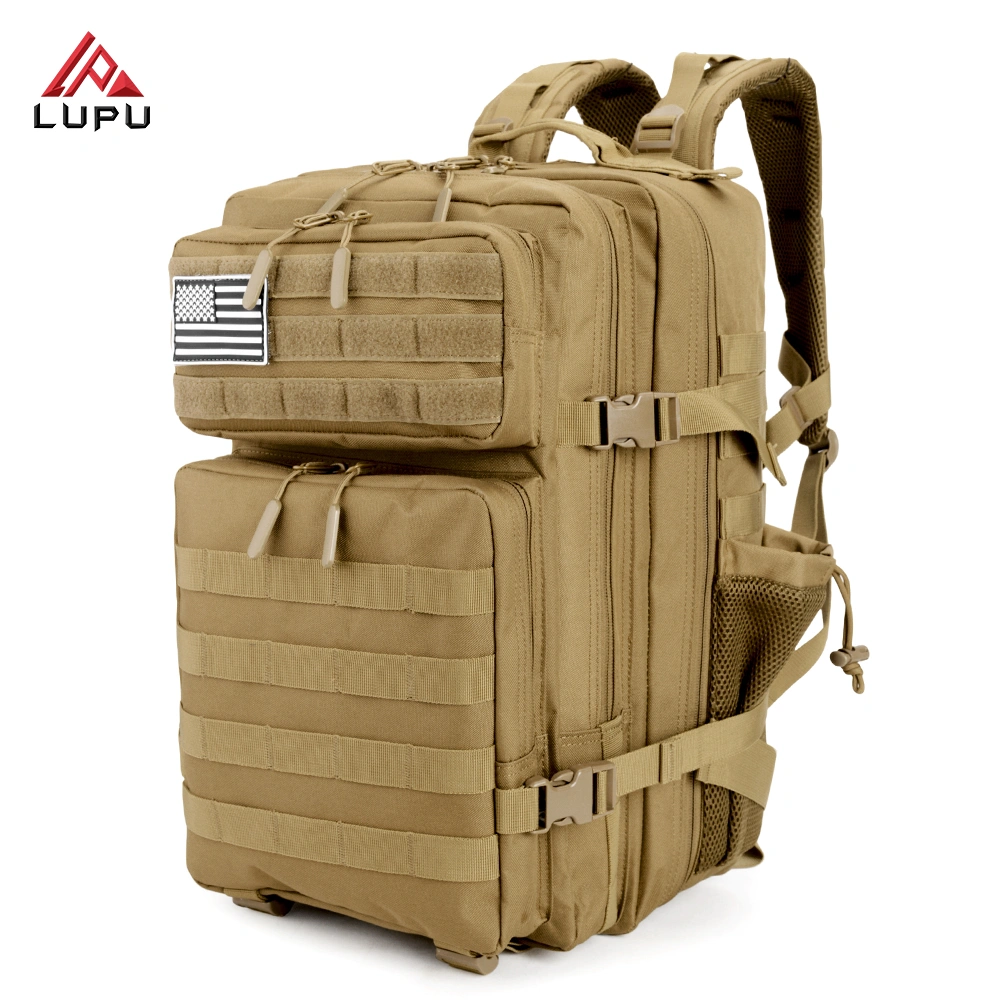
The success of tactical backpacks lies in a feature-driven design approach, focused on real-world performance rather than mere aesthetics. Brands that emphasize durability, ergonomic comfort, modularity, weather resistance, and operational efficiency are better positioned to capture market share, earn customer trust, and maintain long-term competitiveness.
By integrating detailed material specifications, ergonomic data, and operational efficiency metrics, brands can provide measurable value to B2B clients and OEM partners, creating a professional, data-driven product portfolio that differentiates them in the tactical gear industry.
By carefully prioritizing the tactical backpack features that genuinely enhance user experience, brands can develop products that stand out in a crowded market, withstand rigorous conditions, and build a lasting reputation for quality and reliability.
Ready to engineer your next mission-critical gear? Partner with LUPU Tactical Gear Factory today to transform your specifications into performance-driven reality—связаться с нами for a custom manufacturing consultation.