Introduction: Why Understanding Tactical Gear Costs Matters
Tactical gear is often associated with durability, reliability, and professional performance. From tactical backpacks and load-bearing equipment to protective accessories and mission-focused apparel, these products are designed for demanding environments where failure can create serious consequences.
However, many buyers often wonder why tactical gear cost vary so widely. Two products may appear similar in design but have completely different price points. One tactical bag may cost significantly more than another, even though both feature similar layouts, storage compartments, and attachment systems.
The reason lies beneath the surface. The final price of tactical equipment is influenced by a complex combination of material selection, engineering, manufacturing processes, quality control, supply chain management, and brand investment.
Understanding the tactical gear cost structure helps buyers evaluate products more effectively. Instead of focusing only on the initial price, customers can better understand the value behind professional-grade equipment and determine whether a product meets their specific performance requirements.
1. The Basic Components of Tactical Gear Cost Structure
The price of tactical gear is not determined by a single factor. It represents the combined cost of creating, producing, testing, and delivering a product that can perform under demanding conditions.
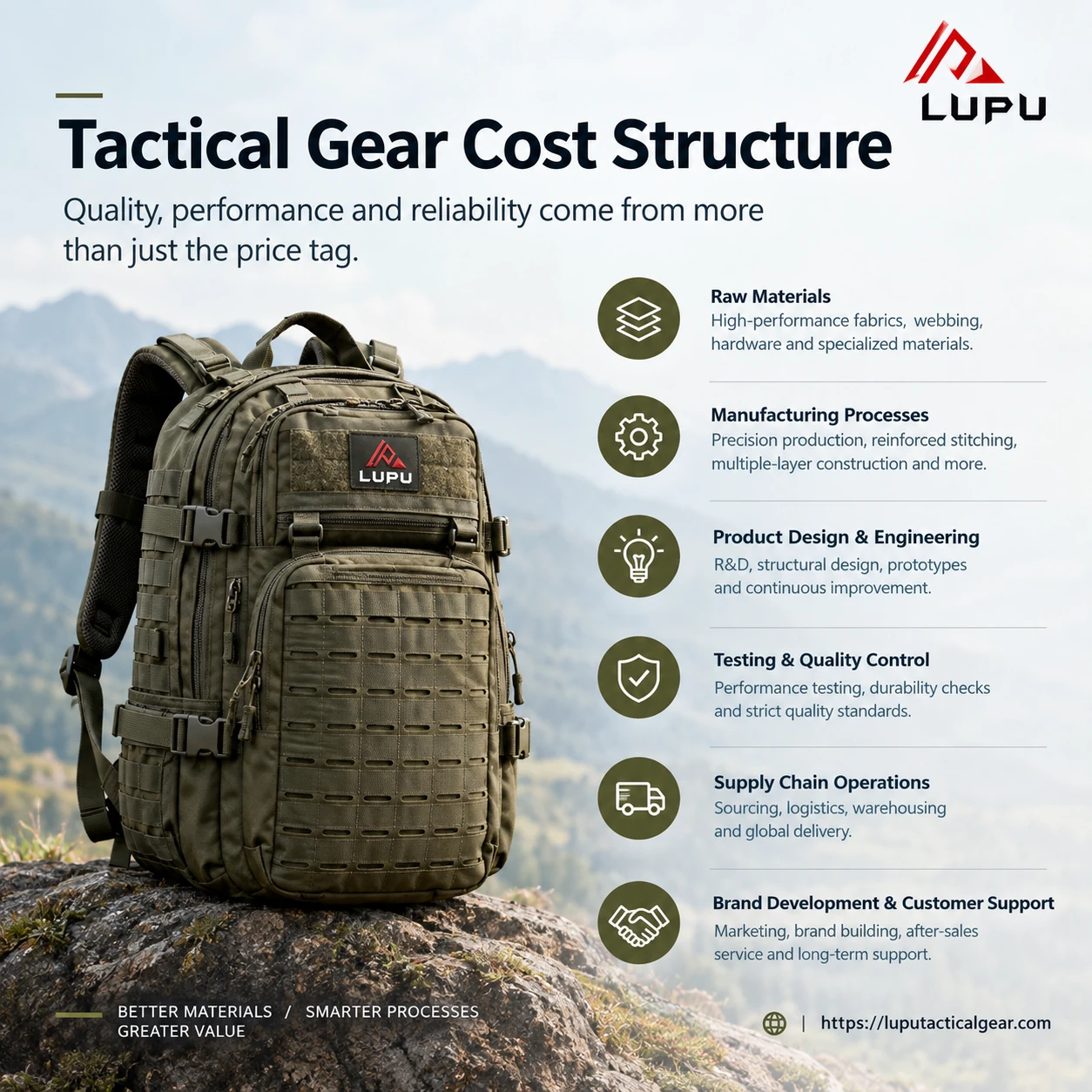
The major cost components typically include:
- Raw materials
- Manufacturing processes
- Product design and engineering
- Testing and quality control
- Supply chain operations
- Brand development and customer support
Each stage contributes to the final retail price.
2. Raw Material Costs: The Foundation of Tactical Gear Pricing
2.1 Advanced Materials Increase Production Costs
Material selection is one of the primary factors influencing tactical gear cost, as advanced textiles and durable components directly impact product performance and production expenses.
Unlike ordinary consumer products, tactical equipment often requires materials that provide higher levels of:
- Abrasion resistance
- Tear strength
- Weight efficiency
- Weather protection
- Long-term durability
Common materials used in tactical gear include:
- High-strength nylon fabrics
- Polyester blends
- Reinforced textiles
- Durable webbing systems
- Heavy-duty buckles and hardware
- Specialized protective materials
The difference between standard materials and performance-oriented materials can significantly affect manufacturing costs.
For example, a basic fabric may be suitable for casual outdoor use, while a reinforced textile designed for repeated stress and harsh environments requires more advanced production technology and higher-quality raw materials.
2.2 Material Selection Impacts Long-Term Value
A lower-cost material may reduce the initial purchase price, but it can also affect:
- Product lifespan
- Resistance to damage
- Performance in extreme environments
- Replacement frequency
Professional users often prioritize reliability over short-term savings because durable equipment can provide better long-term value.
This is why material investment is a major part of tactical gear cost analysis.
3. Manufacturing and Production Costs
3.1 Precision Manufacturing Requires More Resources
Tactical gear manufacturing involves more than simply cutting fabric and sewing components together.
Many products require specialized production methods, including:
- Reinforced stitching techniques
- Load-bearing structural design
- Multiple-layer construction
- Precision assembly
- Hardware integration
These processes require skilled workers, specialized machinery, and strict production controls.
Compared with ordinary bags or clothing, tactical equipment often requires additional manufacturing steps to ensure strength and reliability.
3.2 Labor and Production Complexity
Labor costs represent another important part of tactical gear pricing.
Complex tactical products may require:
- Experienced technicians
- Detailed assembly procedures
- Manual inspection processes
- Additional reinforcement work
A product designed for professional use usually cannot rely only on speed-focused manufacturing. Precision and consistency are critical.
Higher production complexity naturally increases manufacturing expenses.
4. Design and Engineering: The Hidden Costs Behind Tactical Gear
Many consumers see the finished product but do not see the development work behind it.
A professional tactical product often requires extensive research, testing, and refinement before entering production.
4.1 Research and Development Investment
Product development may involve:
- Identifying user requirements
- Creating initial concepts
- Developing prototypes
- Testing different materials
- Improving ergonomics
- Collecting field feedback
Производители тактического снаряжения invest significant resources to ensure that the final product performs effectively in real-world conditions.
The cost of research and development is distributed across the product lifecycle and becomes part of the overall pricing structure.
4.2 Functional Design Features Add Value
Many tactical products include specialized design features such as:
- Modular attachment systems
- Adjustable configurations
- Improved weight distribution
- Quick-access compartments
- Reinforced stress points
- User-focused ergonomic improvements
These features require additional engineering and manufacturing effort.
A tactical product is not simply designed to look professional; it is developed to solve practical problems.
5. Testing, Quality Control, and Performance Standards
5.1 Why Testing Increases Product Costs
High-quality tactical gear must withstand challenging conditions.
Manufacturers may conduct testing related to:
- Abrasion resistance
- Stitch strength
- Load capacity
- Environmental exposure
- Hardware durability
- Water resistance
Testing helps identify weaknesses before products reach customers.
Although testing increases production expenses, it improves product reliability and reduces the risk of failure.
5.2 Quality Control Throughout Production
Quality control is another important cost factor.
Professional manufacturing processes often include:
- Material inspections
- Production monitoring
- Final product checks
- Performance verification
Consistent quality requires time, equipment, and trained personnel.
Products with stronger quality control systems typically have higher production costs but offer greater reliability.
6. Supply Chain Factors Affecting Tactical Gear Prices
6.1 Material Sourcing Challenges
The global supply chain plays an important role in tactical gear pricing.
Factors that influence costs include:
- Availability of specialty materials
- Transportation expenses
- Supplier reliability
- Manufacturing location
- Market fluctuations
Specialized materials may have limited suppliers, making sourcing more expensive.
6.2 Production Scale and Manufacturing Location
Manufacturing volume also affects pricing.
Large production runs can reduce the average cost per unit because expenses are spread across more products.
However, smaller-scale production may involve:
- More customization
- Greater attention to detail
- Higher per-unit manufacturing costs
The location of production also influences expenses through differences in:
- Labor costs
- Manufacturing capabilities
- Logistics requirements
7. Brand Positioning and Market Factors
7.1 The Role of Brand Reputation
A recognized tactical gear brand often invests heavily in:
- Product development
- Customer support
- Warranty services
- Quality assurance
- Industry relationships
Brand reputation represents accumulated experience and customer trust.
A higher price may reflect not only the physical product but also the support system behind it.
7.2 Premium Tactical Gear vs Budget Options
Not all tactical gear serves the same purpose.
Budget products may be suitable for:
- Casual outdoor activities
- Occasional use
- Basic storage needs
Premium tactical equipment is generally designed for:
- Frequent use
- Professional environments
- Higher durability requirements
The difference often appears in:
|
Категория |
Budget Tactical Gear |
Premium Tactical Gear |
|
Материалы |
Standard fabrics |
Advanced performance materials |
|
Construction |
Basic assembly |
Reinforced manufacturing |
|
Testing |
Limited testing |
Extensive evaluation |
|
Lifespan |
Умеренный |
Extended durability |
|
Price |
Lower |
Higher |
The best choice depends on the user’s intended application.
8. Breaking Down the Final Retail Price of Tactical Gear
The retail price of tactical equipment includes much more than manufacturing costs.
A simplified cost structure may include:
Manufacturing Costs
Includes:
- Материалы
- Labor
- Hardware components
- Assembly
Operational Costs
Includes:
- Product development
- Testing
- Quality control
- Warehousing
- Logistics
Business Costs
Includes:
- Customer service
- Warranty support
- Marketing
- Distribution expenses
The final price represents the entire process required to create and support the product.
9. How to Evaluate Whether Tactical Gear Is Worth the Price
Price alone is not the best measurement of tactical gear quality.
Buyers should evaluate several important factors.
9.1 Consider Performance Requirements
Before purchasing, consider:
- Where will the gear be used?
- How frequently will it be used?
- What level of durability is required?
- What features are essential?
A product designed for occasional use may not require the same specifications as equipment intended for demanding environments.
9.2 Evaluate Construction Quality
Important indicators include:
- Material quality
- Stitching strength
- Hardware reliability
- Design functionality
- Manufacturer reputation
A well-designed product should provide practical value rather than simply a premium appearance.
10. Common Misconceptions About Tactical Gear Pricing
Myth 1: Expensive Tactical Gear Is Always Overpriced
Higher pricing does not automatically mean unnecessary cost.
Professional equipment often includes additional investment in:
- Engineering
- Testing
- Better materials
- Quality control
Myth 2: All Tactical Gear Uses the Same Materials
Appearance can be misleading.
Two products may look similar while having major differences in:
- Fabric quality
- Stitching methods
- Hardware strength
- Internal construction
Myth 3: Cheaper Alternatives Offer Identical Performance
Lower-cost alternatives may work for certain applications, but they may not provide the same:
- Долговечность
- Reliability
- Long-term performance
The right choice depends on the user’s actual requirements.
11. Future Trends Influencing Tactical Gear Costs
The tactical gear industry continues to evolve with new technologies and manufacturing methods.
Future cost factors may include:
Advanced Lightweight Materials
New materials may improve:
- Strength-to-weight ratios
- Комфорт
- Долговечность
Sustainable Manufacturing
Increasing demand for environmentally responsible production may influence:
- Material selection
- Manufacturing processes
- Supply chain decisions
Smart Textile Technologies
Future tactical equipment may incorporate:
- Advanced monitoring systems
- Integrated technology solutions
- Performance-enhancing materials
Innovation will continue to influence both product capabilities and pricing structures.
Conclusion: Understanding the Real Value Behind Tactical Gear Pricing
Tactical gear cost is shaped by a wide range of factors, including materials, manufacturing complexity, engineering investment, testing procedures, supply chain challenges, and brand support.
A professional-grade tactical product represents more than a physical item. It represents the research, expertise, and quality processes required to create reliable equipment.
For buyers, understanding the tactical gear cost structure makes it easier to evaluate products based on performance, durability, and long-term value rather than price alone.
The best tactical gear is not necessarily the most expensive option—it is the equipment that provides the right balance between quality, functionality, and intended use.
Frequently Asked Questions (FAQ)
Q1: Why is tactical gear more expensive than regular outdoor equipment?
Tactical gear often uses stronger materials, advanced construction methods, and additional testing processes designed for demanding environments.
Q2: What factors influence tactical gear pricing the most?
The biggest factors include material quality, manufacturing complexity, design engineering, testing requirements, and supply chain costs.
Q3: Does expensive tactical gear always last longer?
Not always, but higher-quality products often include better materials, stronger construction, and more rigorous quality control.
Q4: How do manufacturers determine tactical gear prices?
Manufacturers consider production tactical gear costs, development expenses, operational costs, market conditions, and customer support requirements.
Q5: What should buyers consider before investing in tactical equipment?
Buyers should consider intended use, durability requirements, product quality, manufacturer reputation, and long-term value.
Need Custom Tactical Gear Solutions?
Create reliable tactical equipment tailored to your specific requirements. From material selection and design optimization to production and quality control, our team helps bring your custom tactical gear ideas to life.
Explore Custom Solutions: связаться с нами