Introduction: Understanding the Difference Between Plate Carrier and Tactical Vest
In the tactical equipment industry, the terms plate carrier and tactical vest are often used interchangeably. Many buyers, distributors, and even new tactical brands assume these two products serve the same purpose because they share similar appearances and modular attachment systems.
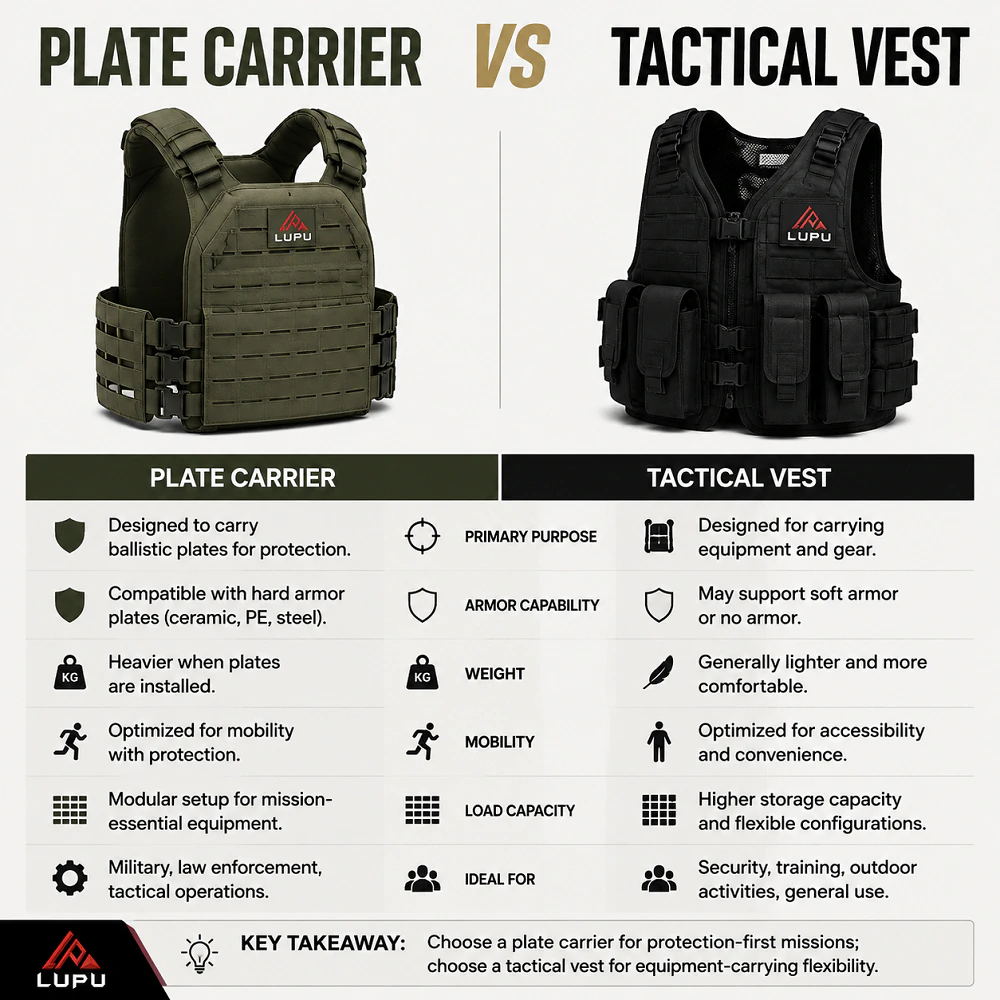
However, from a professional equipment design and manufacturing perspective, a plate carrier vs tactical vest comparison reveals significant differences in structure, protection capability, weight distribution, application scenarios, and customization requirements.
A plate carrier is primarily designed as a protective platform that securely holds ballistic armor plates, while a tactical vest is generally designed as a load-bearing system that allows users to organize and carry mission equipment efficiently.
For tactical gear brands, military equipment distributors, and professional buyers, understanding these differences is essential when selecting products, developing private-label solutions, or working with an experienced tactical vest manufacturer or plate carrier manufacturer.
Choosing the wrong platform can affect:
- user comfort
- operational performance
- product positioning
- customer satisfaction
- market competitiveness
This guide provides an in-depth comparison of plate carriers and tactical vests from both operational and manufacturing perspectives, helping buyers make informed decisions when sourcing professional tactical equipment.
What Is a Plate Carrier?
Definition and Primary Purpose of a Plate Carrier
A plate carrier is a specialized tactical protection platform designed to carry and secure hard armor plates, such as ceramic or polyethylene ballistic plates.
Unlike traditional load-bearing equipment, a plate carrier is built around the concept of integrating armor protection with mission-specific equipment management.
The primary purpose of a plate carrier is:
Protection first, equipment management second.
A modern plate carrier typically provides protection for critical torso areas, including:
- chest area
- back area
- side protection zones (depending on configuration)
The design allows operators to carry essential equipment while maintaining mobility in demanding environments.
Common users include:
- military personnel
- law enforcement units
- tactical response teams
- security professionals
- specialized training organizations
From a manufacturing standpoint, a professional plate carrier manufacturer must balance several technical factors:
- structural strength
- weight distribution
- ergonomic design
- material durability
- modular compatibility
A high-quality plate carrier is not simply a vest with pockets. It is an engineered load-bearing and protection system.
Key Components of a Modern Plate Carrier
Understanding the construction of a plate carrier helps buyers evaluate product quality and manufacturing capability.
1. Front and Rear Plate Bags
The core component of any plate carrier is the front and rear plate bag system.
These compartments are designed to securely hold ballistic plates and maintain proper positioning during movement.
A well-designed plate carrier should provide:
- stable plate retention
- proper armor alignment
- minimal plate movement
- easy plate insertion and removal
For OEM customers, plate bag design is an important customization area.
Manufacturers may customize:
- plate dimensions
- opening methods
- retention systems
- fabric selection
- reinforcement structure
A reliable plate carrier manufacturer must understand not only sewing techniques but also the relationship between armor positioning and user mobility.
2. Cummerbund System
The cummerbund is one of the most important structural elements of a modern plate carrier.
Its primary functions include:
- stabilizing the carrier around the torso
- improving weight distribution
- supporting additional equipment
- increasing adjustment flexibility
Common cummerbund designs include:
Elastic Cummerbund
Advantages:
- improved flexibility
- better movement comfort
- lightweight construction
MOLLE Cummerbund
Advantages:
- additional pouch attachment
- greater modular capability
- increased mission customization
For professional users, the cummerbund system directly affects comfort during extended wear.
3. Shoulder Strap System
Shoulder straps play a critical role in balancing the weight of armor and equipment.
A quality plate carrier should provide:
- adjustable shoulder length
- comfortable padding
- secure load positioning
- compatibility with accessories
Poor shoulder design can create:
- pressure points
- uneven weight distribution
- reduced mobility
Professional manufacturers carefully analyze ergonomics during product development.
4. MOLLE and Laser Cut Modular Platforms
Modern plate carriers usually integrate modular attachment systems.
The most common systems include:
- traditional MOLLE webbing
- laser-cut laminate panels
These systems allow users to attach:
- magazine pouches
- medical kits
- communication equipment
- utility pouches
- hydration systems
For brands developing custom tactical gear, modular design is one of the most important product differentiation factors.
A professional OEM tactical gear supplier can customize:
- MOLLE layout
- laser-cut patterns
- attachment positions
- material combinations
- color options
What Is a Tactical Vest?
Definition and Main Function of a Tactical Vest
A tactical vest is a versatile equipment-carrying platform designed primarily for organizing and carrying mission-related accessories.
Unlike a plate carrier, the primary purpose of a tactical vest is:
Equipment management and accessibility.
A tactical vest may include:
- magazine pouches
- utility pockets
- radio holders
- accessory attachment points
- adjustable straps
Depending on the design, some tactical vests may support armor inserts or protective panels. However, not every tactical vest is designed to carry hard ballistic plates.
This distinction is one of the most important factors when analyzing plate carrier vs tactical vest.
A tactical vest is often preferred in situations where:
- mobility is more important than heavy protection
- equipment organization is the main requirement
- extended wearing comfort is needed
Typical users include:
- security personnel
- outdoor professionals
- training organizations
- law enforcement support teams
- tactical enthusiasts
Common Types of Tactical Vests
1. Load Bearing Vest (LBV)
A load-bearing vest focuses on carrying equipment efficiently.
Key characteristics:
- lightweight structure
- multiple attachment points
- improved accessibility
LBVs are commonly used where users need to carry equipment without requiring heavy armor protection.
2. MOLLE Tactical Vest
A MOLLE tactical vest provides modular customization through webbing attachment systems.
Advantages include:
- flexible pouch configuration
- personalized load setup
- easy equipment replacement
For tactical gear brands, MOLLE systems provide excellent customization opportunities.
3. Ballistic Tactical Vest
A ballistic tactical vest combines equipment carrying capability with protective features.
Depending on design, it may support:
- soft armor panels
- protective inserts
- additional protection components
However, its structure and application may differ from dedicated plate carriers.
Plate Carrier vs Tactical Vest: Core Differences Explained
When evaluating plate carrier vs tactical vest, the most important consideration is not which product is universally better, but which platform is more suitable for a specific operational requirement, target market, and user environment.
Although both products may include MOLLE systems, adjustable straps, and modular accessories, their design philosophies are fundamentally different.
A plate carrier is engineered around ballistic protection and tactical mobility, while a tactical vest is developed around equipment organization and operational flexibility.
For professional buyers, distributors, and brands sourcing from a tactical vest manufacturer or plate carrier manufacturer, understanding these differences helps avoid incorrect product selection and improves market positioning.
Difference 1: Primary Purpose and Design Philosophy
Plate Carrier: Protection-Oriented Platform
The primary mission of a plate carrier is to provide a stable platform for ballistic armor protection.
Its design priorities are:
- Secure armor plate placement
- Stable load distribution
- Freedom of movement
- Modular mission configuration
A plate carrier is developed for environments where users may face higher-risk situations requiring torso protection.
Typical applications include:
- military operations
- tactical law enforcement missions
- security operations
- professional training environments
The structure of a plate carrier is optimized around the armor plate.
Every component, including:
- shoulder straps
- cummerbund
- front panel
- rear panel
is designed to support the weight and position of protective plates.
Tactical Vest: Equipment Management Platform
A tactical vest focuses primarily on carrying and organizing equipment.
Its design priorities are:
- Accessibility
- Storage capacity
- Comfort during extended wear
- Equipment organization
A tactical vest is commonly selected when users need:
- quick access to tools
- flexible equipment arrangement
- lightweight carrying capability
Typical applications include:
- security personnel
- training programs
- outdoor tactical activities
- professional equipment users
The main objective is not maximum protection but efficient equipment management.
Key Difference Summary
|
Feature |
Plate Carrier |
Tactical Vest |
|
Main Purpose |
Ballistic protection |
Equipment carrying |
|
Design Priority |
Armor integration |
Load organization |
|
Protection Level |
Designed for armor plates |
Depends on configuration |
|
Weight |
Usually heavier |
Usually lighter |
|
Mobility |
Optimized for tactical movement |
Optimized for accessibility |
Difference 2: Armor Capability and Protection System
Plate Carrier: Designed for Hard Armor Plates
The most significant difference in the plate carrier vs tactical vest comparison is armor compatibility.
A plate carrier is specifically designed to hold hard armor plates, including:
- ceramic armor plates
- polyethylene plates
- composite ballistic plates
The carrier structure must provide:
- secure plate retention
- proper positioning
- impact stability
- comfortable weight distribution
A professional plate carrier design considers factors such as:
- plate size standards
- plate thickness
- carrier adjustment range
- structural reinforcement
For a plate carrier manufacturer, maintaining consistent plate positioning is a critical quality requirement.
A poorly designed carrier may result in:
- unstable armor placement
- discomfort
- reduced protection effectiveness
Tactical Vest: Flexible Protection Options
A tactical vest may or may not include ballistic protection capability.
Depending on design, tactical vests may support:
- soft armor inserts
- lightweight protective panels
- accessory attachments
However, many tactical vests are primarily designed for carrying equipment.
This means a tactical vest should not automatically be considered equivalent to a ballistic protection platform.
For buyers, it is essential to clearly define:
- required protection level
- operational environment
- user expectations
before selecting a product.
Difference 3: Weight and Mobility Performance
Weight management is one of the most important factors in professional tactical equipment design.
Plate Carrier Weight Considerations
A plate carrier itself may be lightweight, but once equipped with:
- ballistic plates
- magazine pouches
- medical equipment
- communication devices
the total system weight increases significantly.
However, modern plate carriers are designed to distribute this weight efficiently.
Key design features include:
- ergonomic shoulder systems
- adjustable cummerbunds
- balanced load positioning
- low-profile construction
A high-quality plate carrier allows users to maintain mobility despite additional protection requirements.
Tactical Vest Weight Advantages
Tactical vests are generally lighter because they are not always designed around heavy armor plates.
Advantages include:
- reduced fatigue
- easier movement
- improved comfort during long-duration use
This makes tactical vests suitable for users who prioritize:
- flexibility
- endurance
- equipment accessibility
For some markets, especially training and security applications, a lightweight tactical vest may provide a better user experience.
Difference 4: Load Carrying Capability and Equipment Configuration
Both plate carriers and tactical vests can carry equipment, but their approaches are different.
Plate Carrier Load Configuration
A plate carrier typically supports a mission-focused loadout.
Common attachments include:
- magazine pouches
- medical kits
- radio pouches
- utility accessories
- hydration systems
The design philosophy is:
Carry essential equipment while maintaining mobility.
Because space is limited, plate carrier users usually prioritize mission-critical equipment.
Tactical Vest Load Configuration
A tactical vest often provides more flexibility for equipment organization.
Common configurations include:
- multiple utility pouches
- larger storage areas
- customizable accessory placement
The design philosophy is:
Provide maximum equipment accessibility.
This makes tactical vests suitable for applications where users need to carry various tools and accessories.
Difference 5: Customization and Manufacturing Considerations
For brands, wholesalers, and distributors, the differences between plate carriers and tactical vests are also reflected in manufacturing requirements.
A professional tactical gear OEM partner must understand the technical differences between these product categories.
Customization Options for Plate Carriers
A professional plate carrier manufacturer can provide customization in areas such as:
Material Selection
Common materials include:
- 500D Nylon
- 1000D Nylon
- Cordura fabric
- laser-cut composite materials
Material selection affects:
- durability
- weight
- abrasion resistance
- production cost
Structural Design
OEM customization may include:
- plate compartment size
- cummerbund design
- shoulder strap structure
- MOLLE layout
- quick-release systems
Branding and Market Positioning
For tactical brands, customization opportunities include:
- logo placement
- color selection
- packaging design
- accessory compatibility
This allows companies to create differentiated product lines.
Customization Options for Tactical Vests
A tactical vest supplier usually provides customization options including:
Vest Configuration
Examples:
- MOLLE arrangement
- pouch placement
- accessory attachment points
Size and Fit Adjustments
Professional buyers often require:
- different size ranges
- adjustable structures
- regional fit considerations
Product Application Optimization
A tactical vest designed for:
- security companies
may require different features compared with one designed for:
- outdoor markets
- training organizations
- tactical lifestyle brands
Understanding customer application is essential for successful OEM development.
Plate Carrier vs Tactical Vest: Which One Should Brands Choose?
For brands developing tactical equipment products, the decision should be based on:
- Target customer group
- Market positioning
- Required protection level
- Expected product price range
- User application scenario
There is no universal winner between a plate carrier and tactical vest.
The correct choice depends on business strategy and customer demand.
Choosing a Plate Carrier for Professional Protection Markets
A plate carrier is generally the better option for markets requiring:
- ballistic protection compatibility
- professional tactical applications
- modular mission equipment
Suitable industries include:
- defense suppliers
- law enforcement equipment distributors
- professional tactical training providers
Choosing a Tactical Vest for Flexible Equipment Markets
A tactical vest may be more suitable for:
- security markets
- outdoor tactical brands
- training organizations
- recreational tactical users
Advantages include:
- lower weight
- easier configuration
- broader customer appeal
Manufacturing Considerations When Sourcing Tactical Vests and Plate Carriers
For professional buyers, understanding the difference between a plate carrier vs tactical vest is only the first step. The next challenge is selecting a reliable manufacturing partner capable of producing consistent, durable, and market-ready tactical equipment.
Whether you are developing a private-label tactical product line, expanding an existing outdoor brand, or sourcing tactical equipment for professional users, the manufacturing capability behind the product directly influences:
- product reliability
- customer satisfaction
- brand reputation
- long-term business growth
A professional tactical vest manufacturer or plate carrier manufacturer must combine technical knowledge, material expertise, manufacturing experience, and strict quality control processes.
Material Selection: The Foundation of Tactical Equipment Quality
The performance of a tactical vest or plate carrier starts with the materials used during production.
Professional tactical equipment requires materials that balance:
- durability
- abrasion resistance
- weight control
- environmental adaptability
- production consistency
Nylon Fabrics for Tactical Applications
The most commonly used materials include:
500D Nylon
Advantages:
- lightweight construction
- excellent balance between durability and mobility
- suitable for lightweight tactical applications
Common applications:
- lightweight plate carriers
- tactical vests
- EDC tactical equipment
1000D Nylon
Advantages:
- higher abrasion resistance
- stronger load-bearing capability
- suitable for demanding environments
Common applications:
- military-style tactical equipment
- heavy-duty tactical bags
- professional-grade carriers
Cordura Fabric
Cordura is widely recognized in professional tactical equipment manufacturing because of its:
- tear resistance
- durability
- long service life
For brands targeting premium markets, material selection can become a major product differentiation factor.
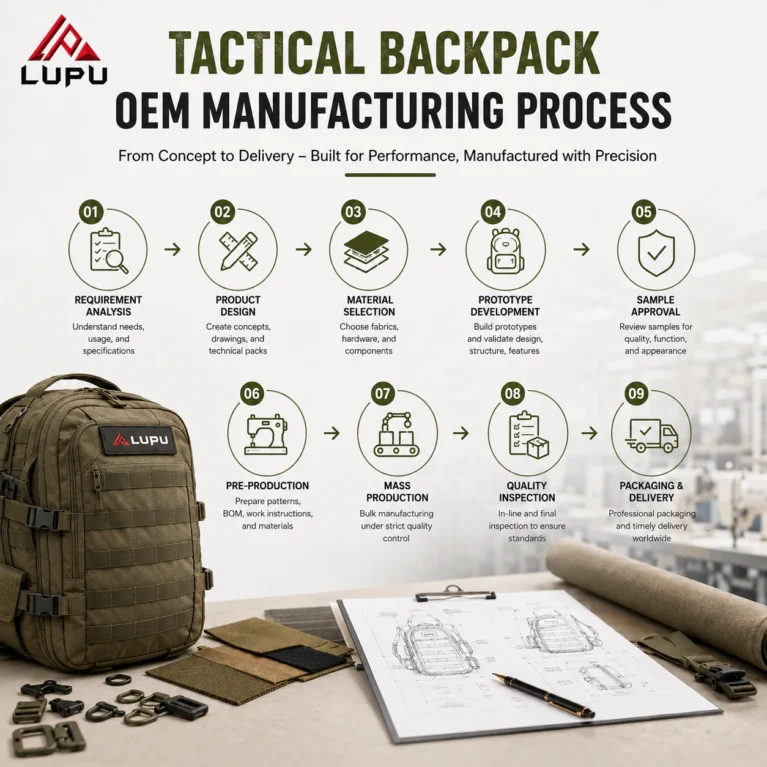
Manufacturing Process: From Prototype to Mass Production
A reliable OEM tactical gear partner should have a structured product development process.
A professional manufacturing workflow typically includes:
1. Product Design and Engineering
Before production begins, manufacturers evaluate:
- intended application
- user requirements
- target market
- product specifications
During this stage, OEM customers may customize:
- product structure
- materials
- colors
- accessories
- branding elements
A strong manufacturer does not simply produce according to drawings but can also provide engineering recommendations.
2. Prototype Development
Prototype development allows brands to evaluate:
- product appearance
- comfort
- functionality
- durability
Professional prototype testing may include:
- fitting evaluation
- load testing
- attachment testing
- structural inspection
This stage helps identify potential issues before mass production.
3. Cutting and Sewing Production
Tactical equipment manufacturing requires precision during:
- fabric cutting
- panel assembly
- reinforcement sewing
- accessory installation
Critical manufacturing areas include:
- stress points
- shoulder straps
- MOLLE attachment areas
- plate compartments
Poor sewing quality can directly affect product durability.
4. Quality Control Inspection
A professional tactical vest supplier should implement quality control throughout the entire production process.
Inspection points may include:
Material Inspection
Checking:
- fabric quality
- color consistency
- thickness
- strength
Sewing Inspection
Checking:
- stitch density
- seam strength
- reinforcement points
- production consistency
Functional Testing
Checking:
- adjustment systems
- MOLLE attachment strength
- buckle performance
- structural stability
How to Choose a Reliable Tactical Gear OEM Partner?
Selecting the right supplier is one of the most important decisions for tactical equipment brands.
A qualified manufacturing partner should provide more than production capacity.
The ideal partner should offer:
- product development support
- manufacturing expertise
- quality management
- customization capability
- international export experience
1. Evaluate Manufacturing Experience
Experience matters because tactical equipment requires specialized production knowledge.
A capable manufacturer should understand:
- load-bearing structures
- tactical applications
- material performance
- user requirements
Companies should avoid suppliers that only provide general bags or apparel manufacturing but lack tactical equipment expertise.
2. Review OEM and Customization Capability
For brands, customization is often the key competitive advantage.
A professional professional tactical gear OEM partner should support:
- custom designs
- private labeling
- color customization
- material selection
- packaging solutions
This allows brands to create unique products rather than compete only on price.
3. Check Production Quality Standards
Before placing bulk orders, buyers should evaluate:
- manufacturing facilities
- quality inspection procedures
- production samples
- previous projects
Important questions include:
- How does the factory control consistency?
- How are defects handled?
- What inspection process is used before shipment?
4. Consider Supply Chain Capability
Global buyers require reliable supply chains.
A mature tactical equipment supplier should understand:
- international shipping requirements
- export documentation
- production scheduling
- packaging standards
Stable supply capability reduces:
- delivery delays
- inventory risks
- unexpected costs
Plate Carrier vs Tactical Vest: Buyer Selection Checklist
Before selecting a product, buyers should evaluate the following factors:
1. What Is the Primary Application?
Ask:
- Is the product intended for protection?
- Is the priority equipment carrying?
- Is it designed for professional or recreational users?
2. What Level of Protection Is Required?
Determine:
- armor compatibility
- protection expectations
- operational environment
A plate carrier is generally designed around hard armor integration, while a tactical vest may focus more on carrying capability.
3. What Is the Target Market?
Different markets require different solutions.
Military and Law Enforcement Markets
Often prioritize:
- protection
- durability
- mission configuration
Security Markets
Often prioritize:
- comfort
- equipment accessibility
- cost efficiency
Outdoor and Tactical Lifestyle Markets
Often prioritize:
- appearance
- versatility
- Customization
Frequently Asked Questions About Plate Carrier vs Tactical Vest
What is the main difference between a plate carrier and a tactical vest?
The main difference is their design purpose. A plate carrier is primarily designed to hold hard armor plates and provide protection, while a tactical vest is generally designed for carrying equipment and improving operational organization.
Can a tactical vest carry armor plates?
Some tactical vests support protective inserts, but they are not always designed for hard armor plates. A dedicated plate carrier usually provides better structural support and armor stability.
Is a plate carrier better than a tactical vest?
Neither option is universally better. A plate carrier is more suitable for users requiring armor protection, while a tactical vest may be better for users who prioritize lightweight equipment carrying.
Are plate carriers heavier than tactical vests?
Generally, yes. A plate carrier becomes significantly heavier when equipped with ballistic plates, although modern designs focus on improving mobility and weight distribution.
How can brands customize tactical vests and plate carriers?
OEM customization options may include:
- materials
- colors
- logo branding
- MOLLE configuration
- structural design
- packaging
Working with an experienced tactical equipment manufacturer allows brands to develop products that match their target markets.
Conclusion: Choosing the Right Tactical Protection Platform
The comparison of plate carrier vs tactical vest is not simply about identifying which product is better. The correct choice depends on the intended application, protection requirements, user expectations, and market positioning.
A plate carrier provides a specialized platform for armor integration and professional tactical applications, while a tactical vest offers flexible equipment management and broader usability.
For brands, distributors, and professional buyers, selecting the right manufacturing partner is equally important as selecting the right product.
An experienced tactical vest manufacturer or plate carrier manufacturer can help businesses achieve:
- consistent product quality
- reliable production capability
- customized solutions
- competitive market positioning
At LUPU Tactical Gear, professional OEM and ODM solutions support global brands seeking reliable tactical equipment manufacturing, including tactical vests, plate carriers, tactical backpacks, and customized tactical gear solutions.
Whether you are developing a new tactical product line or expanding an existing catalog, choosing the right partner can make the difference between a standard product and a competitive market solution.