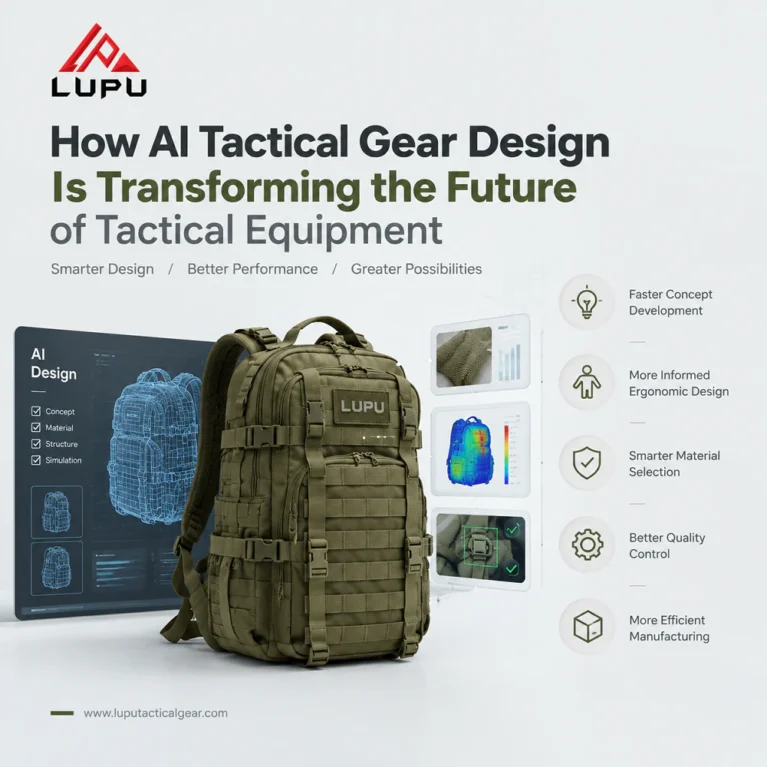
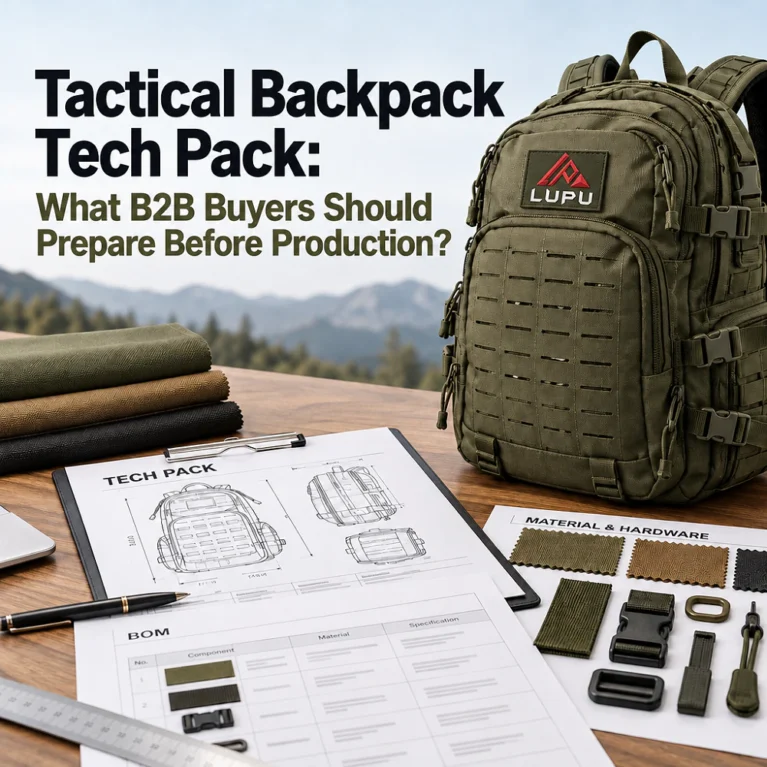
Introduction: The New Era of Tactical Backpack Innovation
A backpack is no longer just a container for carrying personal belongings. For modern users, a high-performance backpack has become an integrated gear system designed to adapt to changing environments, diverse tasks, and evolving needs.
Outdoor enthusiasts, professionals, travelers, photographers, emergency responders, and everyday users increasingly require equipment that provides flexibility, organization, and reliability. A fixed-storage backpack may work for a single purpose, but it often lacks the adaptability needed for multiple scenarios.
This is where Modular Tactical Backpack Design creates a fundamental shift.
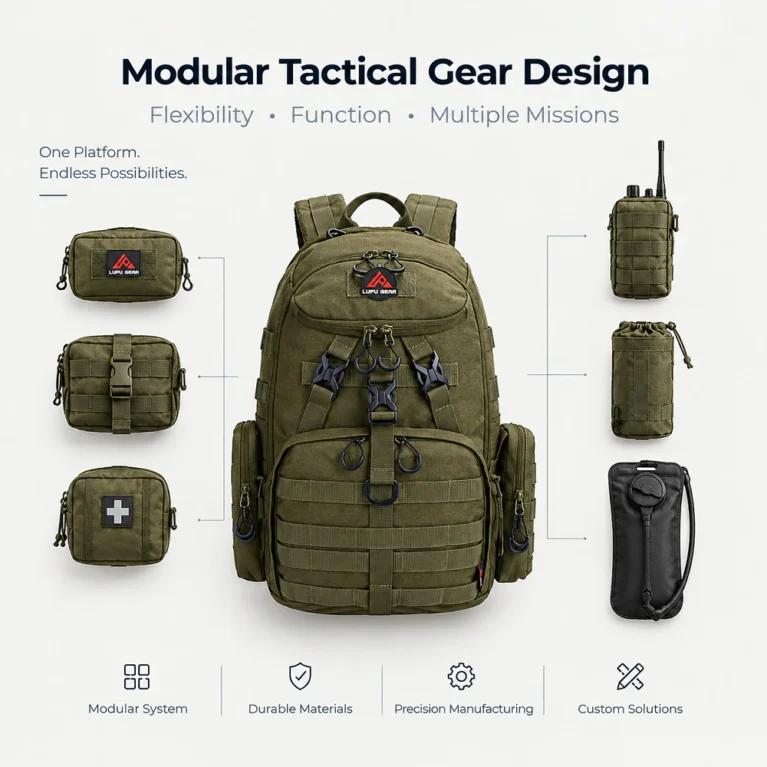
Unlike traditional backpack structures, modular tactical backpacks are built around the concept of customization and adaptability. Through interchangeable components, expandable storage systems, and intelligent organization, these backpacks allow users to configure their gear according to specific requirements.
Modern modular design is not simply about adding more features. It is about creating a smarter carrying solution where every element serves a purpose — improving accessibility, efficiency, comfort, and long-term usability.
1. Understanding Modular Tactical Backpack Design
What Is a Modular Tactical Backpack?
A modular tactical backpack is a flexible carrying platform designed with customizable components that allow users to modify storage capacity, attachment options, and internal organization.
The foundation of Modular Tactical Backpack Design is based on several key principles:
- Adaptable storage configuration
- Expandable attachment capability
- User-specific organization
- Multi-purpose functionality
- Durable construction for long-term use
Instead of forcing users to adapt to a backpack’s limitations, modular systems allow the backpack to adapt to the user.
For example, a traveler may require additional external storage for accessories, while an outdoor enthusiast may need quick access to specialized equipment. A modular backpack provides the flexibility to support different requirements without requiring multiple separate bags.
2. The Design Philosophy Behind Modular Gear Systems
From Single-Purpose Products to Adaptive Platforms
Traditional backpacks are typically designed around a fixed layout. Compartments, pockets, and attachment points are permanently positioned, limiting customization.
A modular tactical backpack takes a different approach by treating the backpack as a platform rather than a finished product.
The core philosophy includes:
- Adaptability
Users operate in different environments, and their equipment requirements constantly change. A modular backpack allows configurations to evolve based on:
- Outdoor activities
- Travel conditions
- Professional requirements
- Daily carry needs
- Efficiency
Good modular design reduces unnecessary searching and improves equipment access.
A well-designed system enables users to:
- Organize essential items logically
- Separate frequently used gear
- Quickly identify and retrieve equipment
- Maintain better workflow efficiency
- Personalization
Every user has different priorities. Modular systems provide the freedom to create individual configurations through:
- External accessories
- Detachable pouches
- Hook-and-loop panels
- Adjustable storage solutions
- Long-Term Value
A modular backpack is designed for extended usability. Instead of replacing an entire bag when needs change, users can modify or upgrade specific components.
This approach improves product longevity and reduces unnecessary waste.
3. Core Components of Effective Modular Tactical Backpack Design
3.1 MOLLE System: The Backbone of Modular Expansion
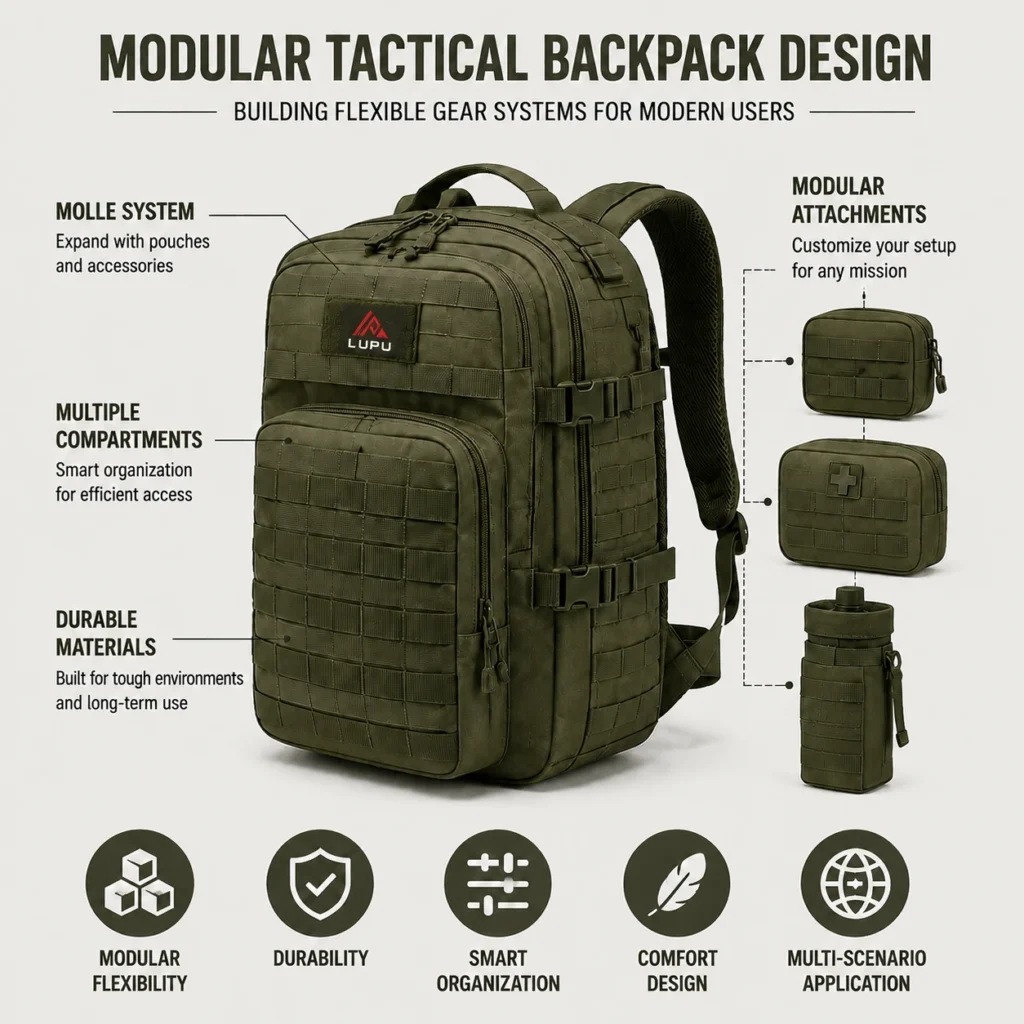
One of the most recognizable features of modern tactical backpack design is the MOLLE (Modular Lightweight Load-carrying Equipment) attachment system.
MOLLE systems allow users to attach compatible accessories externally, creating customized storage configurations.
A well-engineered MOLLE tactical backpack provides:
- Additional carrying capacity
- Flexible accessory placement
- Improved organization
- Faster equipment accessibility
Modern manufacturers have further improved this technology through laser-cut MOLLE panels.
Compared with traditional webbing systems, laser-cut designs offer:
- Reduced weight
- Cleaner appearance
- Improved structural integration
- Enhanced modern aesthetics
The MOLLE platform represents the foundation of modular equipment expansion, allowing users to build a backpack configuration that matches their specific applications.
3.2 Intelligent Compartment Design: Organization Over Quantity
A common misconception is that more pockets automatically create better organization.
Professional Modular Tactical Backpack Design focuses on intelligent compartment planning rather than simply increasing storage spaces.
Effective layouts consider:
Accessibility
Frequently used items should be positioned where they can be reached quickly.
Protection
Sensitive equipment requires dedicated protection and separation.
Visibility
Logical organization reduces time spent searching for essential items.
Balance
Storage placement should maintain comfortable weight distribution.
A premium modular backpack typically includes:
- Large main compartments
- Secondary organization areas
- Quick-access pockets
- Internal dividers
- Expandable storage zones
The goal is not maximum complexity, but maximum efficiency.
4. Material Engineering: Building Durable Modular Backpacks
A modular tactical backpack must withstand demanding environments while maintaining comfort and functionality.
Material selection plays a critical role in overall performance.
High-Density Fabric Construction
Common materials include:
500D Nylon
Provides a balance between durability and weight, making it suitable for everyday outdoor applications.
Offers enhanced abrasion resistance and structural strength for users requiring higher durability.
Water-Resistant Protection
Water-repellent fabrics help protect equipment from unexpected weather conditions and outdoor exposure.
Reinforced Construction
Professional manufacturing focuses on:
- Stress-point reinforcement
- Strong stitching patterns
- Durable hardware
- Reliable zipper systems
A modular system is only effective when every attachment point and structural component can withstand repeated use.
5. Ergonomic Engineering: Comfort Meets Capability
A backpack with extensive features is ineffective if it cannot be carried comfortably.
Advanced modular tactical backpack design must balance functionality with human ergonomics.
Weight Distribution
Proper weight management reduces fatigue by:
- Positioning heavier items closer to the body
- Supporting balanced load distribution
- Improving carrying stability
Shoulder Strap Design
Professional designs incorporate:
- Adjustable shoulder straps
- Reinforced connection points
- Comfortable padding systems
Breathable Back Panels
Long-duration carrying requires airflow management.
Ergonomic back systems help improve:
- Comfort
- Ventilation
- Stability during movement
The best modular backpacks combine adaptability with a user-centered carrying experience.
6. Modular Tactical Backpacks for Different Applications
Outdoor Exploration
For hiking, camping, and adventure travel, modular systems provide flexibility for changing environments.
Users can configure storage for:
- Outdoor accessories
- Navigation equipment
- Personal essentials
- Emergency supplies
Professional Applications
Many professionals require organized and reliable equipment transportation.
Modular backpacks support:
- Tool organization
- Equipment management
- Field mobility
- Efficient workflow
Urban Everyday Carry
Modern tactical backpack concepts have expanded beyond outdoor environments.
Urban users benefit from:
- Laptop protection
- Travel organization
- Daily equipment storage
- Customizable layouts
The combination of durability and clean design makes modular backpacks increasingly popular for everyday lifestyles.
7. Manufacturing Challenges Behind High-Quality Modular Backpacks
Creating a reliable modular backpack requires advanced manufacturing expertise.
Precision Production
Every component must work together accurately:
- Fabric cutting
- Panel alignment
- Sewing precision
- Reinforcement placement
- Quality inspection
Small production errors can affect durability, comfort, and attachment performance.
Balancing Performance and Cost
Manufacturers must carefully balance:
- Material quality
- Production efficiency
- Product durability
- Market requirements
Professional backpack manufacturing requires experience in both engineering and craftsmanship.
8. Customization Trends in Modular Tactical Backpack Design
The demand for personalized gear solutions continues to grow.
Brands, organizations, and businesses increasingly seek customized backpack solutions that reflect their unique requirements.
Customization options may include:
- Custom colors
- Brand logos
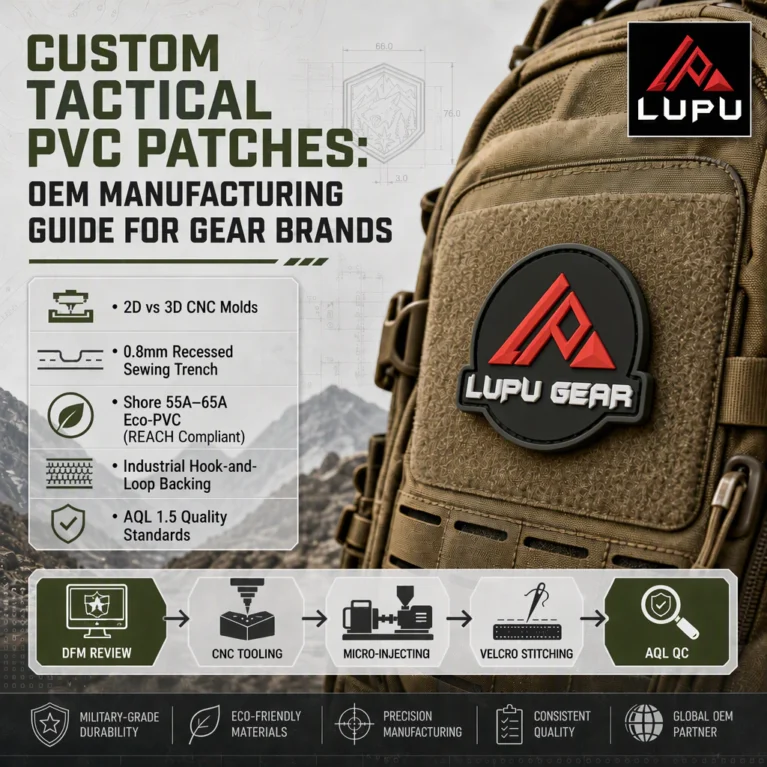
- Private label production
- Modified compartment structures
- Material selection
- Functional adjustments
OEM and ODM Development
Experienced manufacturers help customers transform ideas into finished products through:
- Product concept development
- Prototype creation
- Engineering optimization
- Bulk production support
For businesses entering the outdoor gear market, partnering with an experienced tactical backpack manufacturer provides advantages in quality control, production capability, and market competitiveness.
9. Future Trends in Modular Tactical Backpack Design
The future of backpack innovation will continue moving toward greater flexibility and intelligent design.
Key trends include:
Lightweight Performance Materials
Manufacturers are exploring stronger materials that reduce weight while maintaining durability.
Sustainable Manufacturing
Environmental considerations are becoming increasingly important through:
- Responsible material selection
- Longer product lifecycles
- More efficient production processes
Smarter Organization Systems
Future backpacks may integrate:
- More adaptive storage solutions
- Improved user customization
- Technology-friendly compartments
Hybrid Lifestyle Design
The next generation of modular backpacks will continue blending:
- Outdoor performance
- Professional functionality
- Urban lifestyle requirements
Conclusion: Building the Future of Flexible Gear Systems
Modular Tactical Backpack Design represents a new approach to equipment development — one focused on flexibility, personalization, and long-term performance.
A modern tactical backpack is no longer limited to carrying items. It becomes a customizable platform that supports different users, environments, and challenges.
Through advanced modular systems, durable materials, ergonomic engineering, and professional manufacturing processes, today’s tactical backpacks provide smarter solutions for a wide range of applications.
The future of gear design belongs to products that adapt — not products that restrict.
A truly effective modular tactical backpack gives users the freedom to build their own system, organize their equipment efficiently, and confidently move through every environment.
Build Your Custom Modular Tactical Backpack Solution
Looking for a reliable partner to develop your next-generation gear products?
With professional expertise in Modular Tactical Backpack Design, we support brands, organizations, and businesses with complete OEM and ODM solutions — from concept development and material selection to functional customization, production, and quality control.
Whether you need customized storage systems, branded tactical backpacks, or scalable manufacturing support, our experienced team can help transform your ideas into high-quality gear solutions designed for modern users.
Partner with us to create durable, flexible, and market-ready tactical backpacks.
Contact our team today and start your custom backpack project.
Email: info@luputacticalgear.com
FAQ:
1. What is Modular Tactical Backpack Design?
Modular Tactical Backpack Design refers to a backpack development approach that focuses on flexibility, customization, and adaptability. Unlike traditional backpacks with fixed structures, modular tactical backpacks allow users to adjust storage layouts, attach accessories, and configure carrying systems based on different needs and environments.
2. What are the main advantages of a modular tactical backpack?
A modular tactical backpack provides several benefits, including improved organization, flexible storage options, enhanced durability, and better adaptability. Users can customize the backpack setup for outdoor activities, travel, professional applications, or everyday carry without needing multiple specialized bags.
3. How does the MOLLE system improve a tactical backpack?
The MOLLE (Modular Lightweight Load-carrying Equipment) system enables users to attach compatible pouches and accessories to the exterior of a backpack. This creates an expandable storage platform that allows users to personalize equipment placement and improve accessibility.
Modern designs, such as laser-cut MOLLE systems, provide a lighter, cleaner, and more integrated approach while maintaining modular functionality.
4. What materials are commonly used in high-quality modular tactical backpacks?
Professional modular tactical backpacks often use durable materials such as 500D nylon, 900D Oxford fabric, and other high-strength textiles. These materials provide abrasion resistance, structural stability, and reliable performance for outdoor, travel, and professional applications.
Additional features such as water-resistant coatings, reinforced stitching, and heavy-duty hardware further improve durability.
5. Are modular tactical backpacks suitable for everyday use?
Yes. Modern modular tactical backpacks are designed not only for outdoor environments but also for urban lifestyles. Their organized compartments, durable construction, and customizable storage systems make them suitable for commuting, travel, photography, work equipment, and daily carry applications.
6. Can a modular tactical backpack be customized for brands or businesses?
Yes. Many professional manufacturers provide customization services, including OEM and ODM solutions. Custom options may include materials, colors, logo branding, compartment layouts, attachment systems, and product specifications to meet different market requirements.
7. How do manufacturers ensure the quality of modular tactical backpacks?
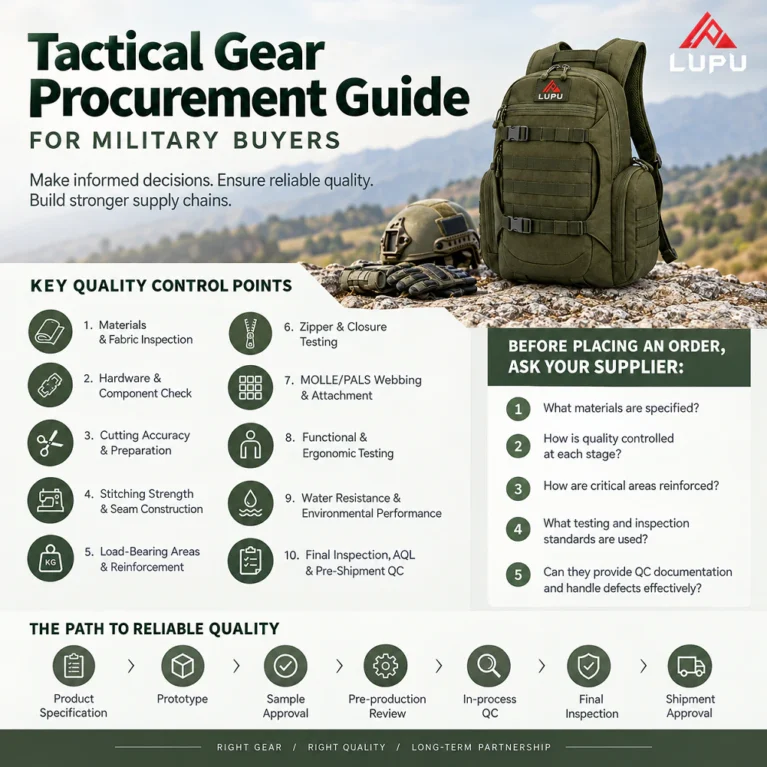
Professional manufacturers use strict quality control processes throughout production, including material inspection, precision cutting, sewing accuracy checks, reinforcement testing, and final product inspections.
A reliable tactical backpack manufacturer combines advanced production technology with experienced craftsmanship to deliver consistent quality.
8. What should businesses consider when choosing a modular tactical backpack manufacturer?
Businesses should evaluate several factors, including:
Manufacturing experience
Production capacity
Material quality standards
Customization capabilities
Quality control systems
Supply chain reliability
Working with an experienced manufacturer helps ensure stable production, consistent quality, and successful product development.
9. What is the future trend of Modular Tactical Backpack Design?
The future of Modular Tactical Backpack Design will focus on lighter materials, smarter organization systems, sustainable manufacturing, and greater customization flexibility. As users continue to demand adaptable gear solutions, modular backpacks will evolve into more versatile platforms that support multiple environments and applications.
10. Why is modular design important for the future of tactical backpacks?
Modular design allows backpacks to evolve with users’ changing needs. Instead of creating a single-purpose product, modular systems provide a flexible foundation that can be expanded, adjusted, and personalized over time, making them a more efficient and sustainable solution for modern gear users.