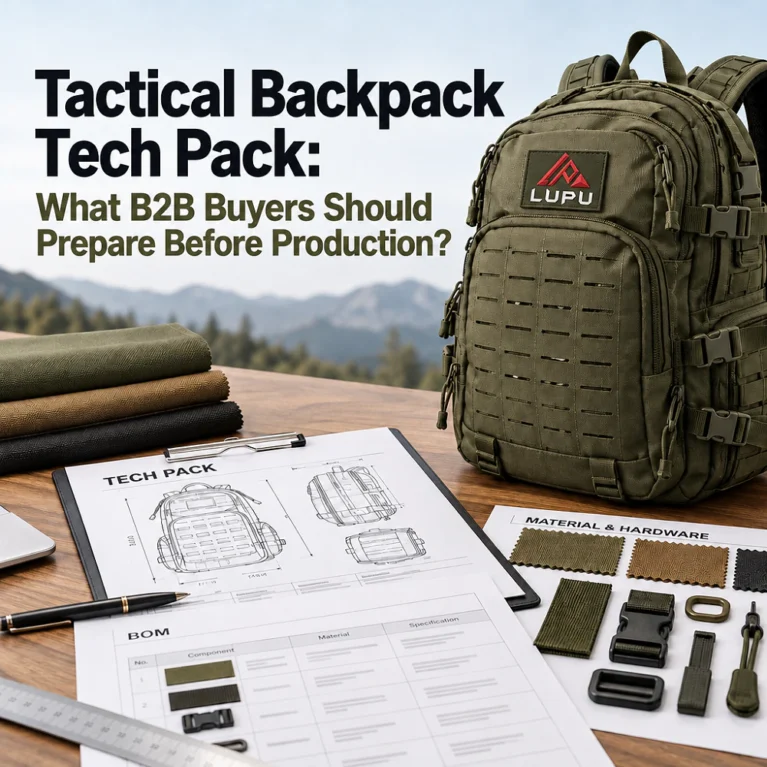
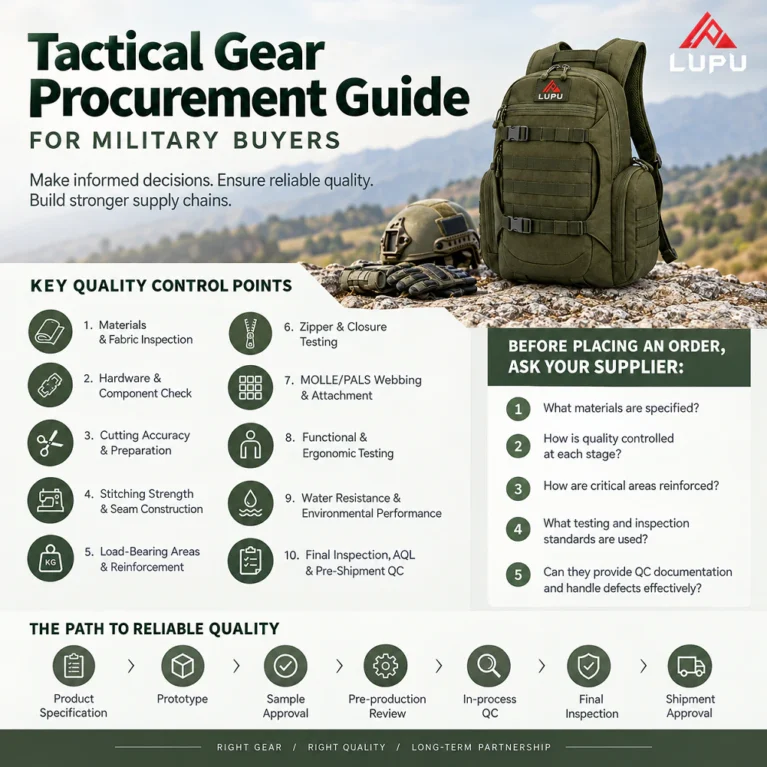
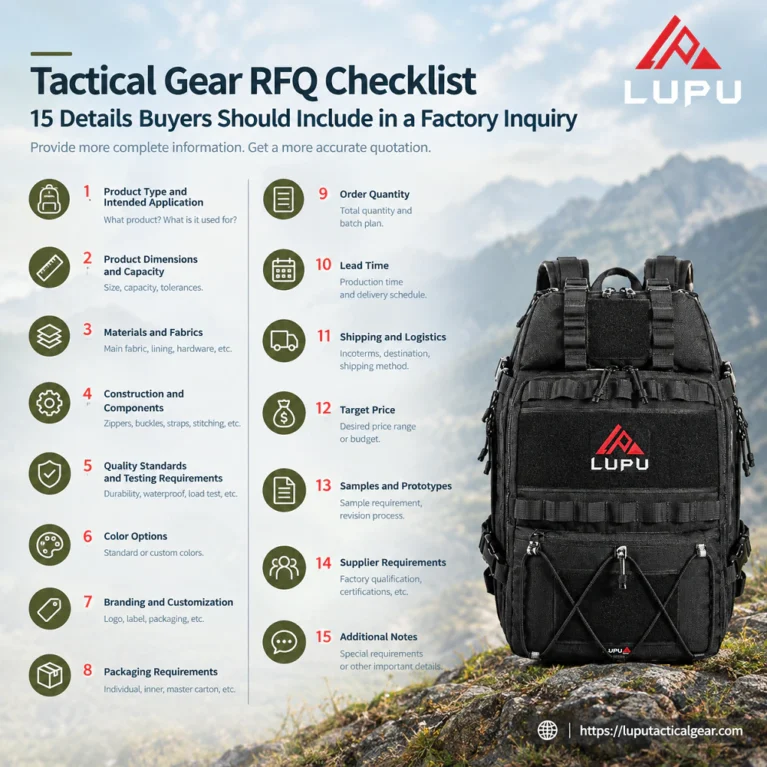
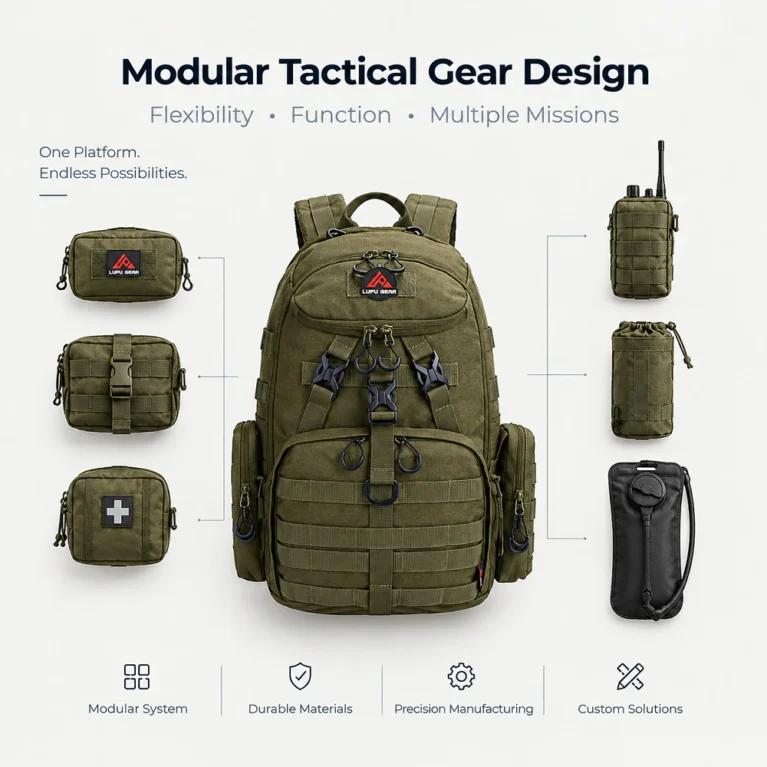
Custom tactical PVC patches give gear brands a durable, highly visible way to identify products, units, teams, and mission equipment. Unlike woven or embroidered badges, PVC patches are waterproof, abrasion-resistant, easy to clean, and capable of precise 2D or 3D relief. This complete OEM manufacturing guide explains how to turn artwork into production-ready patches, select the right mold and materials, specify backings, control quality, and plan a reliable bulk order. These products have emerged as the industry standard for zaini tattici, plate carriers, and combat uniforms.
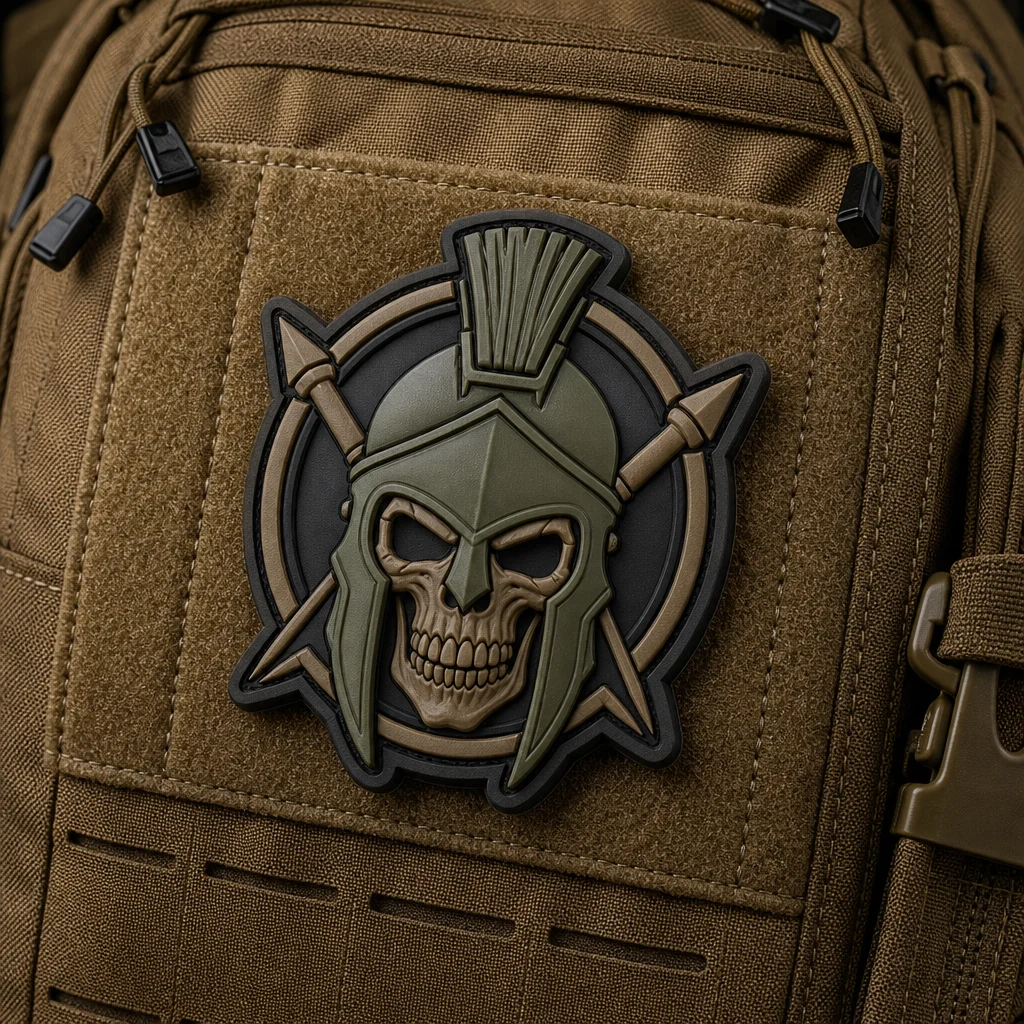
High-durability 3D sculpted custom tactical PVC patches mounted on a 1000D Cordura backpack velcro loop panel.
Why PVC Patches Are a Smart Choice for Tactical Gear
Tactical users expect branding and identification products to survive rain, mud, UV exposure, repeated attachment, and rough handling. Flexible polyvinyl chloride (PVC) holds crisp edges and saturated color while remaining comfortable on packs, plate carriers, uniforms, cases, and apparel. For brands, the material also supports low-profile labels, glow effects, raised details, multi-color designs, and repeatable OEM production.
- Waterproof surface that wipes clean easily.
- Excellent resistance to abrasion, flexing, and outdoor conditions.
- Consistent color and detail from sample approval through bulk production.
- Compatible with hook-and-loop backing, sew-on applications, and specialty attachment systems.
2D Multi-Level vs. 3D Sculpted Mold Tooling: Technical Differences
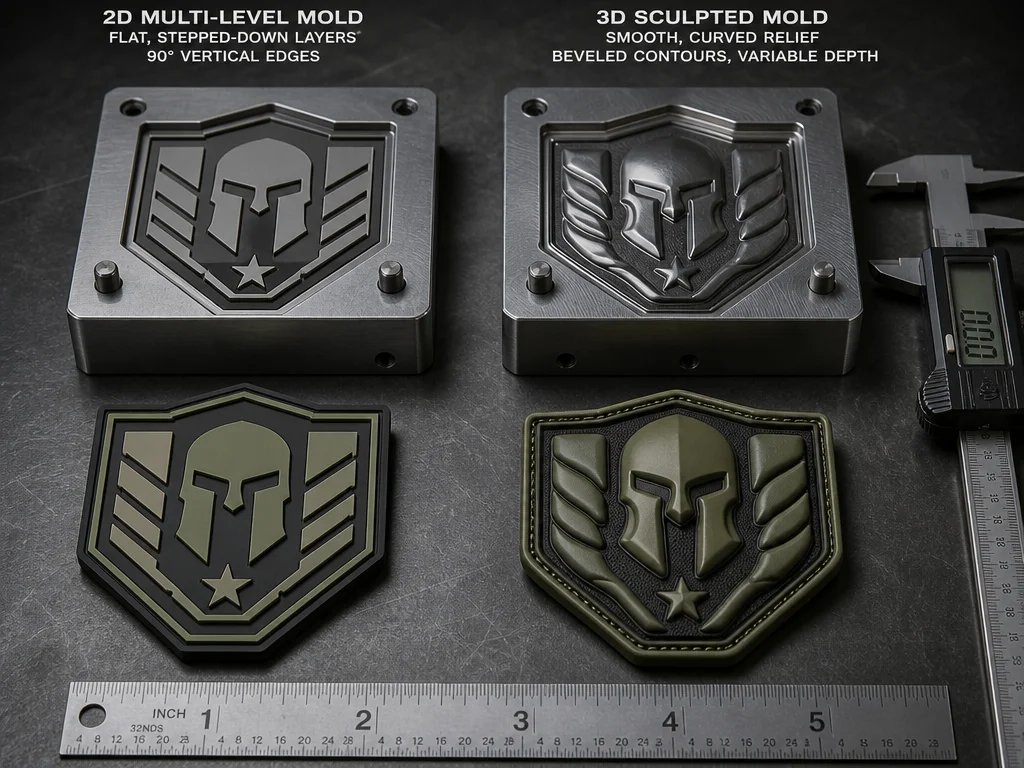
Engineering comparison: 2D stepped-down multi-level patch structure (left) vs. 3D curved sculpted relief mold structure (right).
The mold decision affects appearance, cost, lead time, and how clearly a logo reads at a distance. A 2D patch has a flat face with raised or recessed color areas. A 3D patch uses different heights to create sculpted relief, dimensional lettering, or an embossed emblem.
| Caratteristica | 2D Mold | 3D Mold |
| Surface | Flat, layered, or lightly raised | Sculpted relief with multiple heights |
| Best for | Text, flags, simple logos, serial identity | Emblems, animals, equipment, dimensional branding |
| Artwork tolerance | Works well with small details and clean color blocks | Needs simplified details and adequate spacing |
| Visual effect | Sharp, low-profile, easy to read | Premium depth and tactile impact |
| Typical cost | Efficient for repeatable bulk programs | Higher tooling complexity and sampling cost |
For a first OEM program, submit vector artwork with minimum line widths, exact dimensions, color references, and a clear indication of which areas should be raised or recessed. A factory can then recommend whether a 2D or 3D tool will protect legibility without overcomplicating the mold.
Materials, Color, and Environmental Compliance
Specify a flexible PVC compound appropriate for outdoor use and the intended temperature range. Confirm hardness, thickness, edge profile, and color-matching method before sampling. Pantone references are useful, but a physical color sample or approved production chip is even better for brand-critical colors.
Responsible brands should request documentation for the destination market and product application. Depending on the order, this may include REACH and RoHS declarations, restricted-substance testing, heavy-metal limits, phthalate requirements, and factory statements about recycled content or responsible waste handling. Ask the supplier to identify the PVC formulation, inks or pigments, and any backing adhesives used. Keep the approved specification and compliance records with the purchase order so future reorders remain consistent. Fully compliant with EU REACH Regulation (EC) No 1907/2006 and US CA Prop 65 where applicable.
Backing Systems & Attachment Engineering: The Sewing Trench Advantage
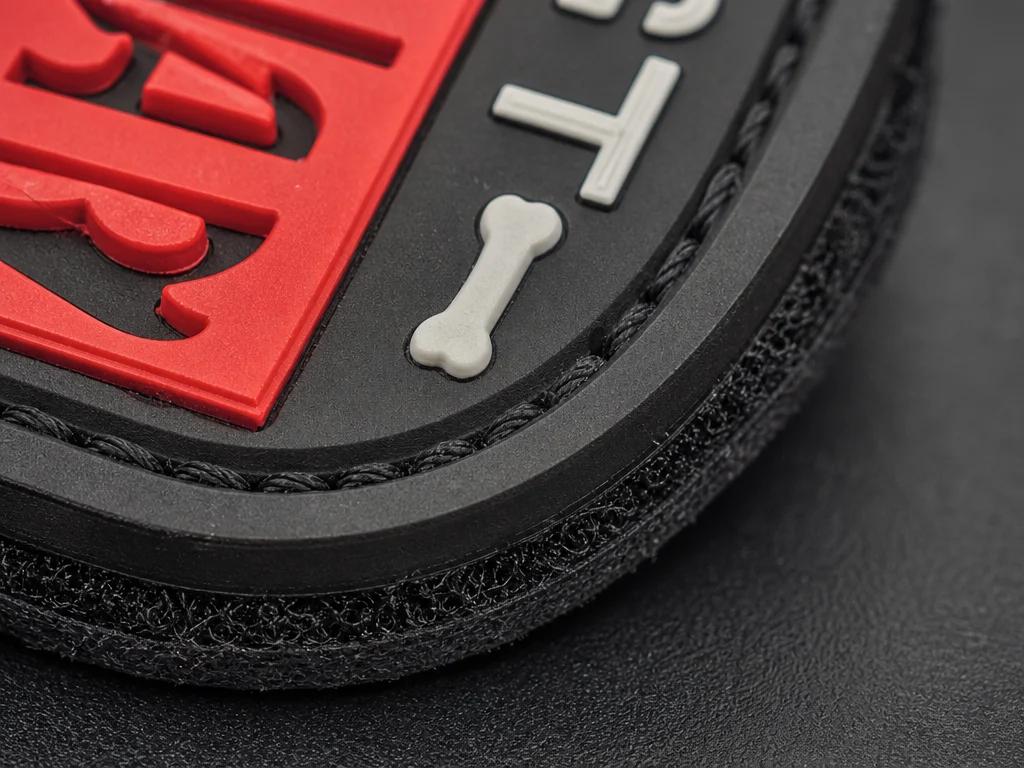
Micro-structure of the recessed perimeter sewing trench (0.8mm deep groove) engineered for heavy-duty nylon perimeter stitching and velcro retention.
Hook-and-loop backing is the standard for removable tactical patches. Decide whether the patch will ship with hook backing only, a matching loop panel, or a complete attachment set. Specify the backing color, adhesive or bonding method, stitch pattern, and whether the backing must be removable for laundering.
A sewing trench is a recessed channel around the perimeter that guides a needle and protects the patch edge. It is valuable when the patch will be permanently sewn onto a garment, bag, or cover. The trench should be wide and deep enough for the selected thread and stitch without cutting through the PVC. Your tech pack should show the trench location, border width, corner radius, finished thickness, and tolerance. Combining a clean border with a properly engineered trench helps prevent puckering, edge lift, and uneven stitching.
The Step-by-Step OEM Manufacturing Workflow for Custom Tactical PVC Patches
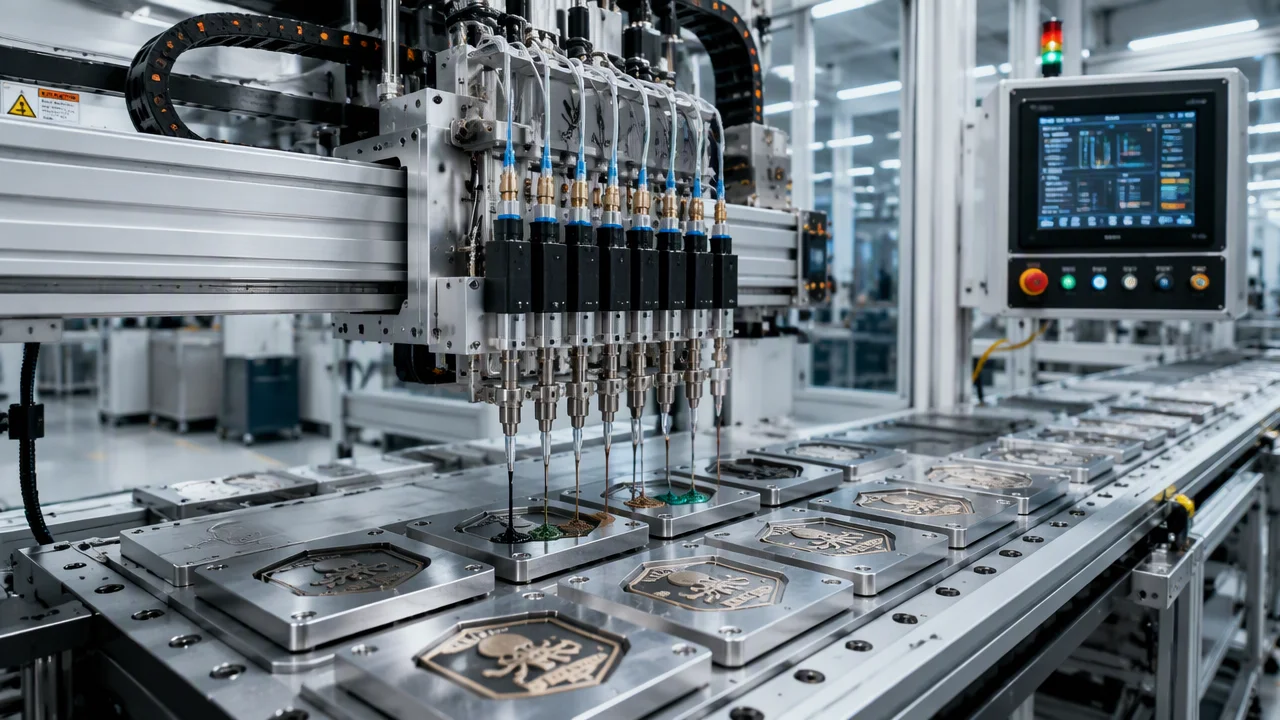
Automated CNC multi-nozzle micro-injection dispensing machine injecting liquid PVC polymers into precision mold cavities in our production cleanroom.
- Brief and artwork review: Share dimensions, application, quantity, colors, backing, packaging, destination, and vector files. The factory checks line width, negative space, and production feasibility.
- Tooling and mold design: Engineering converts the approved artwork into a 2D or 3D mold plan, including layers, relief heights, border, and sewing trench.
- Color and sample approval: The supplier creates a pre-production sample or digital proof. Review color, texture, attachment, size, and every raised detail before authorizing bulk work.
- Material preparation and molding: PVC colors are prepared and dispensed into the mold in the approved sequence. Heat, pressure, curing time, and demolding are controlled for consistent results.
- Finishing and attachment: Trim flash, inspect edges, apply hook-and-loop backing, and add any specified sewing channel, adhesive, label, or packaging.
- Final inspection and shipment: The QC team performs sampling against the approved standard, documents defects, packs by SKU, and releases the shipment only after buyer approval or an agreed inspection result.
AQL Quality-Control Checklist
Set an inspection level and acceptable quality limit (AQL) in the purchase order rather than relying on informal approval. A practical checklist for custom tactical PVC patches includes:
- Correct SKU, quantity, dimensions, thickness, and unit count.
- Artwork matches the approved proof: logo shape, text, relief, border, and color sequence.
- No bubbles, cracks, pinholes, contamination, short shots, sharp flash, warping, or incomplete filling.
- Color is within the approved sample or agreed tolerance under consistent lighting.
- Edges are smooth and the patch lies flat without curling.
- Hook-and-loop backing is centered, securely bonded, and free from lifting or loose fibers.
- Sewing trench is continuous, correctly positioned, and deep enough for the specified stitch.
- Attachment strength and peel resistance meet the agreed test method.
- Packaging protects the face, separates colorways, and shows SKU, lot, and carton information.
- Compliance documents and inspection photos are filed with the batch record.
For high-volume launches, approve a golden sample and retain it for future comparisons. Ask for first-article photos, in-process checks, and a final random inspection report. Clear acceptance criteria reduce disputes and make reorders faster.
Conclusion: Build a Repeatable Patch Program
The best custom tactical PVC patches are designed as part of a complete product specification, not treated as an afterthought. Choose 2D or 3D based on the artwork and use case, document the material and environmental requirements, engineer the Velcro backing or sewing trench, and define AQL checks before production begins. With an approved sample, controlled tooling, and a responsive OEM partner, your brand can deliver patches that look professional and perform reliably in the field. Brands can also expand their product matrix with custom tactical accessories for a coordinated gear program.
Ready to develop your next patch collection? Send your logo, dimensions, quantity, color references, backing preference, and target market to our OEM team. We can review the artwork, recommend the right mold, and prepare a production-ready quotation and sample plan for your gear brand. Connect with the engineering team at LUPU Tactical Gear for OEM & ODM tactical gear services, DFM design assistance, and production support.