Introduction: Why Ergonomics Matters in Tactical Backpack Design
A tactical backpack is no longer just a container for carrying equipment. For military personnel, law enforcement professionals, outdoor specialists, security teams, and tactical gear users, a backpack is an essential load-carrying system that directly affects mobility, endurance, and operational efficiency.
When a user carries communication equipment, medical supplies, tools, protective equipment, ammunition, survival gear, or mission-specific accessories for several hours or even an entire day, poor backpack design can quickly lead to discomfort, fatigue, and reduced performance.
This is where an Ergonomic Tactical Backpack becomes critical.
Unlike standard backpacks designed mainly for casual transportation, an ergonomic tactical backpack is engineered around human biomechanics. It combines advanced shoulder strap systems, optimized back support, intelligent weight distribution, breathable materials, and adjustable components to create a balanced carrying experience.
Professional tactical backpack design is not simply about increasing capacity or adding more MOLLE webbing. It is about creating a complete load management system that works together with the human body.
A well-designed ergonomic tactical backpack should achieve four essential goals:
- Distribute weight efficiently
- Reduce pressure points
- Improve user mobility
- Increase long-duration carrying comfort
For tactical backpack manufacturers and professional buyers, understanding ergonomic design principles is essential when developing products that meet modern operational requirements.
What Is an Ergonomic Tactical Backpack?
Understanding Ergonomics in Tactical Gear Design
Ergonomics is the science of designing products around human physical characteristics, movement patterns, and practical usage conditions.
In backpack manufacturing, ergonomic design focuses on how the backpack interacts with the user’s body. The goal is not only to make the backpack comfortable but also to ensure that weight is positioned and transferred in the most efficient way possible.
An Ergonomic Tactical Backpack considers multiple factors, including:
- Human shoulder structure
- Spine alignment
- Natural body movement
- Equipment weight distribution
- Carrying duration
- Environmental conditions
A tactical backpack used during a short urban operation may require different ergonomic characteristics compared with a backpack designed for long-range outdoor missions. Therefore, professional backpack development requires a deep understanding of user scenarios.
The Core Objectives of Ergonomic Tactical Backpack Design
1. Efficient Load Distribution
The human body is naturally stronger in certain areas, particularly around the hips and core muscles.
A poorly designed backpack places excessive weight on the shoulders, creating pressure and fatigue. An ergonomic design transfers part of the load toward stronger body areas while maintaining stability.
Effective load distribution depends on:
- Shoulder strap positioning
- Back panel structure
- Hip belt design
- Internal compartment arrangement
- Backpack center of gravity
The closer the backpack’s weight remains to the user’s natural body axis, the easier it is to maintain balance and movement efficiency.
2. Improved Mobility
Tactical users often need unrestricted movement, including:
- Walking long distances
- Climbing
- Running
- Crouching
- Navigating uneven terrain
A rigid or poorly fitted backpack can interfere with natural movement.
An ergonomic tactical backpack allows the user to move freely by combining:
- Flexible shoulder systems
- Stable load control
- Adjustable fitting mechanisms
- Anatomical back support
3. Reduced Physical Fatigue
Long-duration carrying creates repetitive stress on muscles and joints.
Ergonomic backpack design helps reduce:
- Shoulder compression
- Neck tension
- Lower back pressure
- Muscle imbalance
This is especially important for professionals who depend on equipment reliability during extended operations.
4. Enhanced Operational Performance
Comfort directly affects performance.
When users are distracted by discomfort or excessive fatigue, their ability to focus and respond effectively decreases.
A properly designed ergonomic tactical backpack allows users to concentrate on their mission rather than managing equipment discomfort.
Shoulder Strap Design: The Foundation of Backpack Ergonomics
The shoulder strap system is one of the most important components of any tactical backpack.
Although shoulder straps may appear simple, their design requires careful engineering. They must support weight, maintain stability, and minimize pressure on sensitive areas of the shoulders and neck.
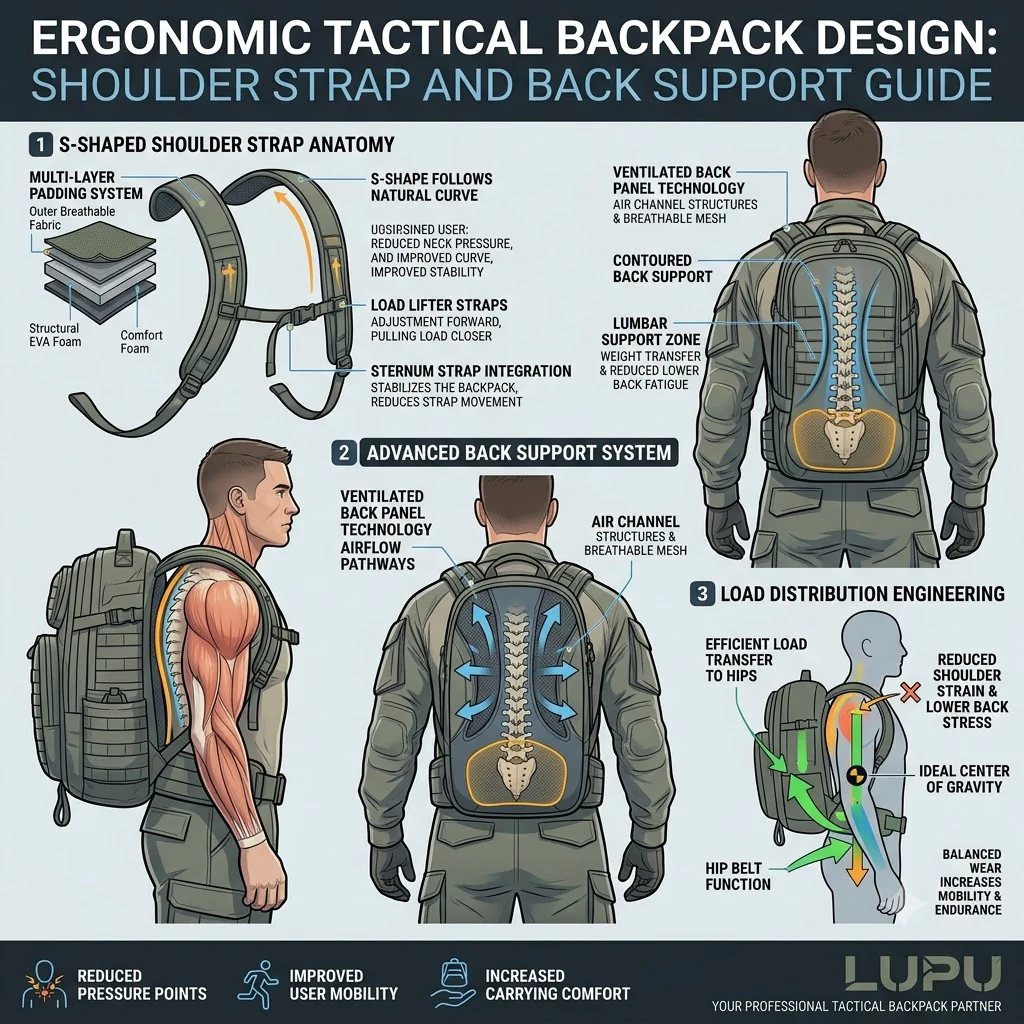
Anatomy of a Professional Tactical Shoulder Strap System
Shoulder Strap Padding Technology
Padding plays a major role in comfort, but more padding does not automatically mean better performance.
Professional tactical backpack manufacturers carefully select foam materials based on:
- Compression resistance
- Gewicht
- Recovery performance
- Long-term durability
Common padding materials include:
EVA Foam
EVA foam is widely used because of its:
- Lightweight structure
- Shock absorption capability
- Resistance to deformation
- High-Density Foam
High-density foam provides stronger support under heavier loads.
It helps maintain strap shape and prevents pressure points during extended use.
Multi-Layer Padding Systems
Premium ergonomic tactical backpacks often combine multiple layers:
- Outer breathable fabric
- Comfort foam layer
- Structural support foam
This creates a balance between softness and load-bearing performance.
S-Shaped vs Straight Shoulder Straps
Shoulder strap shape significantly influences comfort and stability.
S-Shaped Shoulder Straps
S-shaped straps follow the natural curve of the human shoulder.
Advantages include:
- Reduced neck pressure
- Better shoulder positioning
- Improved load stability
- Increased comfort during long-distance carrying
This design is commonly preferred for professional tactical backpacks, hiking packs, and military-style equipment.
Straight Shoulder Straps
Straight shoulder straps offer:
- Simple construction
- Lower production cost
- Easy adjustment
They may work well for lightweight applications but can create more pressure when carrying heavy equipment over extended periods.
For professional tactical applications, ergonomic shaping usually provides superior performance.
Adjustable Shoulder Strap Systems
Every user has different body proportions.
An effective ergonomic tactical backpack should provide adjustment options to accommodate:
- Different heights
- Different shoulder widths
- Various carrying preferences
Important adjustment features include:
Shoulder Strap Length Adjustment
Allows users to position the backpack correctly against their back.
Load Lifter Straps
Load lifter straps pull the upper backpack section closer to the body, improving balance and reducing backward pulling force.
Sternum Strap Integration
The sternum strap connects both shoulder straps across the chest.
Its benefits include:
- Improved stability
- Reduced shoulder strap movement
- Better control during active movement
Back Support System: Engineering Comfort and Stability
The back panel is the second major component of ergonomic backpack performance.
A high-quality back support system must achieve two seemingly opposite goals:
- Provide structural support
- Maintain airflow and comfort
The Role of Back Panels in Tactical Backpack Design
The back panel affects:
- Weight transfer
- User posture
- Ventilation
- Backpack stability
A poorly designed back panel can create:
- Excessive sweating
- Pressure points
- Uneven weight distribution
- Reduced carrying comfort
Modern tactical backpack designs use advanced back structures to improve both support and ventilation.
Ventilated Back Panel Technology
Traditional Flat Back Panels
Traditional flat designs often create direct contact between the user’s back and the backpack.
Common problems include:
- Reduced airflow
- Heat buildup
- Increased moisture accumulation
These issues become especially noticeable in hot climates or during high-intensity activities.
Modern Ergonomic Back Systems
Advanced ergonomic tactical backpacks commonly use:
Air Channel Structures
Designed to create airflow pathways between the user’s back and the backpack.
Raised Padding Zones
Strategically positioned padding reduces contact pressure while improving ventilation.
Breathable Mesh Materials
Mesh fabrics help move moisture away from the body and improve comfort.
The challenge for manufacturers is balancing breathability with tactical durability.
Contoured Back Support and Spine Alignment
The human spine has a natural curve.
A professional ergonomic tactical backpack should support this natural structure rather than forcing the body into an unnatural posture.
Important design elements include:
Lumbar Support Zones
The lower back carries significant stress during heavy loads.
Additional lumbar support helps:
- Improve weight transfer
- Increase stability
- Reduce lower back fatigue
Anatomical Back Shaping
A curved back panel helps the backpack sit closer to the body.
Benefits include:
- Better balance
- Reduced movement of internal equipment
- Improved carrying efficiency
Load Distribution Engineering in an Ergonomic Tactical Backpack
A tactical backpack should not simply carry weight.
It should manage weight.
This difference separates professional tactical equipment from ordinary backpacks.
Understanding Weight Balance
Poor weight distribution can create:
- Shoulder strain
- Lower back stress
- Reduced endurance
- Poor posture
Professional designers consider:
- Equipment placement
- Compartment location
- User movement
- Center of gravity
Heavy items should generally be positioned close to the user’s back to reduce leverage forces.
The Importance of Hip Belts and Sternum Straps
Hip Belt Function
For larger tactical backpacks, hip belts provide important support.
They help:
- Transfer weight from shoulders to hips
- Stabilize the backpack
- Reduce upper body fatigue
Sternum Strap Function
The sternum strap improves upper-body stability by preventing shoulder straps from moving outward.
This is especially valuable during:
- Running
- Climbing
- Fast movement
Materials Used in Ergonomic Tactical Backpack Construction
Ergonomic performance depends heavily on material selection.
A backpack can have excellent design but fail if the materials cannot maintain performance under real-world conditions.
Foam Materials for Comfort and Support
Manufacturers select foam based on:
- Density
- Compression recovery
- Gewicht
- Environmental resistance
The right foam combination ensures long-term support without adding unnecessary weight.
Breathable Fabrics and Mesh Materials
Common breathable materials include:
- 3D air mesh
- Spacer mesh
- Moisture management fabrics
However, tactical backpacks must balance ventilation with:
- Abrasion resistance
- Weather protection
- Long service life
This requires careful material engineering.
How Manufacturers Test Ergonomic Tactical Backpack Performance
Professional tactical backpack manufacturers evaluate ergonomics through multiple testing processes.
Load Testing
Load testing evaluates:
- Strap strength
- Structural durability
- Weight balance
- Stress points
Testing helps identify weaknesses before mass production.
Wear Testing and User Feedback
Real-world testing provides valuable information about:
- Comfort during extended use
- Adjustment effectiveness
- Movement stability
- Environmental performance
The best ergonomic tactical backpack designs combine engineering analysis with practical user experience.
Common Ergonomic Tactical Backpack Design Mistakes
Mistake 1: Adding Excessive Padding Without Structural Support
More padding does not always create better comfort.
Without proper support structure, thick padding can increase weight without improving performance.
Mistake 2: Ignoring Body Differences
A backpack designed for only one body type will limit usability.
Adjustability is essential for professional tactical applications.
Mistake 3: Poor Weight Distribution
Even high-quality materials cannot compensate for poor internal organization.
Compartment design is a critical part of ergonomic performance.
Mistake 4: Prioritizing Appearance Over Function
A tactical backpack should not sacrifice ergonomics for visual style.
Professional users need equipment that performs under demanding conditions.
How to Choose the Right Ergonomic Tactical Backpack
Professional buyers should evaluate several factors.
- Carrying Capacity
Select capacity based on operational requirements:
- Daily carry
- Short missions
- Extended operations
- Load Requirements
Consider:
- Equipment weight
- Carrying duration
- Movement intensity
- Adjustment Features
Look for:
- Adjustable shoulder straps
- Sternum straps
- Hip belt compatibility
- Back Support Design
Evaluate:
- Ventilation system
- Padding structure
- Anatomical support
Why Ergonomic Design Matters for Tactical Backpack OEM Buyers?
For brands, distributors, and wholesalers, ergonomic design is not only a user benefit. It is also a competitive advantage.
A well-designed ergonomic tactical backpack can help brands:
- Build product differentiation
- Improve customer satisfaction
- Increase market value
- Reduce product returns
What Buyers Should Evaluate When Choosing a Tactical Backpack Manufacturer
A capable OEM partner should have expertise in:
- Ergonomic product development
- Material selection
- Prototype manufacturing
- Structural testing
- Quality control
An experienced tactical backpack manufacturer understands that successful products require more than sewing fabric together. They require engineering knowledge, manufacturing experience, and market understanding.
Future Trends in Ergonomic Tactical Backpack Design
The future of tactical backpack development is moving toward:
Lightweight Performance Structures
Tactical gear manufacturers are exploring ways to reduce weight while maintaining durability.
Modular Carry Systems
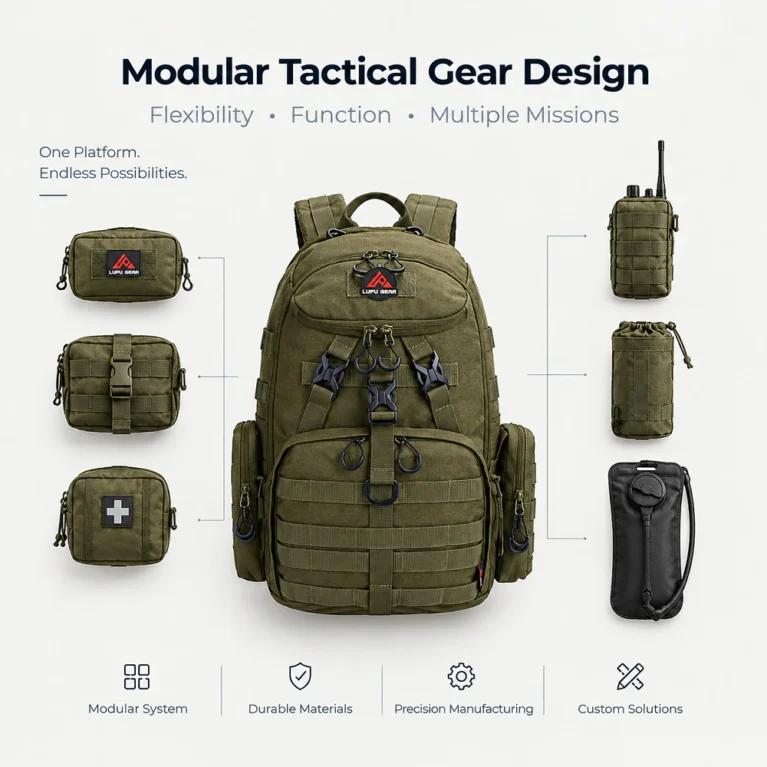
MOLLE systems and customizable components allow users to configure equipment according to mission requirements.
Advanced Performance Materials
New fabrics and lightweight reinforcement materials continue improving durability and comfort.
Personalized Ergonomic Solutions
Future tactical backpacks may offer more adjustable systems designed around individual user requirements.
Conclusion: Ergonomics Defines the Future of Tactical Backpack Design
An Ergonomic Tactical Backpack represents the combination of human-centered engineering, advanced materials, and professional manufacturing expertise.
Shoulder strap design and back support systems are the foundation of carrying performance. They determine how effectively a backpack transfers weight, protects the user’s body, and supports long-duration operations.
For professional users, brands, and tactical equipment buyers, choosing the right ergonomic design is essential.
For manufacturers, creating superior ergonomic tactical backpacks requires deep knowledge of anatomy, materials, production technology, and real-world applications.
A tactical backpack should not only carry equipment.
It should help users perform better.
Looking for a Professional Tactical Backpack Manufacturing Partner?
LUPU specializes in developing and manufacturing high-quality tactical backpacks for global tactical brands, distributors, and professional users.
With expertise in ergonomic design, material selection, OEM customization, and large-scale production, LUPU helps customers create tactical backpack solutions that combine durability, comfort, and operational performance.