Introduction: The Hidden Engineering Behind a Comfortable Tactical Backpack
A tactical backpack is more than a storage system. It is a load-bearing platform designed to carry essential equipment while maintaining mobility, stability, and physical efficiency. Whether used for military operations, outdoor exploration, emergency response, travel, or everyday tactical applications, the backpack’s performance depends heavily on one critical factor: how effectively it manages weight.
Tactical Backpack Load Distribution is the foundation of ergonomic backpack engineering. It determines how weight is transferred from the backpack structure to the human body, how pressure is spread across different support areas, and how efficiently users can move under load.
A poorly designed or improperly packed tactical backpack can create excessive shoulder pressure, accelerate fatigue, compromise posture, and reduce mobility. In contrast, a well-engineered load distribution system allows users to carry heavier equipment with improved comfort, balance, and endurance.
Modern tactical backpack design combines biomechanics, material science, and structural engineering to create systems that work with the human body rather than against it. Understanding these principles helps users choose, adjust, and utilize tactical backpacks more effectively.
1. Understanding the Science Behind Tactical Backpack Load Distribution
What Is Tactical Backpack Load Distribution?
Tactical Backpack Load Distribution refers to the method of organizing, supporting, and transferring backpack weight to minimize physical strain while maximizing carrying efficiency.
The human body is not naturally designed to carry external loads for extended periods. When weight is added to the back, the body automatically adjusts posture and muscle activation patterns to maintain balance. If the load is positioned incorrectly, these adjustments can lead to increased stress on the shoulders, neck, spine, and lower back.
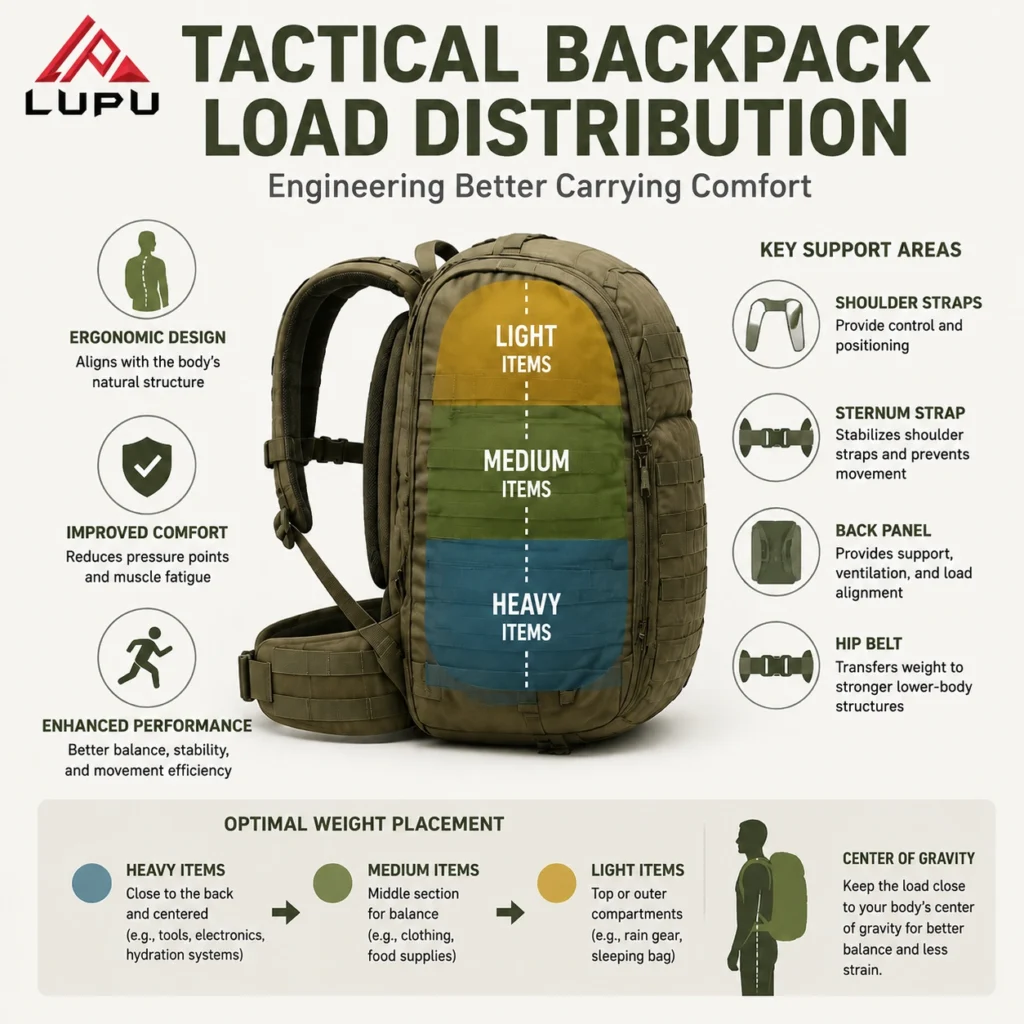
An advanced tactical backpack distributes weight through multiple contact points:
- Shoulder straps provide upper-body control and positioning.
- Hip belts transfer a significant portion of weight to stronger lower-body structures.
- Sternum straps stabilize shoulder straps and prevent movement.
- Back panels create support, ventilation, and load alignment.
- Internal frames or reinforcement systems maintain structural stability.
The goal is not simply to carry weight—it is to make the weight feel balanced and controlled.
Why Weight Placement Matters More Than Backpack Capacity
Many users focus on backpack size, material durability, or storage volume when selecting tactical gear. However, carrying comfort depends more on how the load is positioned than how much space the backpack provides.
A 30-pound backpack with intelligent weight placement may feel significantly more comfortable than a 20-pound backpack with poor balance.
The primary factors affected by weight placement include:
Center of Gravity Control
The closer heavy equipment is positioned to the user’s natural center of gravity, the less effort the body needs to maintain balance.
Heavy items placed far away from the back create additional pulling forces, causing users to lean forward and compensate with lower back muscles.
Movement Efficiency
Balanced loads allow smoother movement during:
- Caminhadas
- Climbing
- Running
- Tactical operations
- Long-distance travel
Poor weight distribution increases unnecessary energy consumption because the body constantly corrects instability.
Reduced Muscle Fatigue
When weight is evenly distributed, muscles work more efficiently. Instead of concentrating stress on the shoulders and lower back, the backpack allows the entire body structure to participate in load support.
2. The Biomechanics of Comfortable Tactical Backpack Carrying
How a Tactical Backpack Interacts With the Human Body?
A tactical backpack functions as an extension of the user’s body. The relationship between the backpack and human anatomy determines overall comfort and performance.
The spine provides structural support, but it is also sensitive to excessive forward or backward pressure. When a backpack pulls the body backward, users naturally lean forward to compensate. Over time, this posture increases strain on spinal muscles and can lead to discomfort.
Effective Tactical Backpack Load Distribution reduces these negative effects by aligning the backpack’s weight with the body’s natural support structure.
Key anatomical considerations include:
Shoulders
Shoulders are excellent for controlling backpack position but are not ideal for carrying the majority of heavy loads. Excessive shoulder loading can cause:
- Pressure points
- Muscle fatigue
- Restricted movement
- Neck tension
Hips
The pelvis provides a stronger foundation for supporting weight. Quality tactical backpacks use hip belts to transfer load from the upper body to the lower body.
Spine
A properly fitted backpack keeps the load close to the spine while maintaining natural posture.
3. The Role of Center of Gravity in Tactical Backpack Design
The center of gravity is one of the most important concepts in backpack engineering.
When equipment is packed correctly, the backpack remains stable and moves naturally with the user. When heavy items are positioned incorrectly, the backpack creates leverage forces that increase physical effort.
Optimal Weight Placement Principles
For most mochila tática applications:
- Heavy equipment should be positioned close to the back panel.
- Medium-weight items should occupy the middle sections.
- Lightweight items should be stored in external or lower compartments.
Examples of heavier equipment include:
- Electronics
- Tools
- Hydration systems
- Protective equipment
- Communication devices
Keeping these items close to the body reduces unwanted movement and improves stability.
4. Engineering Features That Improve Tactical Backpack Load Distribution
Adjustable Shoulder Strap Systems
Shoulder straps are essential for controlling backpack fit and preventing excessive movement.
High-performance tactical backpacks often include:
Ergonomic Shoulder Shapes
Curved straps follow the natural contour of the body, improving comfort and reducing pressure concentration.
Load Lifter Straps
These straps pull the upper section of the backpack closer to the body, improving weight alignment and reducing backward pulling forces.
Reinforced Attachment Points
Strong stitching and durable hardware ensure that the backpack maintains structural integrity under heavy loads.
A poorly adjusted shoulder strap system can completely reduce the benefits of an otherwise advanced backpack design.
5. Hip Belt Technology: The Key to Heavy Load Management
One of the biggest differences between basic backpacks and professional tactical systems is the ability to transfer weight effectively.
The hips are designed to support significant loads because they connect directly to the body’s strongest skeletal structures.
A properly adjusted hip belt can:
- Reduce shoulder pressure
- Improve walking efficiency
- Stabilize heavy equipment
- Increase carrying endurance
For extended missions or outdoor activities, hip belt design becomes a critical component of Tactical Backpack Load Distribution.
Advanced designs may include:
- Wide padded hip wings
- Adjustable positioning systems
- Reinforced support structures
- Quick-release buckles
6. Sternum Straps and Upper Body Stability
Although small in size, sternum straps provide an important function.
They prevent shoulder straps from sliding outward and help maintain consistent backpack positioning during movement.
This is especially valuable during:
- Running
- Uneven terrain travel
- Climbing
- Fast-paced operations
A properly positioned sternum strap improves stability without restricting breathing or upper-body movement.
7. Back Panel Design and Support Engineering
The back panel is where comfort, ventilation, and structural support meet.
Modern tactical backpacks use various technologies:
Foam Padding Systems
Foam provides cushioning and protects the user from internal equipment pressure.
Ventilated Air Channels
Airflow designs reduce heat buildup during extended use.
Reinforced Support Structures
Internal frames or stiffened panels prevent the backpack from collapsing and help maintain proper weight distribution.
A high-quality back panel does not simply add comfort—it actively contributes to load control.
8. Strategic Packing: Maximizing Load Distribution Efficiency
Even the most advanced tactical backpack cannot perform effectively if packed incorrectly.
Heavy Items: Keep Them Close
Heavy equipment should generally be placed near the center area of the backpack closest to the spine.
This reduces unnecessary leverage and improves stability.
Frequently Used Gear: Maintain Accessibility
Items used regularly should be placed in external compartments or quick-access pockets.
Examples include:
- Navigation tools
- Luvas
- Documents
- Emergency supplies
Prevent Internal Movement
Loose equipment creates shifting weight, forcing the body to constantly adjust.
Compression straps, internal organizers, and compartment systems help maintain a stable load.
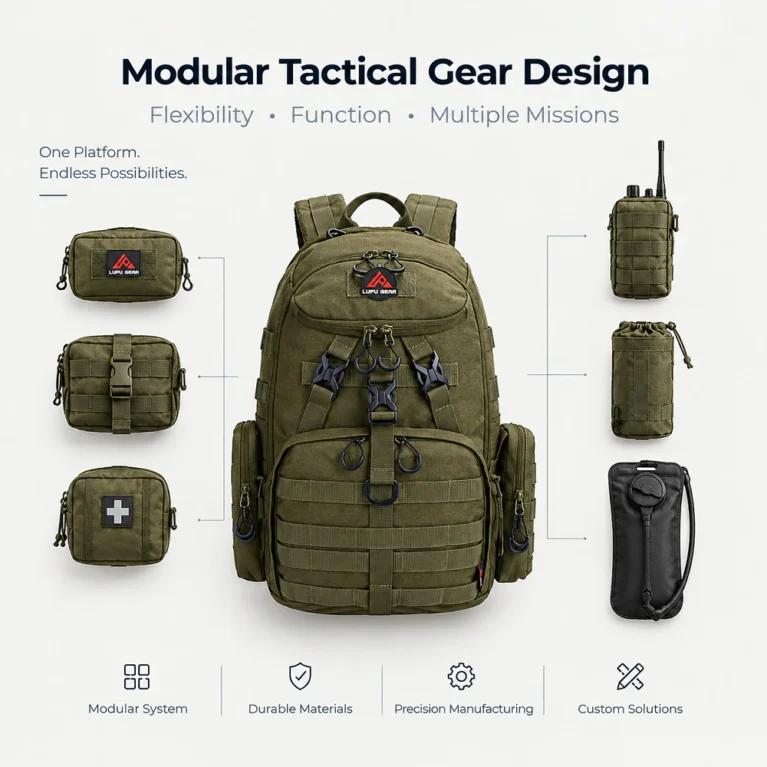
9. MOLLE Systems and External Load Management
MOLLE (Modular Lightweight Load-carrying Equipment) systems provide customization options by allowing users to attach additional pouches and accessories.
However, external customization must be carefully managed.
Incorrect accessory placement can:
- Shift the center of gravity
- Increase imbalance
- Create unnecessary external weight
Effective tactical configuration requires balancing modularity with weight discipline.
A well-designed MOLLE system supports flexibility while maintaining proper Tactical Backpack Load Distribution.
10. Tactical Backpack Load Distribution for Different Applications
Military and Professional Operations
Military users often carry complex equipment for extended periods. Their backpacks require:
- Maximum stability
- Reliable suspension systems
- Durable construction
- Efficient weight transfer
Outdoor Adventure and Hiking
Outdoor users benefit from balanced load systems because they improve:
- Long-distance comfort
- Energy efficiency
- Terrain adaptability
Everyday Tactical and Travel Use
Urban users may carry laptops, cameras, tools, or personal equipment. Proper load distribution reduces daily fatigue and improves convenience.
11. Common Tactical Backpack Load Distribution Mistakes
Overloading One Side
Uneven packing creates asymmetrical pressure and may cause discomfort.
Solution:
- Balance weight between compartments.
- Avoid placing all heavy items on one side.
Incorrect Strap Adjustment
Common mistakes include:
- Loose shoulder straps
- Incorrect hip belt positioning
- Poor sternum strap placement
A backpack should move naturally with the body, not pull against it.
Carrying Heavy Items Too Far From the Body
External attachments should be limited and carefully positioned.
Large external loads increase leverage and reduce stability.
12. How to Choose a Tactical Backpack With Superior Load Distribution
When evaluating a tactical backpack, consider more than appearance or storage capacity.
Evaluate the Suspension System
Look for:
- Adjustable straps
- Supportive hip belt
- Stable frame structure
- Ergonomic design
Examine Construction Quality
Durable materials contribute to long-term performance.
Important features include:
- Reinforced stitching
- Heavy-duty zippers
- Strong buckles
- Abrasion-resistant fabrics
Match the Backpack to Your Mission
Different users require different load systems.
A hiking backpack, tactical operations pack, and urban carry backpack may have different designs because their weight demands and movement patterns are different.
13. Future Trends in Tactical Backpack Load Distribution Engineering
Backpack technology continues to evolve as designers combine advanced materials with ergonomic research.
Future innovations may include:
Lightweight Structural Materials
New fabrics and reinforcement technologies allow fabricantes de equipamento tático to reduce weight while maintaining durability.
Adaptive Suspension Systems
Future tactical backpacks may automatically adjust support based on:
- Load weight
- User movement
- Body position
Smart Ergonomic Monitoring
Emerging technologies may provide feedback about:
- Pressure distribution
- Carrying posture
- Weight balance
These developments will continue improving comfort and operational efficiency.
Conclusion: Engineering Comfort Through Intelligent Load Management
A tactical backpack is not simply a container for equipment. It is a carefully engineered load-management system designed to work with the human body.
Tactical Backpack Load Distribution determines how effectively weight is transferred, how comfortably equipment can be carried, and how efficiently users can move under demanding conditions.
From adjustable suspension systems and ergonomic straps to strategic packing methods and MOLLE customization, every design element contributes to better balance and reduced physical strain.
Whether used for professional operations, outdoor adventures, travel, or everyday carry, the best tactical backpack is one that transforms heavy equipment into a manageable, stable, and comfortable load.
Good backpack engineering is not about carrying more—it is about carrying smarter.
Explore expert Tactical Backpack Load Distribution solutions today and discover how advanced ergonomic designs can improve comfort, balance, and carrying performance.