Introduction: Choosing the Right Manufacturing Strategy for Tactical Equipment
In the tactical equipment industry, selecting the right manufacturing model is one of the most important decisions a brand must make before launching a new product line.
A tactical backpack, MOLLE pouch, plate carrier, duty bag, or other mission-focused gear is not simply a textile product. It is a performance-driven system that must balance durability, ergonomics, materials, functionality, and user requirements.
Many brands face the same question:
Should we develop a completely custom product through Tactical Equipment OEM manufacturing, or should we start with an existing design through an ODM solution?
The answer depends on your product vision, market positioning, customization requirements, investment plan, and long-term brand strategy.
OEM and ODM are not competing concepts. They represent two different approaches to transforming tactical equipment ideas into market-ready products. A professional manufacturing partner helps brands choose the right path based on product goals, technical requirements, and commercial objectives.
1. Understanding Tactical Equipment OEM Manufacturing
What Is Tactical Equipment OEM?
Tactical Equipment OEM refers to a manufacturing partnership where a brand provides its own product concept, specifications, drawings, samples, or technical requirements, while the manufacturer handles engineering development, production, and quality control.
Unlike standard wholesale purchasing, OEM manufacturing allows brands to maintain greater control over:
- Product structure
- Material selection
- Functional features
- Branding elements
- Manufacturing specifications
- Final product identity
For professional tactical brands, OEM is often the preferred approach when product differentiation and ownership are critical.
A mature Tactical Equipment OEM partner does more than produce goods. They help transform concepts into reliable equipment designed for real-world applications.
2. How Tactical Equipment OEM Manufacturing Works
A successful OEM project follows a structured development process.
Step 1: Product Concept and Requirement Analysis
Every tactical product begins with understanding its mission purpose.
Before production starts, タクティカルギアメーカー evaluate:
- Intended users
- Operating environment
- Load requirements
- Carrying requirements
- Functional objectives
- Market positioning
For example, a tactical backpack designed for:
- Military-style operations
- Law enforcement applications
- Outdoor missions
- Security professionals
- Everyday carry
will require different structural solutions.
A professional Tactical Equipment OEM manufacturer helps define these requirements before moving into engineering development.
Step 2: Design Engineering and Product Development
A concept must become a production-ready design.
OEM development may include:
- Technical drawings
- Pattern engineering
- Dimension optimization
- Pocket configuration
- MOLLE layout design
- Load distribution improvements
- Ergonomic adjustments
The difference between a basic bag and professional tactical equipment often comes down to engineering details:
- Reinforced stress points
- Balanced weight distribution
- Efficient organization
- Durable construction methods
Experienced manufacturers understand that tactical products must perform under demanding conditions, not only look professional.
Step 3: Material and Component Selection
Materials determine the durability and performance of tactical equipment.
Common OEM material considerations include:
Fabrics
- 500D Nylon
- 1000Dナイロン
- Cordura® fabrics
- Water-resistant textiles
Hardware
- Heavy-duty zippers
- Tactical buckles
- Reinforced webbing
- Hook-and-loop systems
- Metal attachment components
Material selection affects:
- Abrasion resistance
- 重量
- Weather protection
- Service life
- User comfort
A reliable Tactical Equipment OEM partner helps select materials based on actual application requirements rather than simply choosing the lowest-cost option.
Step 4: Prototype Development and Testing
Before mass production, prototypes allow brands to validate:
- Product structure
- Carry comfort
- Functional performance
- Material compatibility
- Manufacturing feasibility
Prototype testing helps identify improvements before large-scale production.
For tactical equipment, this stage is especially important because small design issues can affect:
- モビリティ
- Accessibility
- Load stability
- Long-term durability
3. Understanding Tactical Equipment ODM Manufacturing
What Is Tactical Equipment ODM?
ODM (Original Design Manufacturing) allows brands to start from existing product designs developed by a manufacturer and customize them according to market requirements.
Instead of creating a product completely from scratch, brands can modify proven platforms with:
- Branding
- Colors
- Materials
- 特徴
- Accessories
- Packaging
ODM is often chosen by companies that want faster product development with lower initial investment.
4. How ODM Helps Tactical Brands Enter the Market Faster
ODM solutions are especially valuable for:
- New tactical brands
- Online retailers
- Distributors
- Private label companies
- Expanding product lines
Instead of spending months developing a completely new structure, companies can begin with an existing tactical platform and focus on market differentiation.
Typical ODM customization includes:
Branding Customization
Brands can customize:
- Embroidery logos
- Woven labels
- Hook-and-loop patches
- Packaging
- Product labeling
This allows companies to create their own market identity while using proven product structures.
Product Customization
ODM customization may include:
- Fabric selection
- Color matching
- Camouflage patterns
- Pocket layout changes
- Hardware upgrades
- Functional modifications
For example:
An existing tactical backpack design can be upgraded with:
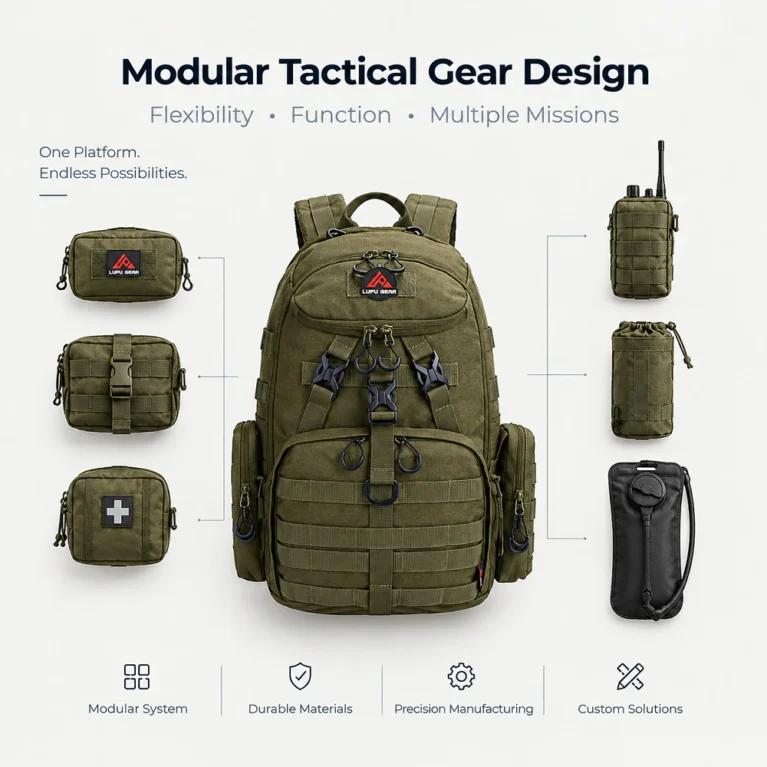
- Additional MOLLE panels
- Hydration compatibility
- Laptop compartments
- Concealed pockets
- Enhanced carrying systems
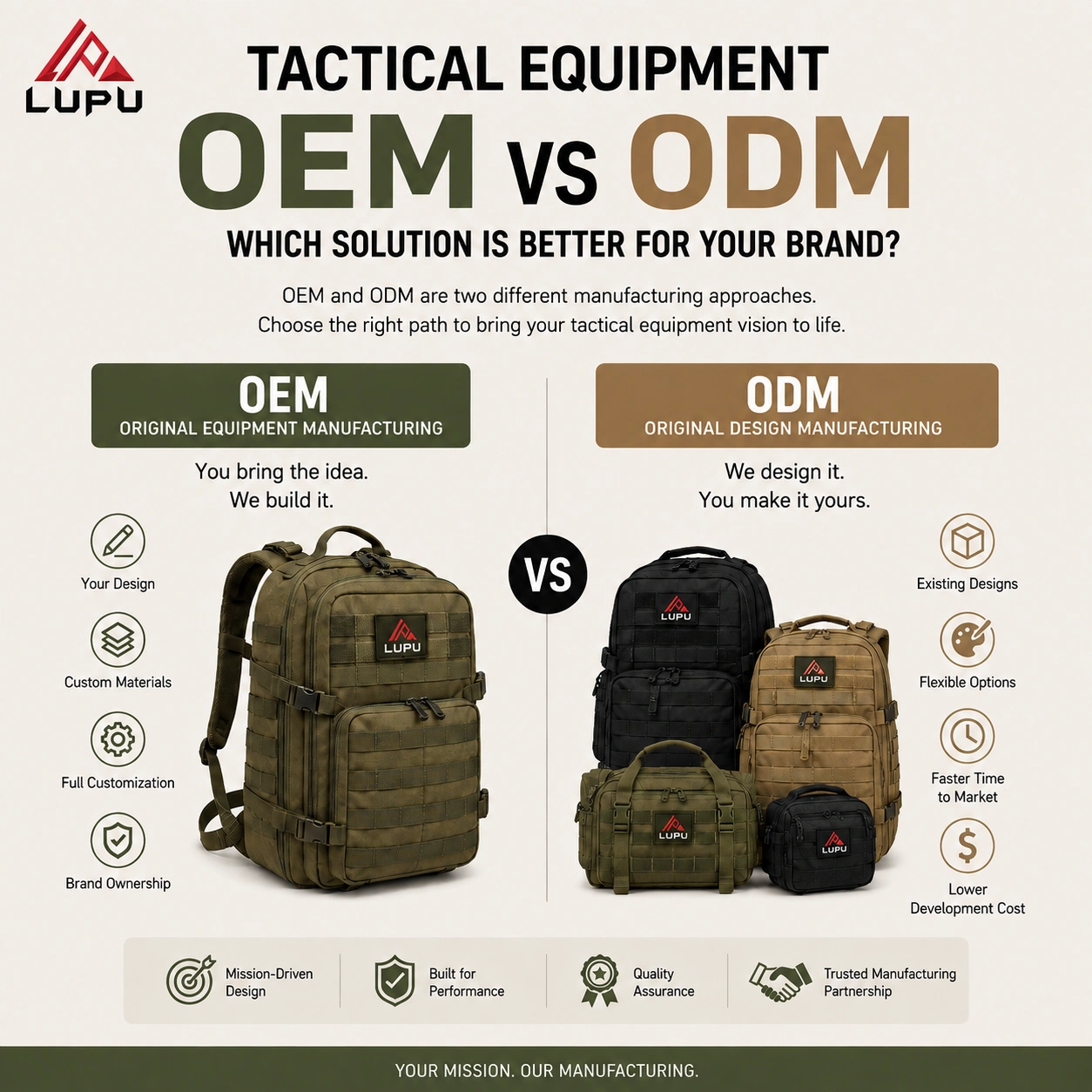
5. Tactical Equipment OEM vs ODM: Key Differences
|
カテゴリー |
Tactical Equipment ODM |
|
|
Product Design |
Customer-controlled design |
Manufacturer-developed design |
|
Customization Level |
Maximum customization |
Flexible customization |
|
Development Cost |
Higher investment |
Lower investment |
|
Development Time |
Longer |
Faster |
|
Product Uniqueness |
Highly differentiated |
Based on existing platforms |
|
Brand Control |
Full ownership |
Partial customization |
|
最適 |
Established brands |
New brands and distributors |
6. Which Solution Is Better for Your Tactical Gear Business?
There is no universal answer.
The right choice depends on your business stage and product strategy.
Choose Tactical Equipment OEM If You Need:
1. A Unique Product Identity
OEM is ideal when your goal is to create products competitors cannot easily duplicate.
Examples:
- Custom tactical backpacks
- Specialized mission bags
- Professional duty equipment
- Unique MOLLE systems
2. Full Control Over Product Development
OEM allows control over:
- Design specifications
- Materials
- 特徴
- Construction methods
- Performance requirements
This is important for brands building long-term product ownership.
3. Advanced Functional Requirements
OEM is better when your product requires:
- Special load systems
- Unique configurations
- Specific dimensions
- Professional applications
Choose Tactical Equipment ODM If You Need:
1. Faster Market Entry
ODM allows brands to launch products faster by using existing designs.
This is suitable when:
- Speed matters
- Market testing is important
- Initial investment needs to remain controlled
2. Lower Development Risk
Because the product structure already exists, ODM reduces:
- Engineering costs
- Prototype cycles
- Development uncertainty
3. Private Label Product Development
ODM works well for brands that need:
- Custom branding
- Retail-ready products
- Tactical product collections
7. Common Mistakes When Choosing OEM or ODM
Mistake 1: Selecting Only Based on Price
The lowest-cost supplier may create hidden risks:
- Poor material quality
- Weak construction
- Unstable production
- Higher return rates
Tactical equipment represents reliability. Cost should be evaluated together with:
- Manufacturing capability
- Quality control
- Technical experience
Mistake 2: Ignoring Real-World Requirements
A tactical product should be developed around usage scenarios.
Important considerations include:
- Environment
- Load weight
- Carry duration
- User mobility
- Storage requirements
A backpack for urban EDC and a backpack for extended field operations require completely different solutions.
Mistake 3: Choosing a Manufacturer Without Development Capability
A true manufacturing partner should provide:
- Engineering support
- Material recommendations
- Prototype development
- Production management
- Quality control
A factory should not only make products — it should help improve them.
8. The Hybrid Approach: Combining OEM and ODM Strategies
Many successful tactical brands use a combination of OEM and ODM.
A common strategy:
Stage 1: Launch With ODM
Start quickly with proven designs.
Benefits:
- Faster market entry
- Lower development investment
- Market validation
↓
Stage 2: Analyze Customer Feedback
Identify:
- Popular features
- Customer preferences
- Performance improvements
↓
Stage 3: Develop OEM Products
Create exclusive designs with:
- Unique functions
- Stronger brand identity
- Higher market differentiation
This approach balances speed and long-term competitiveness.
9. How to Select the Right Tactical Equipment Manufacturing Partner
Choosing the right supplier is often more important than choosing OEM or ODM itself.
Consider these factors:
Technical Experience
A qualified partner should understand:
- Tactical materials
- Load-bearing systems
- MOLLE structures
- Outdoor applications
- Functional design
Manufacturing Capability
Evaluate:
- Production capacity
- Quality systems
- Material sourcing
- Sample development ability
- Export experience
Communication and Development Support
A reliable partner should provide:
- Clear technical communication
- Transparent sampling process
- Production updates
- Quality documentation
Strong communication reduces development mistakes and improves project efficiency.
Conclusion: OEM or ODM — The Right Choice Depends on Your Strategy
Tactical Equipment OEM and ODM are both effective manufacturing solutions, but they serve different business objectives.
Choose Tactical Equipment OEM when you need:
- Maximum customization
- Unique product development
- Strong brand differentiation
- Full control over specifications
Choose ODM when you need:
- Faster market entry
- Lower development investment
- Proven product platforms
- Flexible customization
The best manufacturing solution is not the one with the most customization or the lowest cost. It is the solution that matches your brand strategy, market requirements, and long-term goals.
A professional Tactical Equipment OEM partner can help transform an idea into reliable, production-ready tactical gear built for real-world performance.
Final Thought
In the tactical equipment industry, success comes from more than manufacturing products. It comes from understanding users, engineering reliable solutions, selecting the right materials, and building a partnership that supports continuous improvement.
Whether you choose OEM, ODM, or a hybrid approach, the right manufacturing partner becomes an extension of your brand — helping you create tactical equipment that performs when reliability matters most.
Custom Tactical Equipment Manufacturing Solutions
Develop mission-ready tactical gear with expert OEM and ODM support, from prototype development to full-scale production.
Email: