The surging global demand for tactical equipment, survival gear, and high-capacity mission packs has made overseas sourcing a highly lucrative avenue for international brands. However, navigating the international supply chain is far from simple. For procurement officers, outdoor brand owners, and military surplus distributors, a single misstep in choosing a manufacturing partner can result in thousands of dollars in lost capital, catastrophic product failures, and permanent damage to brand reputation.
When sourcing heavy-duty gear, finding a reliable military backpack wholesale supplier in China requires looking far beyond the low price tags and polished studio photos found on standard B2B directories. True tactical gear production requires a level of precision, material integrity, and regulatory compliance that standard bag factories simply cannot replicate.
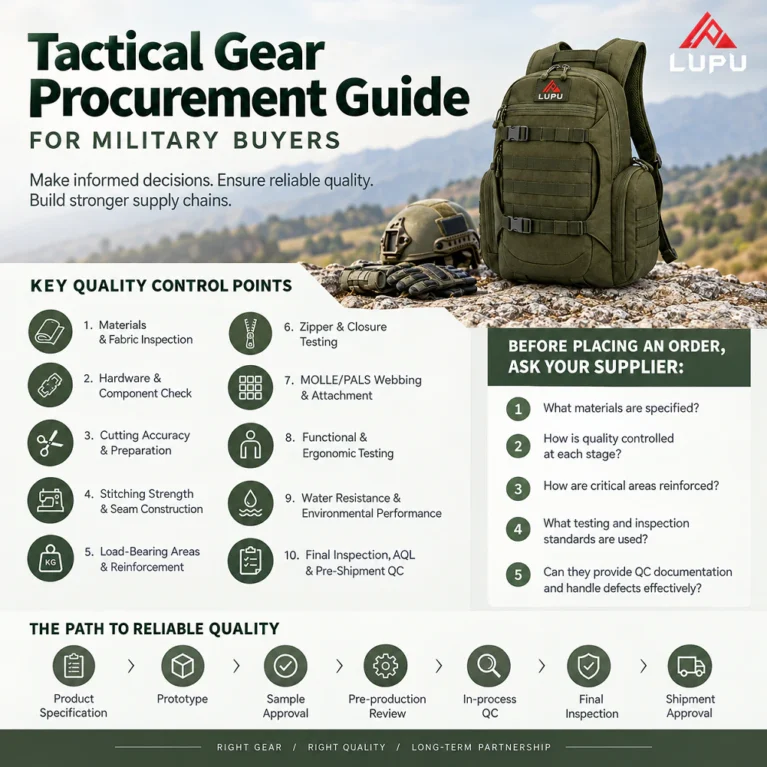
To help secure your supply chain and protect your investment, we have compiled the top five procurement red flags you must watch out for when vetting an overseas tactical manufacturing partner.
Red Flag #1: Fabric Misrepresentation (The 600D Polyester vs. 1000D Nylon Trap)
In the tactical gear industry, material integrity is everything. True military-spec packs demand high-tensile, abrasion-resistant fabrics capable of enduring extreme environments. The most common red flag during the initial quoting stage is material misrepresentation.
Many low-tier suppliers attempt to win contracts by offering bottom-dollar quotes. To maintain their profit margins, they substitute premium, high-density fabrics like 1000D Nylon or genuine Cordura with cheaper, weaker alternatives like 600D Polyester. While a 600D Polyester bag may look identical to a 1000D Nylon pack in an online photo, its performance in the field is vastly inferior. Under heavy loads or rugged terrain, polyester suffers from rapid abrasion, tears, and structural degradation.
How to Vet This:
- Request Certified Testing Reports:Demand recent, verifiable material testing reports from independent third-party agencies such as SGS, Intertek, or TUV. These reports should explicitly verify tensile strength, tear resistance, and hydrostatic pressure (waterproofing).
- Order Physical Fabric Swatches:Before signing a mass-production contract, request a physical sample swatch pack representing their available raw materials. Feel the fabric weight, test its rigidity, and perform flame or scratch tests if necessary. A transparent タクティカルギアメーカー will always provide these willingly.
Red Flag #2: Lack of International Compliance and Factory Audits (No BSCI/ISO)
For international buyers operating in strict regulatory markets like the United States, Canada, and Western Europe, factory compliance is no longer optional—it is a legal and ethical gatekeeper. A major red flag is a supplier that evades questions regarding social compliance and quality management infrastructure.
If a prospective military backpack wholesale supplier cannot provide documentation for globally recognized audits, you are exposing your business to severe risks. Sourcing from non-compliant facilities can result in custom border seizures, severe legal liabilities due to labor violations, and immediate rejection by major Western retail distributors who mandate ethical sourcing protocols.
How to Vet This:
- Verify BSCI and ISO Credentials:Ask the supplier for their BSCI (Business Social Compliance Initiative) audit summary report or their ISO 9001:2015 quality management certification. Legitimate factories will provide a unique DBID or certification number that you can cross-reference and verify instantly on official compliance portals.
- Propose a Third-Party Audit:State early in the negotiation that your procurement protocol requires a third-party on-site inspection (such as an audit conducted by QIMA or SGS) before the balance payment is released. If the supplier exhibits friction or makes excuses to block an inspector from entering the facility, walk away.
Red Flag #3: Total Absence of In-House Quality Control (QC) Processes
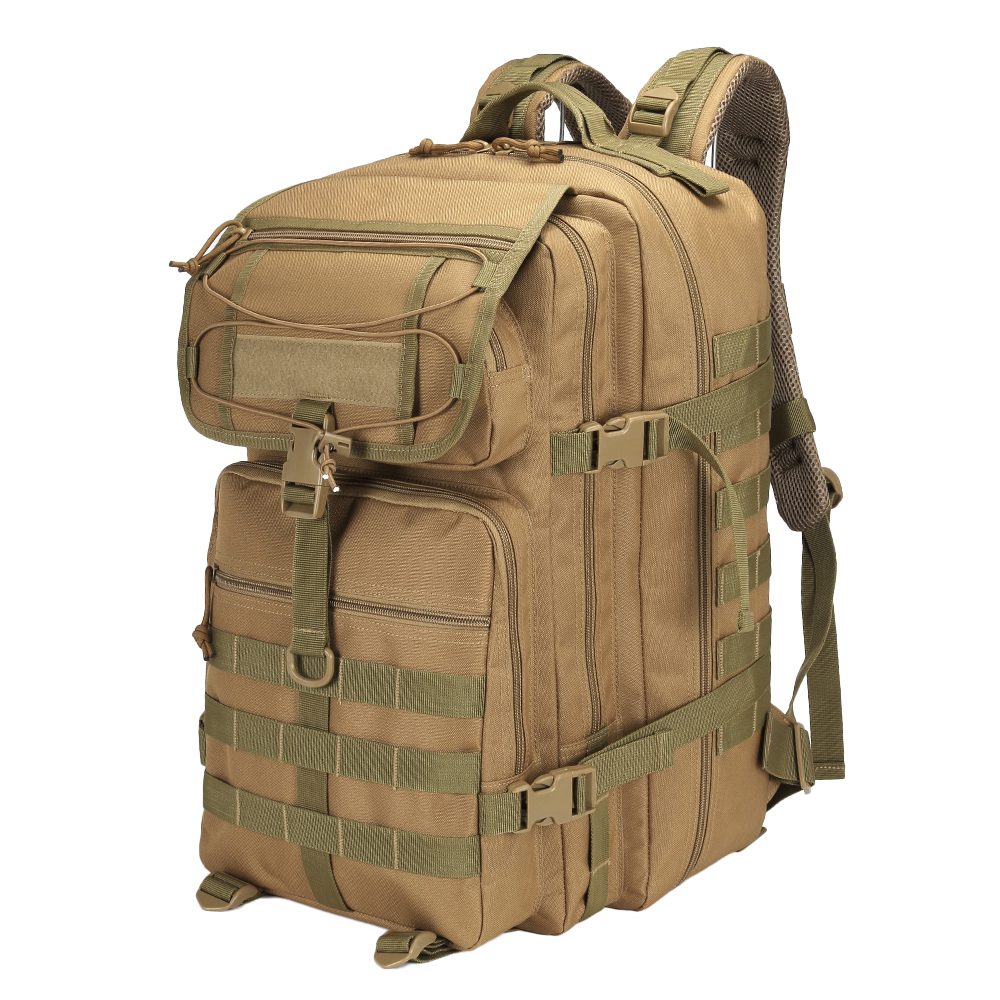
The market is flooded with digital middle-men—trading companies posing as direct factories. When an order is placed, these brokers outsource the assembly to unverified, low-end workshops that completely lack standardized quality control protocols.
Tactical loadouts rely on absolute geometric consistency. If a factory lacks an internal, multi-stage QC workflow, you will inevitably face severe defects in your mass-production batch:
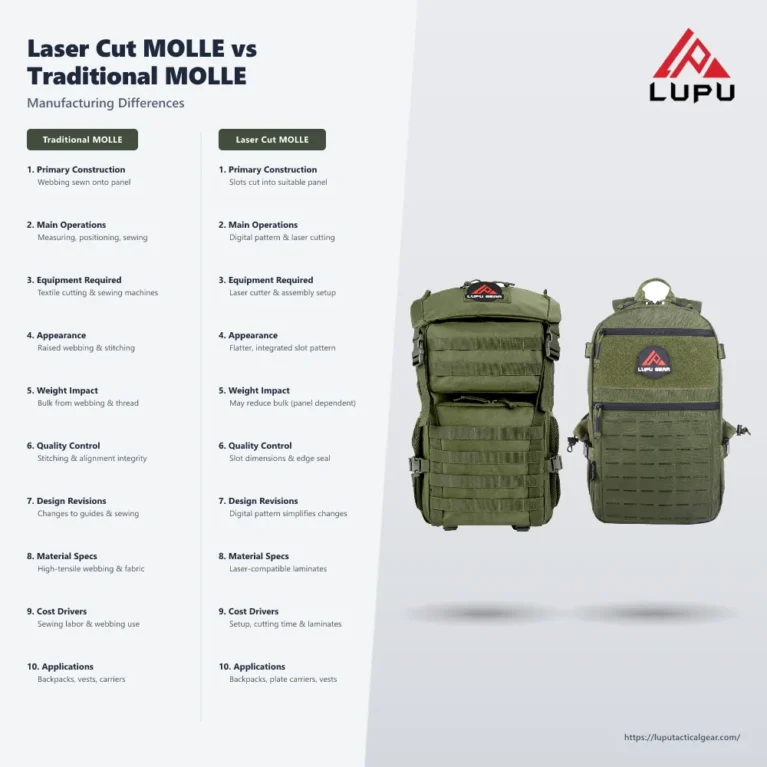
- Misaligned laser-cut MOLLE webbing that prevents modular attachments from fitting securely.
- Inconsistent stitching tension along critical structural seams.
- An absence of vital bartack reinforcement at primary load-bearing stress points (such as where the shoulder straps meet the pack body).
How to Vet This:
- Analyze Their Quality Assurance Workflow:Ask the supplier to detail their specific QA/QC protocol. A professional manufacturer will easily break down their process into three clear stages: IQC (Incoming Quality Control for raw materials), IPQC (In-Process Quality Control on the sewing line), and FQC (Final Quality Control before packaging).
- Request Live Digital Inspections:In an era of seamless digital communication, request a brief, live video tour via WeChat, WhatsApp, or Zoom. A true manufacturer will happily show you their assembly lines, automated bartacking machines, laser-cutting machinery, and their dedicated quality-testing lab equipment (such as tensile strength testers or water-resistance chambers).
Red Flag #4: Unrealistic Lead Times and Friction in Custom Prototyping
A highly dependable military backpack wholesale supplier understands that engineering a heavy-duty tactical pack requires time, precise patterning, and meticulous sampling. Beware of any supplier that promises lightning-fast turnaround times for highly complex, customized OEM/ODM projects without reviewing a technical specification pack.
Unrealistic promises usually point to one of two structural issues: either they are selling you pre-made, low-quality stock items that cannot be customized, or they are brokering your project to an external workshop, leaving them with zero control over the actual production schedule. Furthermore, if a supplier takes weeks just to modify a basic prototype pattern, it reveals a severe lack of in-house R&D capability.
How to Vet This:
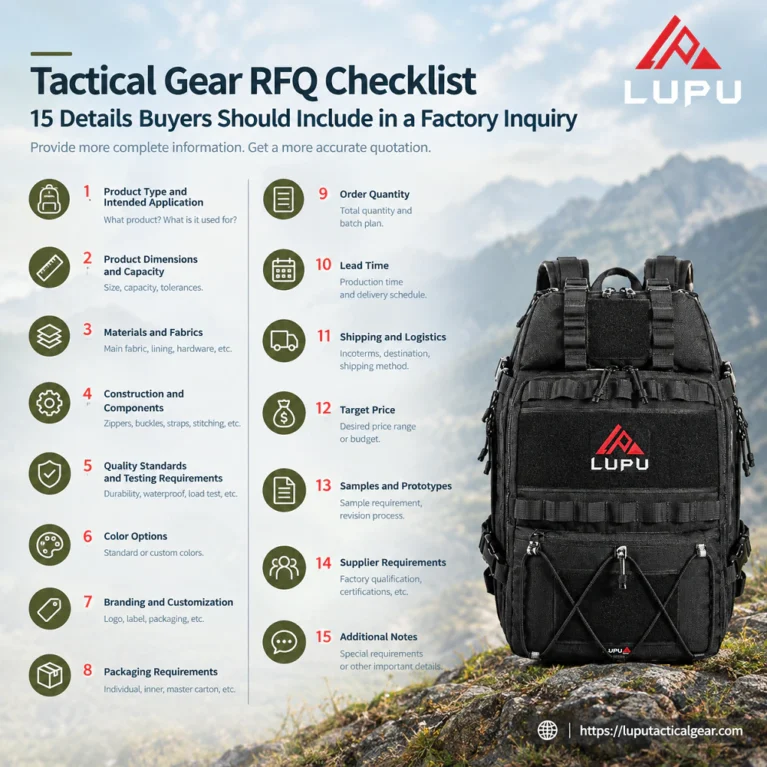
- Test Their R&D Agility:A capable, direct manufacturer backed by an experienced engineering team should be able to translate a tech pack or design sketch into a physical, high-fidelity OEM sample within 7 to 10 working days.
- Evaluate Technical Feedback:Pay close attention to the communication style of their product managers during prototyping. A true manufacturing expert won’t just blindly agree to everything; they will proactively offer technical feedback on how to improve weight distribution, seam strength, and material yield to optimize your production costs.
Red Flag #5: The “Too-Good-To-Be-True” Bottom-Dollar Price Quote
Every procurement professional loves to optimize margins, but in the heavy-duty manufacturing ecosystem, the golden rule always applies: you get what you pay for. If an overseas supplier submits a quotation that sits 20% to 30% below the established market average for tactical gear, it should immediately trigger an alarm.
Extreme low-ball pricing indicates that critical, hidden corners are being cut to save money. This frequently takes the form of using fragile clone hardware instead of premium brands like UTX-Duraflex or YKK zippers, skipping interior seam binding, reducing the stitch count per inch (SPI), or utilizing unethical, underpaid labor. When a pack fails in the field due to a burst zipper or a snapped buckle, the minor savings achieved during procurement will be completely wiped out by product returns and a degraded brand reputation.
How to Vet This:
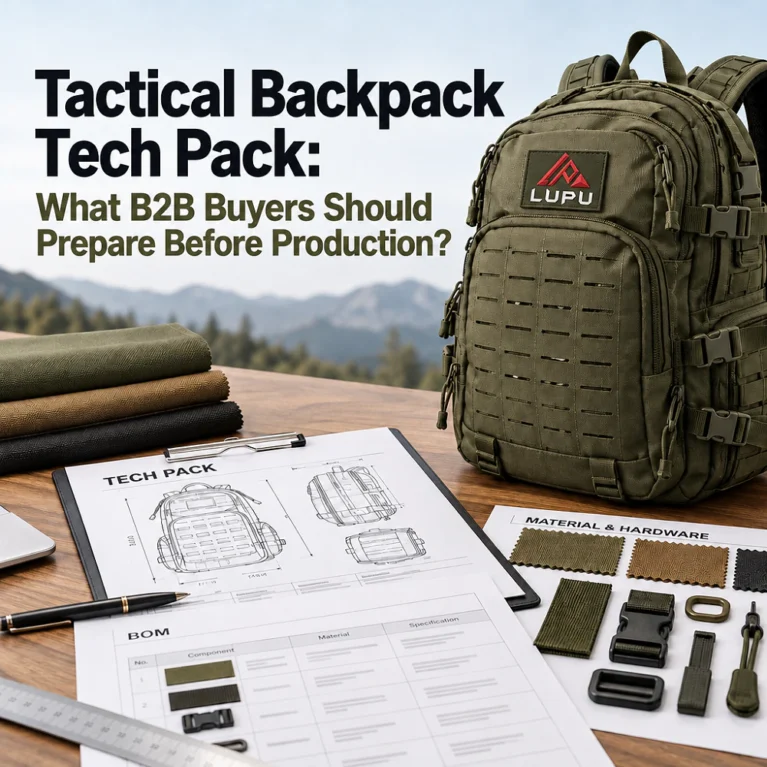
- Demand an Itemized Bill of Materials (BOM):Request a transparent, itemized cost breakdown of the backpack. Professional factories can easily provide the cost mapping for the main fabric, inner lining, buckles, zippers, webbing, and labor.
- Focus on Total Value, Not Lowest Cost:Cross-reference your quotes from multiple qualified manufacturers. Align your brand with a partner whose pricing is fair, transparent, and reflective of rigorous quality control and premium component sourcing.
Conclusion: Securing a Resilient Tactical Supply Chain
Vetting your international manufacturing supply chain is not about avoiding overseas production—it is about filtering out the noise to align with professional, audited, and deeply transparent military backpack factory partners. By actively screening for these five red flags, you protect your capital, elevate your product performance, and build a sustainable business model.
When searching for the right military backpack wholesale supplier, always prioritize factories that welcome open-door audit policies, provide verifiable material certifications, and demonstrate precise technical communication from day one. Investing time into meticulous vetting during the pre-production phase ensures that your gear remains completely locked, loaded, and reliable when it matters most.
関連記事
トップ50:世界のタクティカルギアブランド・リスト