Introduction: Why Modular Design Has Become the Future of Tactical Equipment
In modern tactical equipment development, flexibility is no longer an optional feature — it has become a fundamental design requirement.
Traditional tactical gear was often created for a single operational purpose. A backpack was designed only for carrying equipment, a vest was configured around a fixed loadout, and accessories were permanently attached according to a specific application. While this approach could meet basic needs, it lacked adaptability when users faced changing environments, missions, and equipment requirements.
Today’s professional users expect tactical equipment to provide greater versatility. Military personnel, law enforcement teams, outdoor professionals, survival enthusiasts, and commercial users all require gear that can be adjusted according to different scenarios.
This is where Modular Tactical Gear Design becomes increasingly important.
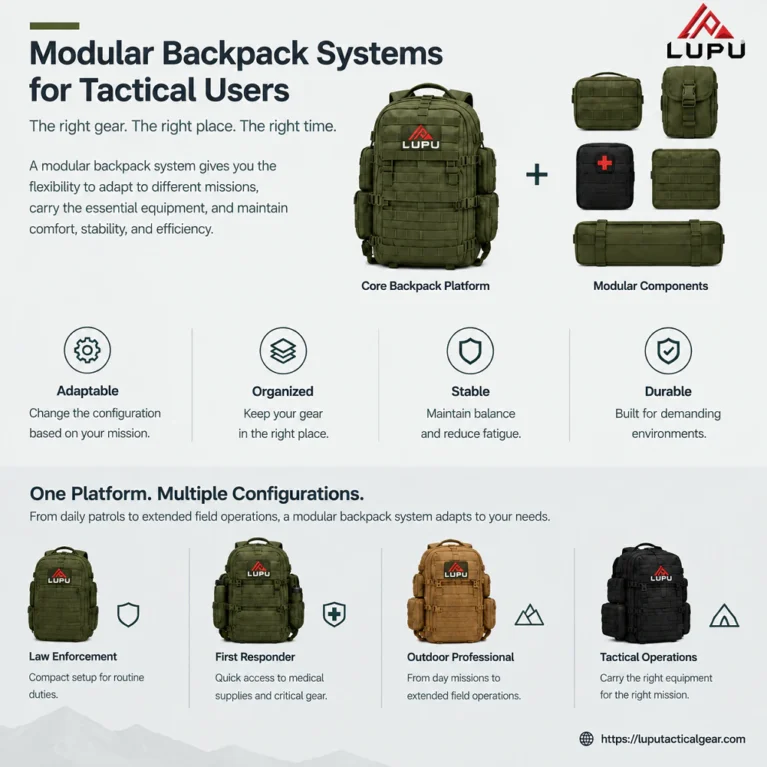
A well-designed modular tactical system allows users to configure, expand, and optimize their equipment without replacing the entire platform. However, professional modular design is far more complex than simply adding MOLLE webbing or attachment points. It requires careful engineering of structure, compatibility, ergonomics, materials, and manufacturing processes.
From a tactical equipment manufacturer’s perspective, the goal of modular design is not to add unlimited features. The goal is to create a reliable platform that allows users to build the right configuration for the right mission.
MOLLE-based systems are a widely adopted modular load-carrying solution, enabling users to securely attach, organize, and reposition pouches and accessories through standardized attachment points.
1. Understanding Modular Tactical Gear Design: More Than Just MOLLE Attachment Points
When discussing modular tactical equipment, many people immediately think of MOLLE panels, webbing rows, or removable pouches.
However, true modular tactical gear design involves much more than adding external attachment systems.
A professional Modular Tactical Gear Design approach focuses on creating an integrated equipment platform where individual components can work together efficiently.
A complete modular system includes three essential elements:
1.1 A Strong Base Platform
Every modular tactical product begins with a reliable foundation.
Examples include:
- Mochilas tácticas
- Plate carriers
- Chest rigs
- Cinturones tácticos
- Equipment bags
The base platform must provide:
- Structural stability
- Proper weight distribution
- Reinforced attachment areas
- Long-term durability
For example, a tactical backpack designed with modular capability must consider not only the number of attachment points but also how additional external loads affect:
- Shoulder strap pressure
- Center of gravity
- Carrying balance
- User mobility
A weak platform with excessive modular options can create performance problems instead of improving functionality.
1.2 Component Compatibility
The purpose of modular equipment is to allow users to customize their setup.
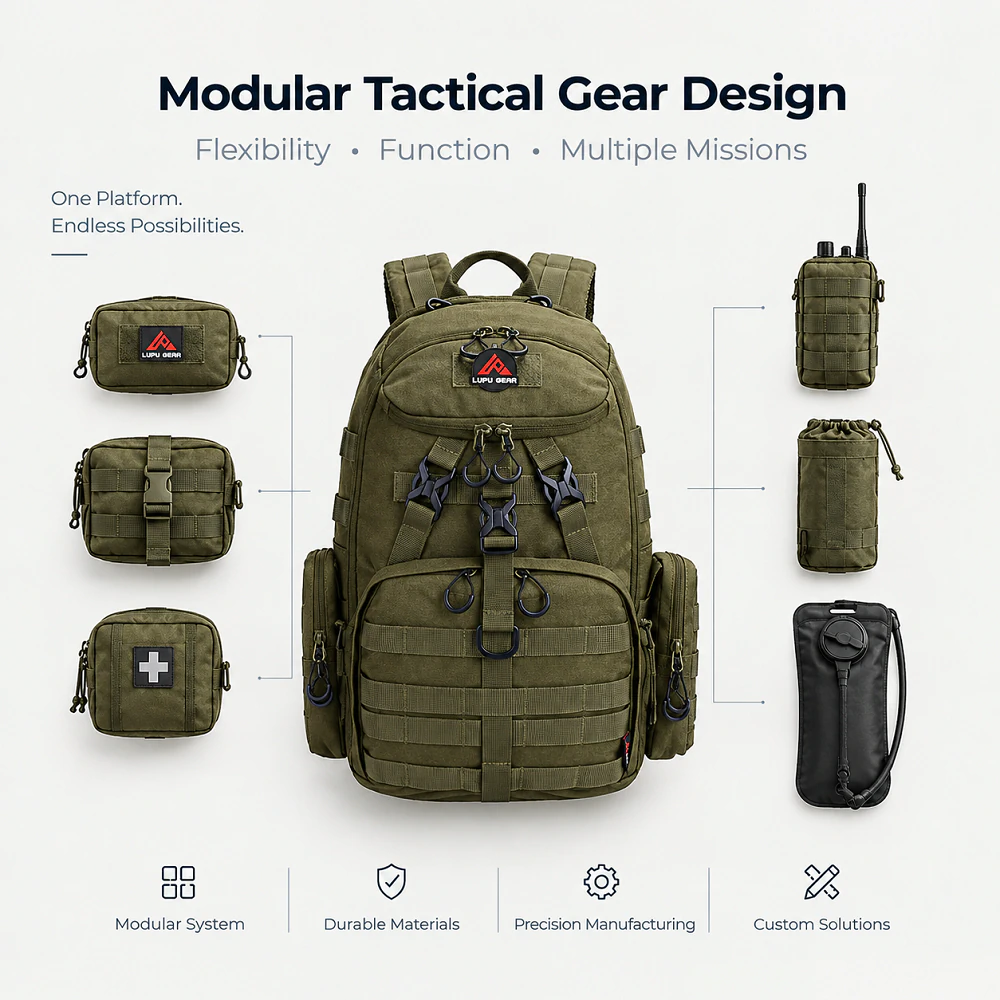
A professional modular system should support different accessories, such as:
- Utility pouches
- Medical pouches
- Radio carriers
- Hydration systems
- Magazine pouches
- Tool attachments
Compatibility requires precision.
Manufacturers must control:
- Attachment dimensions
- Webbing spacing
- Stitching accuracy
- Material thickness
- Component tolerance
A modular product should allow accessories to be added, removed, and repositioned without damaging the main structure.
1.3 Mission-Based Configuration
The strongest modular tactical gear designs are based on real user requirements.
Different users may require completely different setups:
Outdoor professionals may prioritize:
- Hydration storage
- Navigation equipment
- Weather protection
Law enforcement users may require:
- Rapid access compartments
- Communication equipment storage
- Duty-specific accessories
Military users may need:
- Mission-specific load configurations
- Additional carrying capacity
- Equipment integration
A successful modular system allows one platform to support multiple applications.
2. Core Principles of Professional Modular Tactical Gear Design
2.1 Structural Engineering and Load Distribution
One of the biggest challenges in modular equipment design is managing additional weight.
Every attached accessory creates additional stress on:
- Fabric panels
- Stitching areas
- Attachment points
- Shoulder systems
Professional designers must analyze:
- Where the load is concentrated
- How forces transfer through the structure
- Which areas require reinforcement
Critical reinforcement locations often include:
- Shoulder strap connection points
- MOLLE attachment zones
- Carry handles
- Bottom panels
- High-friction areas
A professional fabricante de equipo táctico does not simply attach webbing onto fabric. The entire product structure must be engineered around expected loads.
2.2 Standardized Attachment Systems
Attachment compatibility is one of the most important aspects of modular tactical equipment.
MOLLE/PALS systems gained widespread adoption by offering a standardized attachment platform that allows pouches and accessories to be securely mounted and configured across a range of compatible gear.
However, quality depends heavily on manufacturing precision.
Important factors include:
Webbing Quality
High-quality webbing should provide:
- High tensile strength
- Resistance to abrasion
- Consistent width and thickness
Stitching Performance
Attachment systems require:
- Reinforced stitching
- Accurate stitch spacing
- Secure bartack reinforcement
Long-Term Reliability
A modular system must maintain performance after:
- Repeated attachment cycles
- Heavy loading
- Outdoor exposure
- Environmental stress
Poorly manufactured attachment points can become failure points during real-world use.
2.3 Ergonomic Design and User Comfort
A modular tactical product can have excellent durability but still fail if it is uncomfortable.
Professional designers consider:
- Body movement
- Accessibility
- Weight placement
- Carrying posture
- Extended-use comfort
For example, adding multiple external pouches to a backpack may increase capacity, but poor placement can:
- Pull the user backward
- Create uneven pressure
- Reduce mobility
The best modular tactical gear designs balance flexibility with practical usability.
3. Manufacturing Considerations for Modular Tactical Equipment
3.1 Material Selection
Material selection directly influences modular equipment performance.
Common considerations include:
- Fabric durability
- Abrasion resistance
- Tear strength
- Weight efficiency
- Environmental resistance
Because modular products experience repeated attachment and adjustment, materials must withstand mechanical stress over time.
A professional manufacturer evaluates materials not only by specifications but also by how they perform during actual product usage.
3.2 Reinforcement Engineering
Reinforcement is one of the most important manufacturing steps in modular tactical equipment.
Key reinforcement techniques include:
Box Stitching
Used for securing load-bearing areas.
Bartack Reinforcement
Provides additional strength at stress points.
Layered Construction
Combines multiple fabric layers to improve durability.
Edge Reinforcement
Helps prevent:
- Fabric deformation
- Fraying
- Structural damage
For modular equipment, reinforcement quality often determines the difference between a product that performs reliably and one that fails under demanding conditions.
3.3 Prototype Development and Testing
Before mass production, professional tactical equipment manufacturers typically develop prototypes to evaluate:
- Design functionality
- User accessibility
- Structural performance
- Manufacturing feasibility
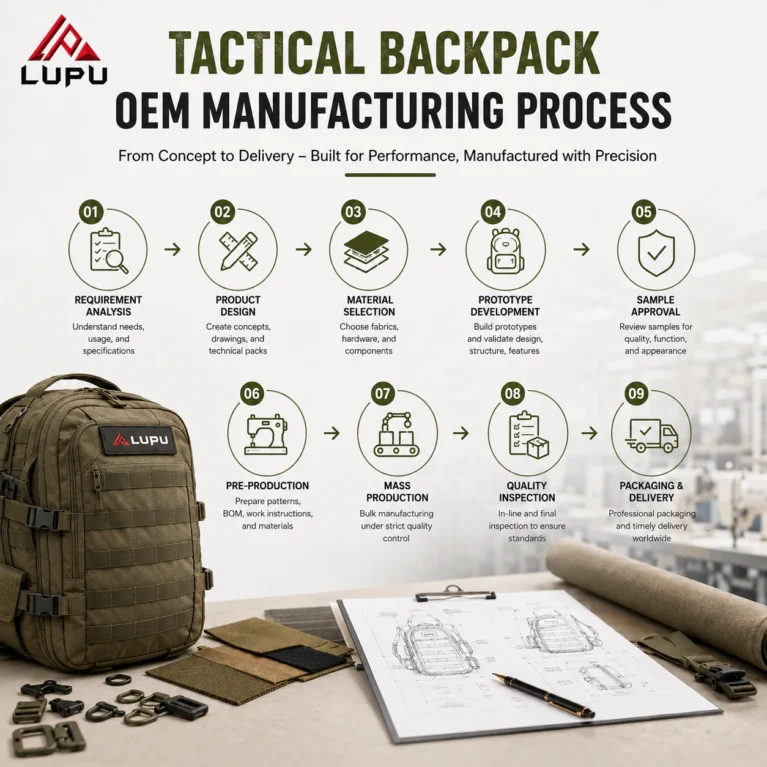
A typical development process includes:
Stage 1: Concept Development
Define:
- Product purpose
- Target users
- Required functions
↓
Stage 2: Prototype Production
Create samples for:
- Structure evaluation
- Feature testing
- Design adjustment
↓
Stage 3: Performance Testing
Evaluate:
- Load handling
- Attachment reliability
- Confort
- Durabilidad
↓
Stage 4: Production Optimization
Improve:
- Manufacturing efficiency
- Quality consistency
- Cost control
For brands developing new tactical products, prototype testing reduces production risks and improves market acceptance.
4. Benefits of Modular Tactical Gear Design for Brands
4.1 Expand Product Lines More Efficiently
Para marcas de equipamiento táctico, modular design creates opportunities to develop multiple products from one platform.
For example, one tactical backpack platform can be adapted into:
- Outdoor backpack
- Patrol backpack
- Survival backpack
- Professional equipment carrier
This allows brands to expand product offerings while maintaining design consistency.
4.2 Support Customization and Private Label Development
Modern tactical equipment buyers increasingly require customization.
A modular tactical gear design approach allows brands to customize:
- Colors
- Camouflage patterns
- Accessories
- Internal organization
- External configurations
- Branding elements
This is especially valuable for:
- Outdoor brands
- Tactical retailers
- Equipment distributors
A flexible manufacturing partner can help transform a product concept into a scalable commercial solution.
4.3 Improve Product Lifecycle Value
Traditional equipment often needs complete replacement when requirements change.
Modular equipment provides a different approach.
Users can upgrade:
- Accessories
- Storage solutions
- Attachment components
without replacing the entire product.
This improves:
- Product longevity
- Customer satisfaction
- Brand loyalty
5. Common Mistakes in Modular Tactical Gear Design
Mistake 1: Adding MOLLE Without Engineering the Structure
A product may appear modular but still lack practical performance.
Common problems:
- Weak attachment points
- Poor reinforcement
- Excessive fabric stress
Modularity must be supported by structural engineering.
Mistake 2: Ignoring Weight Distribution
More attachment options do not always mean better performance.
Excessive external accessories can negatively affect:
- Balance
- Confort
- Mobility
Professional designers must consider the complete carrying system.
Mistake 3: Overcomplicating the Product
A common mistake is adding too many unnecessary features.
Over-designed equipment may result in:
- Increased weight
- Higher production costs
- Reduced usability
The best modular tactical equipment provides maximum adaptability with practical simplicity.
6. Future Trends in Modular Tactical Equipment Design
6.1 Lightweight Modular Systems
Future tactical equipment development is moving toward:
- Stronger lightweight materials
- Reduced unnecessary components
- Improved ergonomic performance
The objective is achieving higher functionality without increasing user burden.
6.2 Integrated Equipment Platforms
Future modular systems will increasingly combine:
- Carrying systems
- Hydration solutions
- Communication equipment
- Protective components
into more integrated platforms.
6.3 Brand-Specific Modular Ecosystems
As competition increases, tactical brands are developing complete ecosystems rather than individual products.
A successful product family may include:
- Backpacks
- Chalecos
- Bolsas
- Accessories
- Supporting equipment
All designed to work together.
7. Choosing the Right Modular Tactical Gear Manufacturing Partner
For brands developing modular tactical products, selecting the right manufacturing partner is critical.
Important evaluation factors include:
Engineering Capability
Look for:
- Product development experience
- Prototype capability
- Material expertise
- Design support
Manufacturing Quality
Evaluate:
- Sewing quality
- Reinforcement methods
- Material control
- Quality inspection processes
Customization Ability
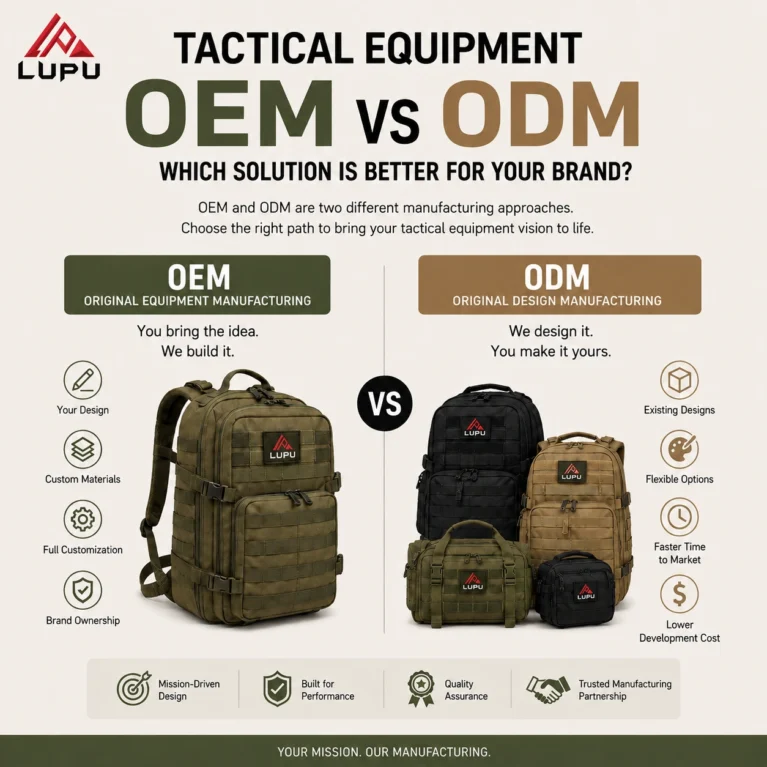
A capable OEM/ODM partner should support:
- Custom designs
- Private label solutions
- Product improvements
- Production scalability
A manufacturer’s value is not only measured by production capacity but also by its ability to solve design and engineering challenges.
Conclusion: Modular Design Defines the Next Generation of Tactical Equipment
Modular Tactical Gear Design represents a major evolution in tactical equipment development.
The future of tactical gear is moving away from fixed-function products toward adaptable systems that allow users and brands to create flexible solutions for different applications.
However, effective modular equipment requires much more than additional attachment points. It requires professional engineering, precise manufacturing, reliable materials, and deep understanding of user requirements.
For tactical brands and professional buyers, working with an experienced manufacturer capable of supporting modular product development is essential to creating equipment that delivers long-term performance, flexibility, and market value.
A truly successful modular tactical system does not simply carry equipment — it adapts, evolves, and performs as mission requirements change.
Custom Tactical Gear Solutions for Your Brand
Looking for a reliable partner to develop your next tactical gear project?
LUPU provides professional custom tactical gear solutions with OEM and ODM support, helping brands create durable, functional, and market-ready products from concept to production.
Design your tactical gear with our experienced team.
👉 Contact Us for Custom Solutions
Email: