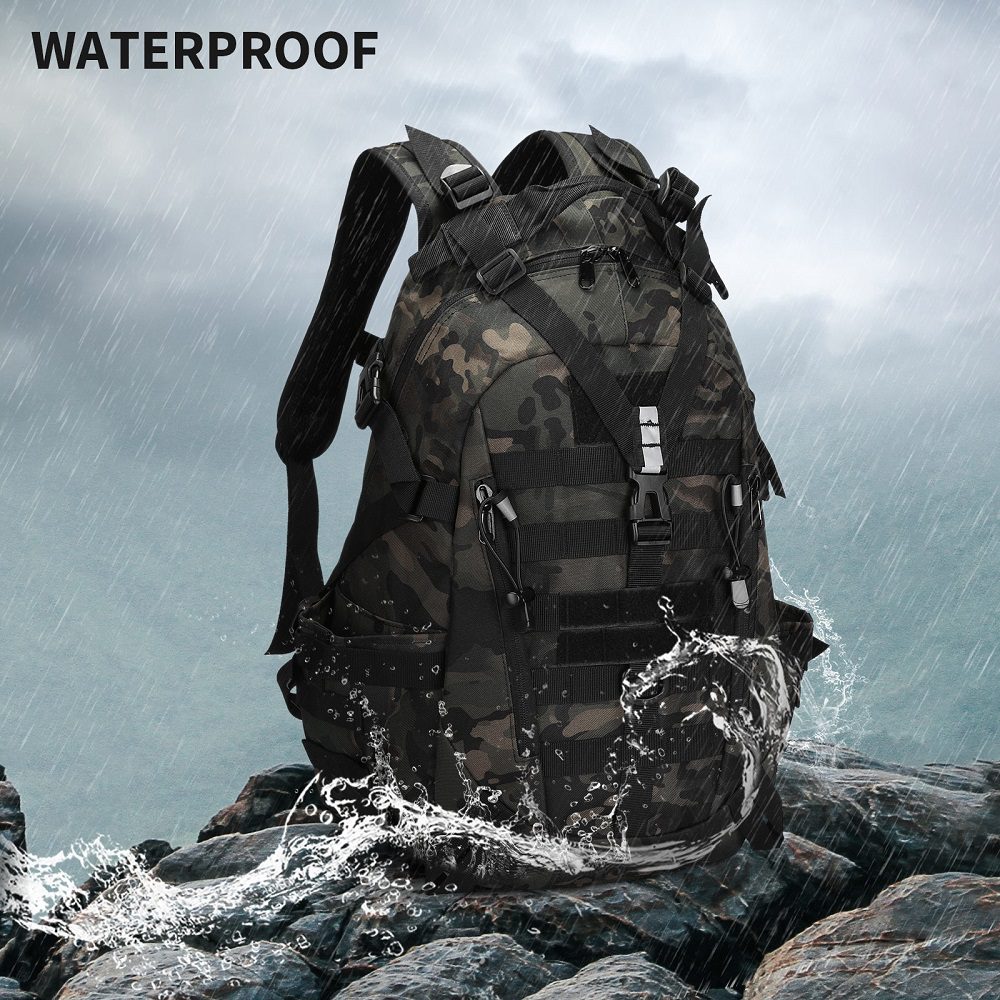
When choosing a tactical backpack, one of the most important considerations is its backpack waterproof capability. While many tactical packs offer water resistance, not all are fully waterproof, and understanding the differences can make the difference between protecting your gear and risking damage. From fabric treatments to seam sealing, the methods used to achieve waterproofing vary widely across models.
This guide explores everything you need to know about tactical backpack waterproof performance—from how waterproofing works and its durability, to the impact of temperature, breathability, and comfort. You’ll also learn how to spot signs of wear and test your backpack to ensure it keeps your gear dry in any conditions. To provide a comprehensive understanding, we will now explore 10 key questions regarding the waterproof capabilities of tactical backpacks, offering detailed, expert insights that clarify how these features work, their practical limitations, and how to ensure your gear stays protected in real-world conditions.
1.Are tactical backpacks waterproof?
Most tactical backpacks are water-resistant, not fully waterproof. That means they can handle light rain, splashes, or snow, but water can eventually get in during heavy rain or if submerged. Only some specialized models are truly waterproof, and those are designed with sealed seams, special zippers, or roll-top closures.
2.Why tactical backpacks are usually not fully waterproof?
Tactical backpacks focus on durability and functionality (lots of pockets, zippers, MOLLE webbing). Those features create:
- Stitching holes and zippers→ places where water can seep in
- Breathability needs→ fully sealed designs are less practical
So tactical backpack manufacturers typically go for water-resistant coatings (like DWR) and tough fabrics, not full waterproof sealing.
3.When tactical backpacks are waterproof?
A tactical backpack is more likely to be truly waterproof if it has:
- Sealed/taped seams
- Waterproof zippers
- Roll-top closure (like dry bags)
- An IP rating or submersion rating
These are less common and often more expensive.
Practical takeaway:
- Everyday use / commuting / hiking→ water-resistant tactical backpack is usually enough
- Heavy rain or critical gear→ add a rain cover or dry bag inside
- Wet environments (kayaking, etc.)→ look specifically for waterproof-rated packs
4.Why do tactical backpacks need to be waterproof?
Tactical backpacks don’t strictly need to be waterproof, but there are strong reasons why waterproofing is highly valued, depending on the use case. Let me break it down carefully:
1. Protecting sensitive gear
Tactical backpacks often carry:
- Electronics (radios, GPS, laptops, cameras)
- Documents or maps
- Survival gear (fire starters, med kits)
- Ammunition or weapons (for military/law enforcement users)
Water can ruin electronics, make documents unreadable, or even compromise ammunition. Waterproofing reduces that risk.
2. Outdoor and military environments
Tactical backpacks are frequently used in:
- Rain, snow, or river crossings
- Humid or swampy areas
- Rapid-response situations where time is critical
In these contexts, water-resistance can be a mission-critical feature, preventing gear failure.
3. Durability and longevity
Even if you’re not carrying electronics, water can:
- Weaken stitching and fabrics over time
- Cause mold or mildew
- Make the pack heavier if materials absorb water
Waterproof coatings or fabrics extend the life of the backpack.
4. Comfort and practicality
A wet bag is:
- Heavier to carry
- Cold or uncomfortable against the back
- Harder to organize if internal pockets get soaked
Waterproofing helps maintain comfort and usability.
Bottom line: Waterproofing isn’t absolutely required for every tactical backpack, but it protects gear, extends lifespan, and increases reliability in tough conditions.
5.What is the waterproofing process used for tactical backpack fabrics?
Tactical backpacks are rarely fully waterproof, but their fabrics are treated to resist water using several different processes. Here’s a careful breakdown:
1. DWR Coating (Durable Water Repellent)
- What it is:A chemical coating applied to the fabric surface.
- How it works:Causes water to bead up and roll off instead of soaking in.
- Common chemicals:Fluoropolymers (PFOS/PFOA historically, now mostly newer “short-chain” fluoropolymers or non-fluorinated alternatives)
- Pros:Lightweight, keeps fabric breathable.
Cons: Doesn’t seal seams or zippers; beads wear off over time.
2. PU Coating (Polyurethane Laminate)
- What it is:A thin layer of polyurethane applied to the underside of the fabric.
- How it works:Creates a barrier that prevents water from penetrating the material.
- Pros:Provides real waterproofing without sacrificing flexibility.
- Cons:Can reduce breathability; may crack over time if folded excessively.
3. TPU or PVC Laminates
Thermoplastic polyurethane (TPU) or polyvinyl chloride (PVC) can be bonded to the fabric for heavier-duty waterproofing.
- Pros:Very durable; used in high-end or military-grade packs.
- Cons:Adds weight; less flexible; often not breathable.
4. Seam Sealing / Taping
- What it is:Applying waterproof tape or sealant over stitched seams.
- Why it matters:Even the most waterproof fabric leaks through needle holes.
- Methods:Heat-activated tape or liquid seam sealants.
- Result:Prevents water entry at weak points.
5. Waterproof Zippers & Closures
- Zippers:Often coated with polyurethane or rubber to keep water out.
- Closures:Roll-top or flap designs are sometimes used instead of standard zippers for extra protection.
6. Wax or Oil Treatments (less common today)
- Traditional method using wax or oils rubbed into fabrics like canvas.
- Heavy, adds stiffness, but highly water-resistant.
- Mostly replaced by modern DWR or PU coatings in tactical gear.
In practice:
Most tactical backpacks combine DWR-treated nylon (like 500D or 1000D Cordura) with PU-coated undersides and sometimes waterproof zippers or taped seams. That gives a balance between water resistance, durability, and weight.
Comparing water resistance levels, fabric treatment types, and real-world effectiveness for tactical backpacks
|
Water Resistance Level |
Fabric Treatment / Material |
Typical Features |
Real-World Effectiveness |
Notes / Longevity |
|
Water-Resistant |
DWR-coated nylon (e.g., 500D or 1000D Cordura) |
Standard zippers, untreated seams |
Protects against light rain, splashes, and snow; water beads off |
DWR wears off after ~6–12 months of heavy use; can be renewed with spray |
|
Moderate Waterproof |
PU-coated fabric or laminated nylon |
Water-resistant zippers, partially taped seams |
Can handle moderate rain, brief exposure to puddles |
PU coating may crack over time; effectiveness reduces after folding/repeated abrasion |
|
High Waterproof / Weatherproof |
TPU/PVC laminate or high-denier coated nylon |
Fully taped seams, waterproof zippers, roll-top closures |
Can survive heavy rain, short submersion, or river crossings |
Long-lasting under normal use; seams may still need occasional resealing |
|
Fully Waterproof / Submersible |
Heavy-duty dry-bag style TPU/PVC or specialized military-grade fabrics |
Roll-top or welded closure, sealed seams, waterproof compartments |
Complete protection against prolonged rain or full submersion |
Very durable, but bulky and less breathable; designed for extreme conditions |
Key Takeaways:
- DWR coatings are lightweight but wear off quickly.
- PU or TPU coatings with taped seams offer the best balance of durability and protection.
- For critical gear or heavy rain, consider backpacks labeled as weatherproof or submersible, or use a rain cover/dry bag inside.
6.How long does the waterproof performance of a tactical backpack last?
The waterproof performance of a tactical backpack depends on the type of fabric treatment, frequency of use, and environmental exposure, so it’s not a fixed number—but here’s a detailed breakdown:
- DWR (Durable Water Repellent) Coatings
- Expected lifespan:~6–12 months of regular use
- Factors affecting longevity:
- Friction and abrasion (back against surfaces, straps rubbing)
- Exposure to dirt, oils, or harsh detergents
- Sunlight/UV degradation
- Maintenance:Can be renewed with spray-on or wash-in DWR treatments.
- PU (Polyurethane) Coatings
- Expected lifespan:2–5 years under normal use
- Factors affecting longevity:
- Folding or bending repeatedly (may cause micro-cracks)
- Heavy abrasion on high-wear areas
- Maintenance:Clean gently; avoid sharp folds to prolong waterproofing.
- TPU/PVC Laminates & Fully Waterproof Materials
- Expected lifespan:5–10 years or longer
- Factors affecting longevity:
- Extreme heat or harsh chemicals can degrade laminates
- Mechanical punctures can compromise waterproofing
- Maintenance:Rinse after exposure to saltwater or mud; check seams and closures periodically.
- Seams and Zippers
Even the best fabric loses waterproof effectiveness if seams and zippers aren’t sealed.
- Taped seams:Typically last as long as the fabric, but may peel after several years.
- Waterproof zippers:Durable, but keep debris out to maintain sealing.
In summary:
Lightly treated backpacks → 6–12 months
PU-coated → 2–5 years
TPU/PVC laminated → 5–10+ years
Tip: You can extend waterproof performance by using a rain cover or dry bag inside, especially for electronics or sensitive gear.
7.How does temperature affect the waterproof properties of a tactical backpack?
Temperature actually plays a significant role in the waterproof performance of tactical backpacks, especially because most rely on chemical coatings (DWR, PU) or laminated materials (TPU/PVC). Let me break it down clearly:
1. High Temperatures
Effect on coatings:
- DWR or PU can soften, melt slightly, or degrade under prolonged heat.
- UV exposure accelerates chemical breakdown, reducing water repellency.
Practical impact:
- Water may start to soak in rather than bead off, especially on high-contact areas.
- Fabric may feel less stiff and seams may weaken over time.
Example: Leaving a backpack on a hot dashboard or in direct sun for weeks can reduce water resistance noticeably.
2. Low Temperatures
Effect on coatings:
- PU and TPU coatings can become brittle in freezing conditions.
- Laminates may crack if folded sharply in subzero weather.
Practical impact:
- Small cracks or micro-fractures allow water to seep through.
- Roll-top closures or taped seams may be less flexible, making full sealing harder.
3. Temperature Cycling
Repeated hot-to-cold cycles stress coatings and seams, accelerating deterioration.
For instance, a backpack left in a sunny car during the day and freezing nights can lose water resistance faster than constant moderate conditions.
4. Fabric-Specific Notes
|
Material/Coating |
Heat Tolerance |
Cold Tolerance |
Notes |
|
DWR-coated nylon |
Moderate (~50–60°C / 120–140°F) |
Good, doesn’t crack |
Coating wears off faster in sunlight |
|
PU-coated nylon |
Up to ~80°C / 176°F |
Can crack < -20°C |
Flexible but sensitive to bending in cold |
|
TPU/PVC laminate |
High, ~90–100°C / 194–212°F |
Brittle < -30°C |
Very durable but stiff in extreme cold |
Key takeaway:
- Extreme heat → accelerates coating breakdown → less water repellency
- Extreme cold → can make coatings brittle → small leaks possible
- Moderate temperatures → waterproof performance lasts longest
Here’s a practical chart showing how temperature affects the waterproof performance of different tactical backpack materials.
|
Material / Treatment |
High Temperature Effect |
Low Temperature Effect |
Optimal Temperature Range |
Practical Waterproof Notes |
|
DWR-coated nylon (500D–1000D Cordura) |
Coating softens and degrades under prolonged heat or UV → water beads less effectively |
Performs well in cold, remains flexible |
0°C – 50°C (32°F – 122°F) |
Water resistance decreases over time; reapply DWR spray for long-term use |
|
PU-coated nylon |
Can soften or tack under heat; excessive heat may cause mild cracking |
Coating becomes brittle below -20°C (-4°F); bending can cause micro-cracks |
-10°C – 60°C (14°F – 140°F) |
Moderate waterproofing; lasts 2–5 years if cared for |
|
TPU/PVC laminated fabric |
Very resistant to heat up to 90–100°C (194–212°F) |
Becomes stiff and less flexible below -30°C (-22°F); extreme folding can cause cracks |
-20°C – 90°C (-4°F – 194°F) |
High waterproof reliability; heavy-duty applications; may feel rigid in cold |
|
Sealed / taped seams |
Heat may soften adhesive tape, reduce seam integrity |
Cold can make tape brittle → small leaks at edges |
-10°C – 60°C (14°F – 140°F) |
Critical for overall waterproofing; inspect after extreme temperature exposure |
|
Waterproof zippers |
Can expand slightly in heat, but usually maintain seal |
Can stiffen or freeze, reducing closure effectiveness |
-20°C – 60°C (-4°F – 140°F) |
Check for proper operation in freezing; keep clean to maintain seal |
Practical Takeaways:
- Moderate temperatures are ideal for preserving waterproof coatings.
- Extreme heat accelerates chemical breakdown; keep backpacks out of direct sun when possible.
- Extreme cold can make coatings brittle and zippers less flexible; avoid folding sharply in subzero conditions.
- Regular maintenance—like cleaning, reapplying DWR spray, and checking seams—extends waterproof performance.
8.Do waterproof tactical backpacks maintain breathability and comfort?
now we’re diving into the classic trade-off between waterproofing and comfort—this is where tactical backpacks show their engineering compromises. Here’s a careful breakdown:
1. Breathability
- DWR-coated nylon (water-resistant):
- Highly breathable because it’s just a surface coating.
- Sweat and moisture from your back can escape, so it’s comfortable for long periods.
- PU-coated nylon:
- Partially waterproof, but the polyurethane layer reduces breathability.
- Heat and sweat may build up inside the backpack during intense activity.
- TPU/PVC laminated / fully waterproof packs:
- Essentially non-breathable.
- Traps heat and moisture, which can make the backpack feel damp inside even if nothing leaks in.
Key point: The more waterproof a backpack is, the less breathable it usually becomes.
2. Comfort
Factors affected by waterproofing include:
|
Factor |
DWR-coated |
PU-coated |
TPU/PVC laminated |
|
Gewicht |
Light |
Moderate |
Heavy |
|
Flexibility |
Hoch |
Moderate |
Low (stiff) |
|
Heat buildup |
Minimal |
Moderate |
Hoch |
|
Pack feel |
Comfortable against back |
Slightly stiffer |
Can feel rigid, especially when full or cold |
- Fully waterproof packs may require extra padding or ventilation channels to maintain comfort.
- Non-waterproof but water-resistant backpacks often feel lighter and more flexible, making them better for hiking or everyday carry.
3. Engineering trade-offs
- Tactical Gear Manufacturers balance waterproofing vs. breathability vs. durability.
- Common solutions to improve comfort in waterproof packs:
- Mesh back panels with air channels (for airflow)
- Ventilated straps and padding
- Using waterproof liners inside a breathable pack (keeps gear dry without sacrificing comfort)
Summary:
- Water-resistant (DWR) backpacks:Great breathability and comfort, but not fully waterproof.
- Moderate waterproof (PU-coated):Compromise between protection and comfort.
- Fully waterproof (TPU/PVC):Excellent protection but limited breathability; can feel heavy and stiff.
Here’s a clear comparison table showing waterproofing vs. breathability vs. comfort for tactical backpacks.
|
Backpack Type / Material |
Waterproof Level |
Breathability |
Comfort & Flexibility |
Best Use Cases |
|
DWR-coated nylon (500D–1000D Cordura) |
Light / water-resistant |
Hoch |
Very flexible, lightweight, comfortable |
Everyday carry, hiking, commuting, moderate rain |
|
PU-coated nylon |
Moderate / weatherproof |
Moderate |
Slightly stiffer, moderate weight |
Outdoor activities in moderate rain, tactical use where some waterproofing is needed |
|
TPU/PVC laminated (fully waterproof) |
High / submersible |
Niedrig |
Heavy, rigid, less flexible; can trap heat |
Extreme weather, river crossings, heavy-duty military operations |
|
Waterproof backpack with removable dry bag liner |
High (internal) |
High (outer pack breathable) |
Outer pack remains comfortable; internal gear stays dry |
Hiking, camping, long treks where comfort + waterproofing is needed |
|
Sealed/taped seam packs |
Moderate to high |
Low to moderate |
Depends on base material; seams may stiffen pack |
Military or tactical applications in heavy rain |
Key Insights:
- Higher waterproofing usually = lower breathability.
- DWR packs are best for comfort and light rain.
- TPU/PVC laminated packs are for heavy exposure but can feel stiff, hot, and heavy.
- Hybrid solutions (breathable outer pack + waterproof liner) give the best of both worlds.
9.What are the signs that a tactical backpack has lost its waterproof capability?
Ah, spotting when a tactical backpack has lost its waterproofing is surprisingly straightforward if you know what to look for. Let’s go through it in detail:
1. Water No Longer Beads on the Surface
- Original state:On a new DWR-coated backpack, water forms beads and rolls off the fabric.
- Sign of lost waterproofing:Water soaks into the fabric instead of beading.
- Tip:Test by sprinkling a few drops of water on the fabric. If it absorbs quickly, the DWR coating has worn off.
2. Fabric Feels Saturated Faster
- When carrying the backpack in light rain, the outer material becomes wet quickly, even with brief exposure.
- Heavy spots or patches that hold water indicate that the coating or laminate is compromised.
3. Stiff, Cracked, or Peeling Coating
- PU or TPU coatings can crack, peel, or flake after prolonged use or exposure to heat, cold, or abrasion.
- Cracks create tiny channels for water to enter, even if the surface looks mostly intact.
4. Leaks from Seams or Zippers
- Water-resistant fabrics may still fail if stitching, taped seams, or zippers degrade:
- Seams show signs of peeling or adhesive failure.
- Zippers let water seep through despite being “waterproof”
- Even if the fabric is fine, failed seams are a common weak point.
5. Persistent Dampness Inside the Pack
- Check inside:if gear or the lining gets wet after exposure to rain or even splashes, the waterproofing is compromised.
- This is especially critical for electronics, documents, or survival gear.
6. Faded or Worn DWR
- DWR coatings wear off gradually:areas with heavy contact (shoulder straps, back panel, bottom) are usually first to fail.
- A visual inspection often reveals uneven sheen or color changes, indicating lost repellency.
Quick Test You Can Do at Home:
- Place the backpack on a dry surface.
- Sprinkle a few drops of water on different areas.
- Observe:
- Water beads and rolls off → still good.
- Water spreads and soaks in → coating needs refreshing or repair.
Summary of signs:
- Water soaks in instead of beading
- Fabric saturates quickly
- Cracks, peeling, or flaking coating
- Seams or zippers leaking
- Interior dampness after exposure
Here’s a practical waterproof-check checklist for tactical backpacks. You can use it before any trip, hike, or tactical use to see if your pack still protects your gear:
10.How do you check if a tactical backpack is waterproof?
You can perform the inspection using this tactical backpack waterproof checklist.
1. Surface Water Test
- Sprinkle a few drops of water on various parts of the backpack (front, sides, bottom, shoulder straps).
- Pass:Water beads and rolls off.
- Fail:Water spreads or soaks in → coating may need renewal.
2. Fabric Inspection
- Look for:
- Cracks, peeling, or flaking of PU/TPU coatings
- Faded or worn DWR coating
- Pass:Smooth surface, uniform sheen
- Fail:Cracks, peeling, or dull areas indicate reduced waterproofing
3. Seams & Stitching
- Check taped or sealed seams for:
- Peeling tape
- Gaps or weak adhesive
- Pass:Seams intact, tape fully adherent
- Fail:Water can enter along stitched areas
4. Zipper Test
- Check water-resistant or waterproof zippers:
- Gently spray water near zipper edges
- Observe if any water seeps in
- Pass:No leaks; smooth operation
- Fail:Water penetration or stiff, brittle zipper
5. Interior Dryness
- Place a dry paper towel or tissue inside the backpack
- Lightly spray the exterior or expose to drizzle for a few minutes
- Pass:Interior stays dry
- Fail:Paper towel gets damp → backpack is compromised
6. Wear & Tear Check
- Inspect high-contact areas:shoulder straps, back panel, bottom
- Look for abrasion, thinning, or worn coatings
- Pass:Fabric intact and uniform
- Fail:Heavy wear may reduce water resistance in those areas
Optional Maintenance Step
- If the pack fails surface water test or shows worn DWR, reapply a spray-on or wash-in DWR treatment.
- For PU/TPU coatings, consider professional repair if cracks are severe.
Quick Rule of Thumb:
If any one of the first three tests fails (water beading, seams, zippers), the backpack cannot be considered reliably waterproof.
Understanding the waterproof capabilities of a tactical backpack is essential for protecting your gear in any environment. By exploring how waterproof treatments work, their durability, and the signs of wear, you can make informed decisions and maintain your pack effectively. Whether for hiking, tactical operations, or everyday use, choosing a backpack waterproof to the right standard ensures your belongings stay dry and your pack performs reliably under all conditions.
Verwandt:
Top 50: Globale Liste taktischer Ausrüstungsmarken
Top 12 Militärische Kampfstiefel Hersteller In Der Welt