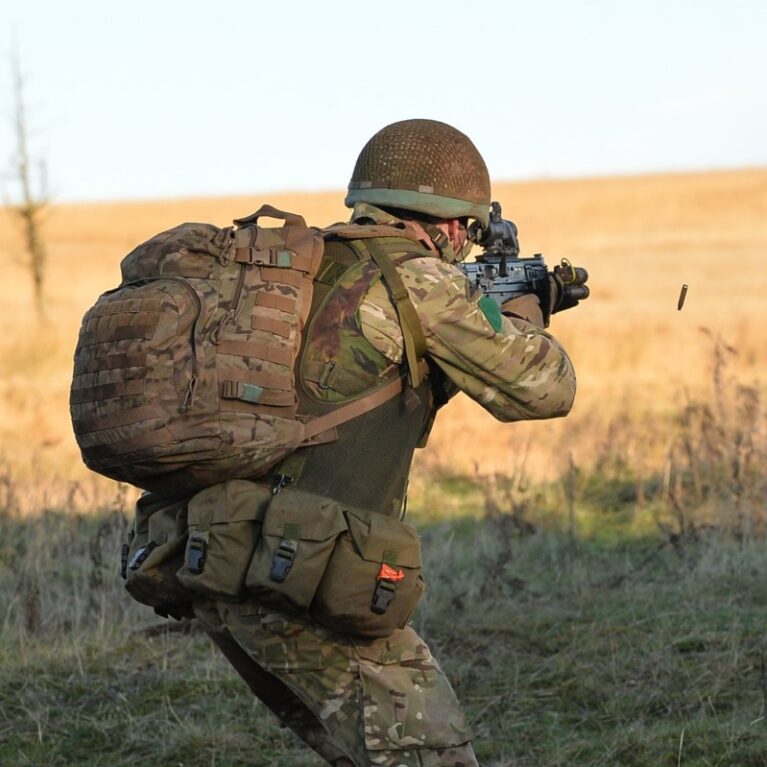
O tactical backpacks size may seem simple, but they are actually quite complex. Different marcas de equipamento tático and manufacturers often differ in capacity ratings, measurement systems, and design variations. Even backpacks with the same stated capacity can have vastly different practical usability. For example, I once bought two 35L backpacks of the same style but from different brands. Upon receiving them, I found that one was significantly smaller than the other, with a considerable difference in capacity. Although the stated capacity was the same, the actual internal space differed greatly due to factors such as the backpack's shape, internal compartment layout, and fabric density.
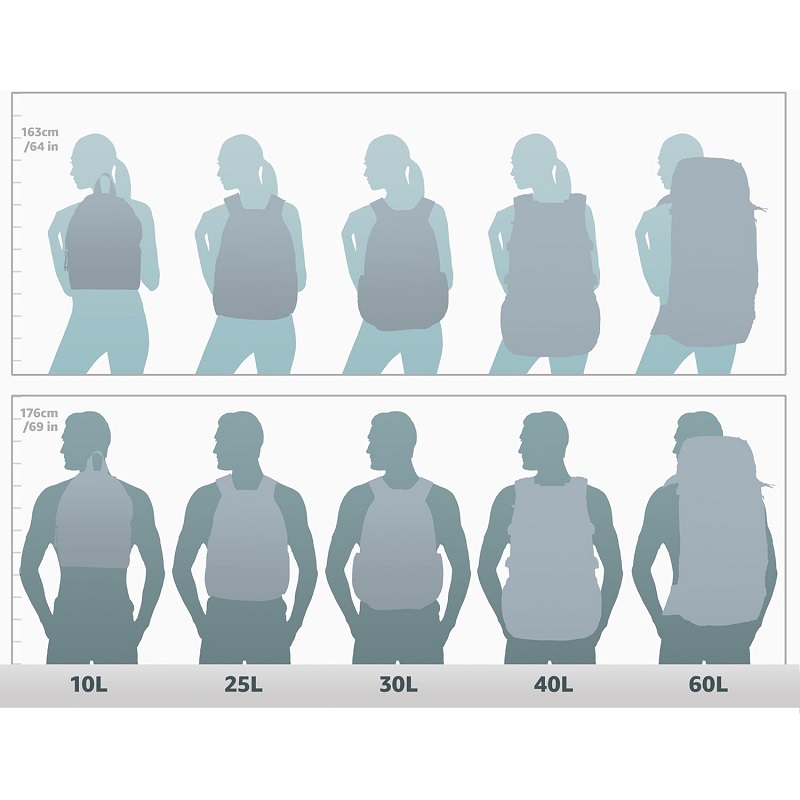 For instance, some backpacks expand their capacity through MOLLE systems or adjustable compression straps, while others may use thicker fabrics or complex frame structures, all of which affect the actual volume of the backpack. Backpack design is not simply about a capacity number; the layout of internal compartments and additional features such as hydration systems or laptop compartments also directly impact the usable space.
Therefore, when choosing a tactical backpack, relying solely on the "L" (liter) rating might lead to the wrong choice. Understanding the specific design features of the backpack, such as whether it has expandable space, how the internal structure is arranged, and the thickness of the fabric, will help you make a more informed decision and avoid choosing a backpack that is too small or too heavy. Having this information ensures that the chosen backpack meets your needs without causing inconvenience during actual use.
The core of this issue lies in a key question:
What exactly do the different tactical backpack sizes represent?
Tactical backpack sizes are generally measured in liters, indicating the total internal volume of the pack. While common sizes like 20L (ideal for everyday carry), 30L (for day trips or short missions), 40L (suitable for extended outdoor use), and 50L+ (preferred for military or multi-day excursions) are widely recognized, the true capacity of a backpack often varies depending on factors like compartment design, MOLLE expandability, frame construction, and fabric thickness. A 40L pack from one fabricante de mochilas tácticas may offer a significantly different experience compared to a similarly sized bag from another brand.
To truly understand tactical backpack sizes, it's essential to consider these real-world implications. For instance, imagine a customer ordering a "40L tactical backpack” expecting ample space for a multi-day trip, only to find that the pack feels more like a cramped 28L bag once they begin packing. The reason? The internal layout, compartment design, and material density can drastically reduce the effective volume, making the pack less versatile than anticipated. This is why understanding the full scope of backpack sizing is crucial for both buyers and manufacturers alike.
What Tactical Backpack Sizes Really Mean?
In the world of tactical gear, backpack sizes are usually measured in liters or cubic inches to reflect internal storage capacity. However, factors such as compartment layout, MOLLE system expansion, internal depth, and fabric weight all play a role in determining the true usable volume. While the capacity (e.g., 30L, 40L) gives a general idea of the bag's size, the actual fit and functionality will depend on the bag's design. To ensure your gear fits efficiently and comfortably, it's important to consider how each feature influences the overall experience, especially when comparing packs of similar liter sizes.
How Are Tactical Backpacks Measured (Liters vs. Cubic Inches vs. Compartments)?
While liters (L) have become the global standard for measuring backpack capacity, tactical gear—especially in the U.S. military—historically used cubic inches (cu in). Understanding both units of measurement allows buyers to compare and choose the right gear with greater accuracy. To make this comparison easier, 1 liter is roughly equivalent to 61 cubic inches. This conversion helps customers understand how much gear a pack can hold, especially when considering different measurement systems across brands or product lines.
| Liters (L) | Cubic Inches (cu in) |
| 20L | ~1,220 cu in |
| 30L | ~1,830 cu in |
| 40L | ~2440 cu in |
| 50L | ~3050 cu in |
| 60L | ~3660 cu in |
In addition to volume, many tactical backpacks emphasize compartment design, which can significantly impact a pack's usability. For example, two backpacks of the same volume may feel very different depending on the number of compartments, internal organization, and expansion options like MOLLE systems. While liters or cubic inches provide a basic measure of capacity, the actual functionality and organization of the compartments inside the pack will determine how efficiently you can store and access your gear.
Therefore, when evaluating a tactical backpack, it's essential to consider both the overall volume and the compartmentalization features. This ensures the pack meets your specific needs, whether you're preparing for day trips, extended missions, or everyday carry.
The capacity of a tactical backpack is not simply defined by its empty internal space, often thought of as a cylindrical void waiting to be filled.
In theory, capacity (measured in liters) is determined by:
- Filling all compartments with small particles or liquid.
- Measuring the volume displaced by these materials.
- Applying the formula for total volume: length x width x height.
However, tactical backpacks often feature specialized compartments and accessories that alter the true usable space, such as:
- Hydration bladder compartments
- Utility pouches
- Radio compartments
- Support plates
- Padded dividers
- Capas para computadores portáteis
- Elastic straps
While these features contribute to the overall volume, they reduce the practical storage area inside the pack. As a result, while a tactical backpack may have a larger total volume, the actual space available for gear may be significantly less due to these internal elements. Therefore, when considering capacity, it's essential to account for both the stated volume and how the pack's internal design impacts usable storage.
Here's why: A 35L tactical backpack isn't the same as a 35L hiking backpack. The tactical version often feels smaller inside due to construction thickness and compartment segmentation.
One of the most frequently asked questions on Google is:
What's the difference between 50L, 40L, 30L, and 20L tactical backpacks?
Each size is designed to meet specific needs, with each capacity offering distinct advantages based on your gear requirements and intended use:
20L Pack For Tactical
Perfect for Everyday Carry (EDC), this compact and lightweight pack is ideal for daily use. It comfortably fits your essentials, including a first-aid kit, laptop or tablet, water bottle, and basic tools. Best suited for urban environments where mobility and efficiency are key.
30L Pack For Tactical
The most versatile and widely favored size. This backpack caters to a variety of needs, including:
- Gym and work gear for daily tasks
- 1-day outdoor missions, providing ample space for essentials
- Commuting and tactical hybrid use, blending practicality and functionality
- Travel carry-on, meeting the needs of frequent travelers with its compact yet spacious design
40L Pack For Tactical
Designed for heavier loadouts, this backpack strikes a balance between capacity and mobility. It's the perfect choice for:
- Weekend trips where you need to carry more gear without overpacking
- Hunting and hiking, providing space for outdoor gear and clothing
- Military training, accommodating tools, equipment, and layers for extended exercises
- Outdoor operations that require multiple layers and organized gear
The 40L offers an ideal blend of volume and maneuverability, making it suitable for a wide range of activities.
50L+ Pack For Tactical
Built for serious, equipment-heavy missions, the 50L+ tactical backpack is engineered for extended operations where heavy-duty capacity is essential. It's tailored for:
- Bug-out bags (BOB), designed to carry all the survival gear needed for emergency situations
- Search and Rescue (SAR) operations, offering ample room for lifesaving tools and gear
- Military deployments, supporting the demanding needs of armed forces in the field
- Multi-day trekking, providing space for additional food, clothing, and supplies
- Emergency preparedness, ensuring you have all the necessary equipment for any crisis situation
The 50L+ packs are designed for those who need to be fully equipped for long-duration missions or unexpected scenarios.
Are Tactical Backpack Sizes Consistent Across Brands?
No, tactical backpack sizes are not standardized across different brands.
Two backpacks labeled as "35L" can offer very different capacities and user experiences due to various factors. Here's why:
Key Factors Affecting Size Variations:
- Internal Layout:More pockets or compartments can reduce available flexible space, affecting how much gear you can actually pack.
- Fabric Thickness:Heavier materials like 1000D nylon take up more room compared to lighter fabrics like 500D, impacting the overall space inside the bag.
- Shape and Profile:The shape of the backpack—whether it's wide, tall, or deep—affects how the internal space is utilized and organized.
- Padding Density:Thicker padding provides more comfort but can reduce internal volume.
- Frame Construction:The presence of a frame can alter the interior dimensions and impact the pack's usable space.
- External Compartments:Some brands include side or external pockets in the total liter count, while others do not, leading to discrepancies in capacity labeling.
As a result, when choosing a tactical backpack, it's important to consider the actual usable space and design rather than relying solely on the liter rating.
What Design Features Affect the Perceived Capacity?
The liter rating alone doesn't provide the full picture. Several key design elements play a significant role in determining how spacious a tactical backpack actually feels.
Here are the factors that influence the perceived capacity:
1. Backpack Shape (Tall, Wide, or Deep)
The shape of a backpack plays a significant role in how its capacity feels:
- Tall packs are ideal for carrying vertical items, such as clothing and hydration bladders.
- Wide packs offer a greater feeling of space but may sit less comfortably on the back.
- Deep packs excel at efficiently carrying bulkier gear.
A 35L deep-profile pack often feels more spacious than a 45L tall, narrow pack, thanks to its more optimized internal space.
2. Compartment Segmentation
The number of compartments in a pack can improve organization but limit flexibility.
Military-style admin pockets are space-efficient yet improve accessibility, making it easier to grab important items quickly.
3. MOLLE Attachments & Modular Expansion
MOLLE webbing allows for a significant increase in storage capacity:
- It can add 2-15 liters of external storage.
- Attach specialized pouches for medical kits, radios, or tools.
- Detachable kits can expand the bag's functionality.
A 20L pack with full MOLLE expansion can feel like a 35L system when all compartments are fully utilized.
4. Fabric Thickness
The thickness of the fabric directly affects the internal space of the pack:
- 1000D Cordurais highly durable but takes up more space inside.
- 600D Polyesteris lighter and allows for more interior room.
- Nylonoffers superior abrasion resistance but tends to be thicker, reducing the pack's internal volume.
These fabric differences are more noticeable in smaller-sized backpacks.
5. Frame Boards and Padding
Internal frames, foam padding, and mesh panels are designed to enhance comfort but reduce the usable interior space.
While better ergonomics improve overall comfort, they typically result in less capacity for your gear inside the bag.
Comprehensive Comparison Table for Usability:
Choosing the Right Tactical Backpack Size for Your Needs?
The ideal tactical backpack size is determined by your specific use case and requirements.
- A 20L packis perfect for everyday carry, offering compact storage for essential items.
- A 30L packis versatile enough for day missions or travel, providing ample space without being bulky.
- O 40L packis tailored for outdoor and tactical field operations, offering enough capacity for gear needed during extended activities.
- Meanwhile, 50L+ packsare designed for military, survival, or multi-day preparedness, capable of carrying heavy loads for long durations.
Each size caters to different carrying capacities, mobility requirements, and comfort levels—selecting the right size ensures optimal performance and safety.
What Size Is Best for Everyday Carry (EDC)? (20L–25L)
For daily use—whether it's work, commuting, school, travel, or light outdoor adventures—the 20L to 25L size range is optimal.
Why 20L–25L is Ideal for EDC Tactical Backpack?
This size strikes the perfect balance for urban life and short trips:
- Compact enough for crowded urban environments, ensuring easy navigation.
- Lightweight and ergonomic, reducing strain during long hours of wear.
- Ample room for essentials like:
Laptop or tablet (like: Ipad) - Chargers
- First-aid kit
- Personal items
- Light jacket
- Hydration bottle
Benefits of a 20L-25L EDC BackPack Para Tática:
- Maximized mobility, allowing you to move quickly without being weighed down.
- Minimal shoulder fatigue, perfect for daily commutes or short outdoor activities.
- Compact enough to fit under airplane seats, making it ideal for travel.
- Slim profile helps avoid snags in crowded spaces like subways or offices.
- Durable and efficient organization ensures quick access to everything you need.
Drawbacks of a 20L - 25L EDC Backpack For Tactical:
- Not designed for heavy outdoor loadouts or bulky gear.
- Limited space for larger or more specialized items.
- Not ideal for extended trips or heavy-duty adventures.
Who Should Choose 20L–25L Tactical EDC backpack?
- Office workers looking for a compact, organized daily bag.
- Students who need to carry their essentials without excess bulk.
- City commuters seeking convenience and efficiency.
- Digital nomads who need a lightweight, versatile pack.
- Travelers in need of a compact personal bag for quick trips or carry-on luggage.
A tactical EDC pack in the 20L–25L range prioritizes durability (usually made from 500D–600D nylon), water resistance, and smart organization—not just volume. It's about creating a highly functional, mobile, and reliable solution for those who need to stay prepared while on the move.
Which Tactical Backpack Size is Ideal for Hiking & Outdoor Travel? (30L–40L)
Outdoor enthusiasts have unique requirements compared to urban users. For day hikes or short weekend trips, a 30L–40L tactical backpack is the perfect size.
Why 30–40L tactical backpack is Ideal for Outdoor Activities?
This capacity comfortably accommodates all your essential gear for one to two-day outdoor adventures:
- Layers of clothing for varying weather conditions
- Food and snacks to keep you fueled throughout the day
- Water bladders (2–3 liters) for easy hydration on the go
- Emergency medical kits for quick access to first aid
- Navigation tools like maps or compasses
- Rain gear to protect against unexpected weather
- Compact shelter elements, such as a lightweight tent or tarp
- Gloves, hats, and accessories for added comfort and protection
30L – 40L Tactical Backpack Key Benefits:
- Balances mobility and load capacity, offering enough room for gear while keeping weight manageable.
- Comfortable for long-distance walking, providing just the right amount of space without hindering movement.
- Supports hydration systems, with dedicated compartments for water bladders.
- Can integrate trekking pole mounts, offering hands-free storage for your poles when not in use.
- Not overly bulky, allowing for better maneuverability and ease of access to your gear.
30L - 40L Tactical Backpack, ideal For:
- Day hikers looking for a lightweight yet spacious pack.
- Overnight trekkers who need enough room for essentials without excess weight.
- Photography field trips, where equipment and extra layers must be carried securely.
- Outdoor workers who need to carry tools and supplies while maintaining mobility.
- Campers who require a versatile pack for short trips or multi-day stays in nature.
Backpacks in the 30L–40L range typically include features like padded hip belts, sternum straps, and back ventilation foam—ensuring comfort during long hikes or elevation changes. These design elements help distribute weight evenly and reduce pressure on the shoulders, providing better support throughout your journey.
How to Choose the Right Backpack Size for Military, Law Enforcement, and Security Work (40L–50L+)
Tactical professionals—whether military personnel, law enforcement officers, or security teams—require backpacks designed to handle specialized gear. Their equipment tends to be heavier, denser, and highly dependent on the mission at hand.
Why 40L–50L+ Tactical Backpack is the Preferred Size for Tactical Professionals?
The 40L–50L+ range provides ample storage for the essential, mission-specific gear:
- Ballistic plates for personal protection
- Ammunition and magazine pouches
- Communication equipment for maintaining operational coordination
- Hydration systems to stay hydrated during long missions
- Protective gear such as body armor and helmets
- Ration packs for extended durations
- Extra uniforms and tactical clothing
- Tools and repair kits for on-site maintenance
- Mission-specific accessories like flashlights, medical supplies, or breach tools
Key Benefits of 40L–50L+ Tactical BackPacks:
- Excellent capacity for modular loadouts, allowing for flexible storage and easy access to gear when needed.
- MOLLE compatibility, which enables easy attachment of additional pouches, holsters, and accessories.
- Built for durability, often constructed with 900D–1000D nylon, ensuring the pack can withstand tough environments.
- Supports structured frame systems for even weight distribution, reducing fatigue during extended operations.
Tactical Factors to Consider:
- For missions longer than 24 hours, a 45L+ pack is essential to carry everything needed for multi-day operations.
- Patrol operations benefit from 40L packs with modular designs, which can be easily adjusted based on daily requirements.
- Specialized teams like SWAT or Search and Rescue (SAR) often prefer 50L+ packs for added redundancy and storage, ensuring they have the necessary tools for every scenario.
- Armed forces require versatility and efficient organization, making the 40L–50L+ size range the most practical for carrying heavy loads over long periods.
Tactical backpacks in this size range are crafted to balance strength, capacity, and functionality, offering durability and customization to suit the diverse needs of military, law enforcement, and security professionals.
What Size Should Preppers Choose for Bug-Out Bags (BOB)? (50L–65L)
Emergency preparedness (prepping) has become one of the fastest-growing segments in the tactical backpack market. For bug-out situations, where rapid evacuation and long-term survival are key, the 50L–65L size range is considered optimal.
Why Survivalists Prefer 50L–65L Tactical Packs?
A bug-out bag (BOB) is designed to carry everything needed to survive for several days in case of an emergency. For prepping, the 50L–65L range provides ample space for:
- Food supplies to sustain you for 72+ hours
- Water filtration systems to ensure access to clean drinking water
- Fire-starting tools for warmth and cooking
- Sleeping gear, such as a sleeping bag or small tent
- Medical supplies for treating injuries or illnesses
- A change of clothing to adapt to changing weather conditions
- Knives and multi-tools for self-defense, food preparation, and other survival tasks
- Navigation and communication equipment, including maps, compasses, or radios
This type of loadout is significantly heavier and bulkier than typical everyday carry packs due to the sheer volume of gear required for extended survival.
Benefits of Larger Tactical Backpacks (50L–65L):
- Sufficient space for redundancy, allowing you to pack multiple backup items in case of failure (e.g., extra food, water filters, or batteries).
- Better suited for unpredictable emergencies, where you might need to carry additional gear or tools.
- These packs typically feature reinforced PE boards or aluminum stays, which help provide structure and support, making it easier to carry heavy loads.
- Efficient weight distribution, ensuring that even with a heavy load, the backpack remains comfortable and stable, reducing strain during long-term use.
Key Factors to Consider for Preppers
- Larger packs require stronger hip support to help distribute weight evenly, particularly if the bag is heavily loaded.
- It's crucial to test the weight of your fully packed bag before long-term use to ensure it remains manageable during an emergency.
- MOLLE compatibility can enhance a pack's resilience by allowing you to attach additional pouches, holsters, and tools, making the pack more adaptable for long-term survival scenarios.
- Choosing a pack that's too small can compromise safety and preparedness, leaving you without essential items when you need them most.
For preppers, the 50L–65L range offers the right balance of capacity, durability, and adaptability, ensuring you're prepared for extended survival in any emergency situation.
Detailed Comparison Chart — Optimal Sizes for Different User Types
| Tipo de utilizador | Recommended Size | Key Reason |
| Urban/EDC | 20-25L | Mobility + daily essentials |
| Day Hikers | 30-35L | Space for food, gear, water |
| Outdoor Travelers | 35-40L | Multi-layer clothing + tools |
| Military/Law Enforcement | 40-50L+ | Gear-intensive loadouts |
| Preppers / Survivalists | 50-65L | 72-hour emergency load |
This organized overview allows customers to quickly pinpoint the ideal size for their specific needs.
How do tactical backpacks of different sizes differ in terms of functionality and carrying capacity?
Tactical backpack sizes vary not only in capacity but also in structural support, weight distribution, MOLLE expandability, and torso compatibility. Smaller packs are designed for mobility and carrying lightweight gear, prioritizing quick access and flexibility. In contrast, larger packs are built with reinforced structures, hip belts, and modular attachment systems to accommodate heavier loads required for tactical, military, or survival missions. These engineering differences profoundly impact comfort, usability, and overall mission performance, ensuring each pack is tailored for specific operational needs.
Do MOLLE and Expansion Systems Expand Storage Capacity?
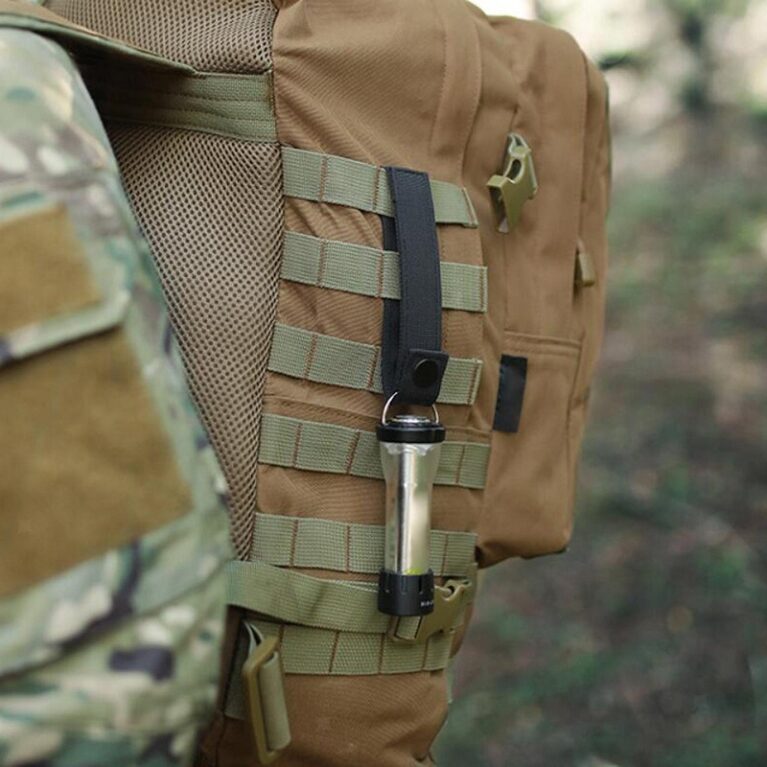
One of the most distinctive features of tactical backpacks is MOLLE (Modular Lightweight Load-Carrying Equipment), a system that significantly increases functional storage. MOLLE doesn't just expand the main compartment; it allows for the attachment of external pouches, offering flexibility to adapt the pack to diverse missions.
How MOLLE Increases Effective Capacity?
MOLLE grids provide the ability to attach a wide range of accessories and compartments, such as:
- Medical pouches for first-aid supplies
- Tool kits for field maintenance and repairs
- Magazine carriers for ammunition or equipment
- Water bottle holders for convenient hydration
- Radio pouches for communication gear
- Dump pouches for quick storage
- Admin organizers for keeping documents and small items accessible
For example, a 25L base pack equipped with full MOLLE expansion can effectively increase its capacity to 30–55 liters, depending on the number and size of external pouches added. This versatility makes MOLLE systems essential for adapting the pack to evolving mission requirements and diverse gear needs.
Size-Based Differences:
| Backpack Size | MOLLE Impact |
| 20L | Adds 2-6L before it becomes bulky |
| 30L | Adds 5-10L efficiently |
| 40L | Adds 10-15L; strongest modular range |
| 50L+ | Used mostly for mission-specific add-ons,not everyday expansion |
Strategic Use of MOLLE Systems:
- EDC Users typically add only a minimal amount of MOLLE attachments to their packs to keep the weight low and maintain mobility for daily tasks.
- Tactical and Military Users leverage the full potential of MOLLE to optimize their packs for carrying mission-critical gear, ensuring they have the necessary tools and equipment for field operations.
- Preppers heavily rely on MOLLE systems to transform a single backpack into a comprehensive survival platform, adding specialized pouches and accessories to carry all the gear needed for extended emergency situations.
Key Insight:
The beauty of MOLLE is its adaptability: it takes a single liter capacity and allows users to customize their pack into a mission-specific system. Whether it's an everyday carry solution, a tactical mission loadout, or a fully equipped survival bag, MOLLE enables complete transformation based on the user's needs.
How Do Load Distribution & Frame Support Vary by Size?
Effective load distribution is a critical factor that differentiates tactical backpack sizes. The design of the frame and how weight is distributed across the body play a significant role in comfort and performance.
20L–30L (Small Backpacks For Tactical)
- Typically frameless, relying on padding and the natural structure of the fabric for support.
- Designed for maximum mobility, these packs are ideal for lightweight loads and quick access to gear.
- These packs generally do not require hip belts or aluminum stays, as their compact size and light load don't place undue strain on the user.
30L–40L (Medium Backpacks Para Tactical)
- Often incorporate HDPE frame sheets (a rigid plastic board) for improved structure and weight distribution.
- Light aluminum stays may be included, providing added rigidity and support without significantly adding weight.
- These packs are designed for full-day use and moderate terrain, offering moderate load support.
- Small loads transfer through the shoulder straps, while moderate loads are more evenly distributed across the entire back panel, improving overall comfort.
40L–50L (Large Backpacks Para Tactical)
- Typically include advanced support systems like removable aluminum stays, reinforced spine channels, load lifter straps, and thick lumbar padding for enhanced weight distribution.
- Optimized for 10–18 kg loads, these packs are well-suited for law enforcement, rucking, and field operations.
- The design ensures the load is carried more efficiently, improving stability and reducing fatigue during long missions or extended use.
50L–65L (Extra-Large Backpacks Para Tactical)
- Engineered like mountaineering backpacks, these large packs are built for heavy-duty use and often carry the most significant loads.
- Require a full internal frame, large hip belts, and adjustable harness systems to effectively distribute weight.
- Can safely carry 15–25+ kg loads, ensuring comfort and support over extended periods of heavy use.
- Weight distribution is optimized across the shoulders, hips, and torso, minimizing strain and ensuring better balance during movement.
Why This Matters?
Without proper frame engineering and load distribution, carrying a heavy pack can lead to:
- Shoulder strain from uneven weight
- Back curvature and long-term posture issues
- Instability during movement, affecting agility and safety
- Decreased mission efficiency due to fatigue or discomfort
Ultimately, the size of the pack not only determines how much you can carry but also how comfortably and safely you can carry it. A well-engineered frame and proper load distribution are essential for ensuring maximum comfort and optimal performance.
What is the Recommended Weight Capacity for Each Tactical Backpack Size?
Tactical backpacks are designed to endure heavy use, and each size category has a specified weight limit to ensure optimal performance and durability.
Recommended Load Capacity Chart for Tactical Backpacks
| Backpack Size | Safe Carrying Weight | MOLLE Impact |
| 20L | 5 - 8 KG | Up to 10 kg |
| 30L | 7 - 12 KG | Up to 14 kg |
| 40L | 10 - 18 KG | Up to 20 kg |
| 50L+ | 15 - 25 KG | Up to 30 kg |
Factors Influencing Tactical Backpack Weight Capacity
The weight capacity of a tactical backpack is influenced by several key design elements. Understanding these factors can help determine the optimal load a pack can carry without compromising performance or comfort.
- Fabric Denier Rating:The thickness and durability of the fabric used in the construction of the pack play a significant role. For example, 500D fabric is lightweight and more flexible, while 1000D fabric is thicker and more durable, capable of withstanding heavier loads.
- Stitching Techniques:The type of stitching used affects the overall strength of the pack. Techniques like X-stitching, bartack stitching, and box stitching reinforce high-stress areas, improving durability and load-bearing capability.
- Frame Material:The internal frame, often made from materials like HDPE (High-Density Polyethylene) or aluminum, provides structural support. Stronger frames help distribute the weight evenly, reducing strain on the back and shoulders.
- Shoulder Strap Foam Density:The thickness and padding of the shoulder straps significantly affect how weight is carried. Higher foam density provides better comfort and reduces pressure points, allowing for a more comfortable load.
- Hip Belt Thickness:A well-padded and adjustable hip belt plays a critical role in transferring weight from the shoulders to the hips, which helps improve comfort and stability while carrying heavier loads.
- Back Ventilation Channels:Packs with ventilation channels on the back panel help with airflow, reducing heat buildup and improving comfort, particularly during long carries.
Insights on Size Comparisons
- Small Tactical Packs (20–30L):These packs generally prioritize mobility over ergonomics. With their compact size, they rely more on the user's shoulder strength to carry the load, making them ideal for light gear and quick access. However, their minimalist design offers little support for larger or heavier loads.
- Large Tactical Packs (40–65L):Packs in this size range are designed with distributed weight architecture to ensure more even weight distribution across the body. This reduces the risk of spinal strain and enhances comfort when carrying heavier gear over long distances.
- Professional Rucking Groups (Military, Law Enforcement):For tactical professionals, 40L–55L packs are often the preferred choice. These sizes offer an ideal balance, providing enough capacity to carry essential gear while maintaining stability and posture. They are capable of handling heavy loads without compromising performance, making them ideal for extended missions and high-intensity activities.
How Does Torso Length Influence Backpack Size Selection?
Torso length, rather than overall height, is one of the most crucial yet often overlooked factors when choosing the right tactical backpack.
Why Torso Length Is More Important Than Height?
Two individuals of the same height (e.g., 175 cm) can have vastly different torso lengths, which affects how a backpack fits and performs. A well-fitting pack should align with the user's torso length for optimal comfort and efficiency.
The Benefits of Proper Torso Alignment:
- Centers the Weight:A correctly sized pack ensures the weight is distributed evenly across the torso, reducing the strain on specific areas such as the shoulders and lower back.
- Prevents Shoulder Digging:With the right torso length, the shoulder straps rest comfortably on the shoulders without cutting into the skin or causing discomfort, even under heavy loads.
- Improves Breathing:A properly aligned backpack allows for natural movement and unrestricted breathing, especially important during strenuous activities or long hikes.
- Stabilizes Load During Movement:When the torso length is correctly matched to the pack, it stabilizes the load, ensuring that it moves with your body rather than against it. This minimizes shifting or bouncing during movement, which can lead to discomfort or fatigue.
Ideal Backpack Sizes Based on Torso Length
| Torso Length | Recommended Pack Size |
| 38-44 cm(Short) | 20-30L or compact 40L |
| 44-50 cm (Medium) | 30 - 45 L |
| 50-56 cm (Long) | 40 - 65 L |
The Importance of Harness Adjustability
Top-tier tactical backpacks, such as those produced by LUPU, are designed with adjustability in mind to ensure a personalized, comfortable fit for a variety of torso profiles. Key features include:
- Adjustable shoulder harnessesthat can be fine-tuned to accommodate different body shapes, ensuring the straps align correctly across the shoulders.
- Movable sternum strapsthat provide stability and help secure the pack, reducing movement during use.
- Multi-level load liftersthat allow users to adjust the pack's weight distribution, optimizing balance and comfort, even when carrying heavy or bulky gear.
These adjustable elements help ensure that users with varying torso lengths can carry the load comfortably, preventing fatigue or discomfort during extended use.
Risks of an Improper Torso Fit
Choosing a pack that does not align with your torso size can lead to several issues that compromise both comfort and performance:
- Shoulder Compression:Poorly fitted straps can dig into the shoulders, leading to discomfort and even restricting circulation, particularly when carrying heavy loads.
- Inefficient Weight Transfer:Without proper torso alignment, weight may not be evenly distributed, causing unnecessary strain on specific areas like the shoulders or lower back.
- Uneven Posture:An improperly fitted pack can affect posture, making the user lean forward or backward unnaturally, which can lead to fatigue and discomfort.
- Back Pain:Prolonged use of a poorly fitted backpack can result in significant back pain, especially after extended periods of carrying heavy gear.
By selecting a pack with adjustable harness features, you can ensure a proper fit, which minimizes these risks and enhances both comfort and mobility during use.
Aligning the pack size with your torso length significantly enhances overall performance and comfort.
Feature Variations Based on Backpack Size
| Caraterística | 20L EDC | 30L Multi-Use | 40L Field Pack | 50-65L Survival / Military |
| Mobility |
☆☆☆☆☆ |
☆☆☆☆ | ☆☆☆ | ☆☆ |
| Load Capacity |
☆☆ |
☆☆☆ | ☆☆☆☆ | ☆☆☆☆☆ |
| Frame Support | Mínimo | Moderado | Forte | Full Frame |
| MOLLE Expansion | Limitada | Moderado | Wide | Mission - Specific |
| Ideal Weight | 5 - 8 kg | 7 - 12 kg | 10 - 18 kg | 15 - 25 kg |
| Utilização primária | Daily carry | Hiking / Travel | Tactical / Outdoor | Military / BOB |
How to Choose the Ideal Tactical Backpack Size for Your Brand or Custom Projects?
When selecting the ideal tactical backpack size for your brand or mochila tática personalizada projects, it's essential to consider factors such as your target audience, intended use cases, regional preferences, material specifications, and the load capacity that your customers expect.
Common OEM sizes include:
- 20L for EDC (Everyday Carry)—ideal for light, daily gear.
- 30L for multi-purpose use, offering versatility for a variety of activities.
- 40L for outdoor and tactical missions, suitable for day trips and moderate terrain.
- 50L+ for military-grade or bug-out bags, designed to support longer excursions or emergency preparedness.
Aligning the size with your brand's positioning, pricing strategy, and design features will help improve sales performance and ensure customer satisfaction. The right size directly impacts usability, customer experience, and long-term success in the market.
What Are the Size Preferences of Global Customers (20L–55L)?
Customer preferences for backpack sizes can vary significantly depending on regional buying behaviors and specific market needs. Understanding these size trends is crucial for tailoring products to meet the demands of each market. For instance:
- In urban markets, smaller sizes like 20L–30L are often preferred for EDC and commuting.
- Outdoor enthusiasts in regions with extensive hiking or tactical operations may gravitate toward 40L–50L packs.
- Survivalists or military professionals often request 50L+, needing robust, high-capacity packs for extended missions or emergency preparedness.
By tailoring your offerings to regional preferences, your brand can better align with consumer expectations and improve product launch success.
Worldwide Backpack Size Preferences
| Region | Most Purchased Sizes | Buyer Profile |
| EUA | 30L, 40L, 50L+ | Outdoor, tactical, survivalist |
| Europe | 20L, 30L, 40L | Commuters + hikers |
| Japan / Korea | 15L - 25L | Urban EDC users |
| Middle East | 40L - 55L | Military, security |
| Australia | 30L - 40L | Outdoor + travel |
| Southeast Asia | 20L - 30L | Motorcycle commuters |
Why Understanding These Patterns is Crucial?
Selecting the right size for your tactical backpacks impacts multiple facets of your business, from competitiveness to customer satisfaction. Key areas affected include:
- Market Competitiveness (especially on platforms like Amazon)
- Targeted Marketing Strategies and promotional angles
- Shipping Requirements (carton size, packaging efficiency)
- Manufacturing Costs
- Margins per SKU
- Customer Satisfaction (pack size, usability, and durability)
To maximize audience reach and meet diverse consumer needs, many brands adopt size series like:
- 20L + 30L + 40L for general-purpose and EDC markets
- 30L + 40L + 50L for tactical and outdoor gear markets
This strategy ensures broad coverage across various consumer groups, each with different use cases and expectations.
Choosing the Right Materials & Fabrics for Each Backpack Size
Selecting the correct material for a tactical backpack is essential to match the intended size and usage. Weight, stiffness, and durability vary significantly depending on the pack's capacity. Here's an overview of the best materials for each size range:
20L–25L BackPacks (Urban & EDC Use)
- Best Fabrics: 500D nylon, 600D polyester
- Reinforcements: Foam backing, bartack stitching for stress points
- Why: These packs need to remain lightweight, compact, and slim for daily use, ensuring easy mobility in urban environments.
30L BackPacks (Most Versatile)
- Best Fabrics: 600D–900D nylon, 600D Cordura, ripstop materials
- Reinforcements: Foam-padded shoulder straps, HDPE frame optional for structure
- Why: These packs strike the perfect balance between storage capacity and mobility, making them ideal for a variety of activities, from daily commutes to outdoor adventures.
40L BackPacks (Outdoor & Tactical Use)
- Best Fabrics: 900D–1000D nylon, 1000D Cordura, ballistic nylon
- Reinforcements: Aluminum stays, reinforced MOLLE webbing, thick back panel
- Why: Larger packs need a stronger structure to support heavier loads and withstand rugged environments, ensuring durability during field operations.
50L–65L BackPacks (Military & Survival)
- Best Fabrics: 1000D Cordura, heavy-duty woven nylon
- Reinforcements: Full internal frame, large hip belts, multiple compression straps
- Why: Built for extreme field conditions, these packs require maximum durability and extra capacity to handle survival gear, tools, and emergency supplies.
The Impact of Material Choice on OEM Customers
Choosing the wrong material for a given backpack size can lead to a range of issues, including:
- Early Wear & Tearing:Inappropriate fabric choice may not hold up under stress.
- Sagging Under Weight:Insufficiently durable materials cause the pack to lose shape under heavy loads.
- Customer Complaints:Poorly selected fabrics can lead to dissatisfaction due to premature damage or discomfort.
- Reduced Lifespan:Inadequate materials diminish the pack's overall durability.
- Negative Reviews:Inconsistent quality or material failures result in poor feedback, affecting brand reputation.
LUPU recommends fabric choices that are perfectly suited to each backpack size, the intended use, and the target market. This approach ensures quality, performance, and longevity in every product.
How to Create a Custom Size Backpack with OEM Manufacturing?
Designing a mochila tática personalizada goes beyond choosing a liter capacity. The process involves careful engineering, prototype testing, and coordinated manufacturing to meet specific market needs.
Aqui's a breakdown of the OEM development process at LUPU:
1. Requirements & Scenario Analysis
Understand the target user group, their intended load, and size preferences.
Define product positioning (budget, mid-range, or premium) and regional market demand.
2. Capacity Engineering
Calculate actual internal volume, design the shape (tall, wide, or deep), and determine the number of compartments.
Plan MOLLE placement and hydration system layout to enhance functionality.
3. Material Selection
- Based on the chosen size, select fabrics like nylon, polyester, Cordura, or ripstop.
- Choose high-quality zippers (YKK, SBS) and durable buckles (Duraflex, Nifco).
- Specify frame sheets, foam density, and mesh materials for comfort and durability.
4. Structural Engineering
Analyze load-bearing capacity, reinforce stitching at high-stress zones, and optimize back ventilation.
Design strap angles, and ensure ample hip belt and chest strap padding for better weight distribution.
5. Prototype Production (5–7 Days)
LUPU in-house sample team creates:
- Pre-production samples for size and fit testing.
- Reinforced stress-point samples to ensure durability.
6. Field Testing
Rigorous stress tests include:
- Tear strength, abrasion resistance, and waterproofing.
- Load distribution and MOLLE strength testing.
- Strap endurance and zipper cycle tests to ensure longevity.
7. Final Adjustments & Mass Production
After comprehensive testing, final adjustments are made to capacity, stitching, padding, ergonomics, and modular layout.
This ensures that the final product matches your brand's specifications and meets customer expectations, ready for mass production.
Conclusão
Choosing the right tactical backpack size goes beyond merely looking at volume specifications. Key factors such as capacity, usability, load distribution, and the intended use case are all critical in determining the optimal size. Whether you're designing a compact EDC pack, a versatile 30L daypack, a durable 40L outdoor bag, or a heavy-duty 50L survival pack, the chosen size must be tailored for practical functionality, not just aesthetics.
If you're looking to develop a tailored tactical backpack line or create customized packs in 20L, 30L, 40L, or 50L, reach out to LUPU today. We specialize in helping brands design and manufacture high-quality, durable, and market-ready tactical gear that resonates with customers and stands out in global markets.
Article Recommend:
Top 50: Lista global de marcas de equipamento tático
Os 12 melhores fabricantes de mochilas no Reino Unido
Os 12 principais fornecedores de vestuário militar do mundo